
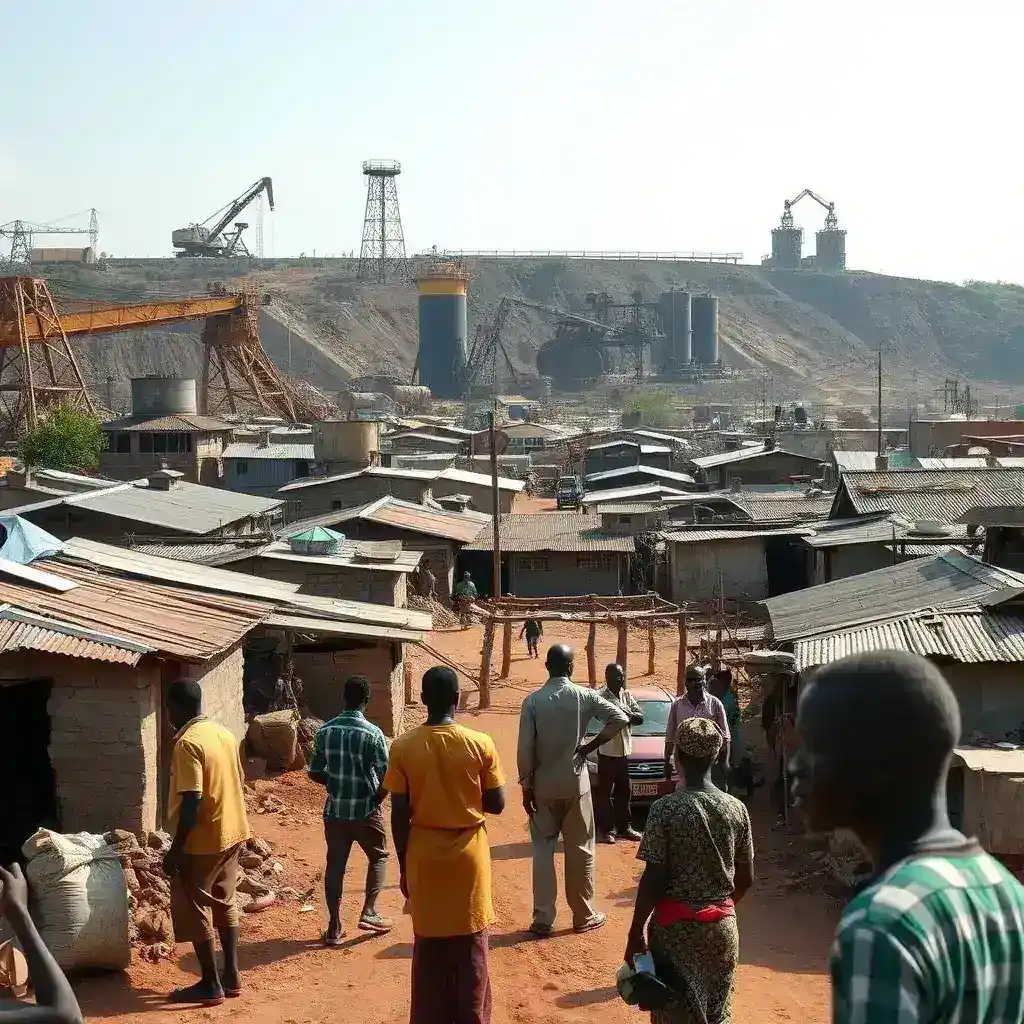
Accra, Ghana – Member of Parliament for Mpraeso, Davis Opoku Ansah, has amplified calls to reject the lease renewal for Gold Fields’ Tarkwa Mine, advocating for a fundamental shift in how Ghana manages its mineral resources to achieve greater economic self-sufficiency. This stance comes as the nation grapples with recurrent economic challenges, evidenced by its frequent reliance on the International Monetary Fund (IMF), despite possessing vast natural wealth.
Economic Dependence and Resource Management
Mr. Opoku Ansah highlighted Ghana’s consistent need for IMF support, citing 17 such programs over the past 40 years. He argued that this dependency underscores a persistent failure by successive governments to effectively leverage the nation’s abundant mineral resources for sustainable development and economic growth.
The Mpraeso lawmaker pointed to the stark contrast between the significant profits reaped by multinational mining corporations and the ongoing developmental deficits faced by mining-affected communities. He specifically mentioned Tarkwa and Obuasi, areas with a long history of mining operations, which continue to suffer from inadequate infrastructure and limited social amenities.
“We need to appreciate that Ghana, as a country, in the last 40 years, has been to the IMF 17 times. What this tells us is that Ghana is rich in resources but very poor in our value retention,” Mr. Opoku Ansah stated in a recent interview. He emphasized that the current approach of merely exporting raw materials, such as gold, is unsustainable.
Tarkwa Mine Lease Renewal as a Turning Point
The ongoing discussions surrounding the renewal of Gold Fields’ lease for the Tarkwa Mine present a critical juncture for Ghana. Mr. Opoku Ansah views this as a strategic opportunity to renegotiate terms and implement policies that ensure the nation retains a more substantial share of the wealth generated from its extractive industries.
This debate is not merely about a single mining lease; it represents a broader national conversation about sovereignty and economic empowerment. Critics argue that current agreements often favor foreign companies, leaving Ghana with insufficient benefits relative to the value of its extracted resources.
Calls for Value Addition and Local Benefit
The core of Mr. Opoku Ansah’s argument centers on the principle of value addition. Instead of exporting raw minerals, he suggests that Ghana should prioritize processing and refining these resources domestically. This would create jobs, foster industrial development, and significantly increase the revenue retained within the country.
Data from the Ghana Chamber of Mines indicates that the mining sector is a significant contributor to the national economy, providing substantial foreign exchange earnings and direct employment. However, the debate questions whether these benefits are maximized for the long-term economic health of the nation and its citizens.
Experts in resource governance have long advocated for stronger local content policies and greater transparency in mining contracts. These measures aim to ensure that host communities and the national economy benefit more directly from resource extraction. The situation in Tarkwa and Obuasi serves as a potent reminder of the social contract between mining companies and the communities in which they operate.
Looking Ahead: Policy Reforms and Future Opportunities
The push to renegotiate mining leases and demand greater value retention signals a potential shift in Ghana’s economic strategy. Observers will be watching closely to see if this momentum translates into concrete policy changes that prioritize domestic processing and equitable benefit-sharing.
The outcome of the Tarkwa Mine lease renewal negotiations could set a precedent for future agreements, influencing how Ghana engages with foreign investors in its crucial mining sector. The focus is increasingly on transforming resource wealth into sustainable development and reducing economic vulnerability.






Leave a Reply