
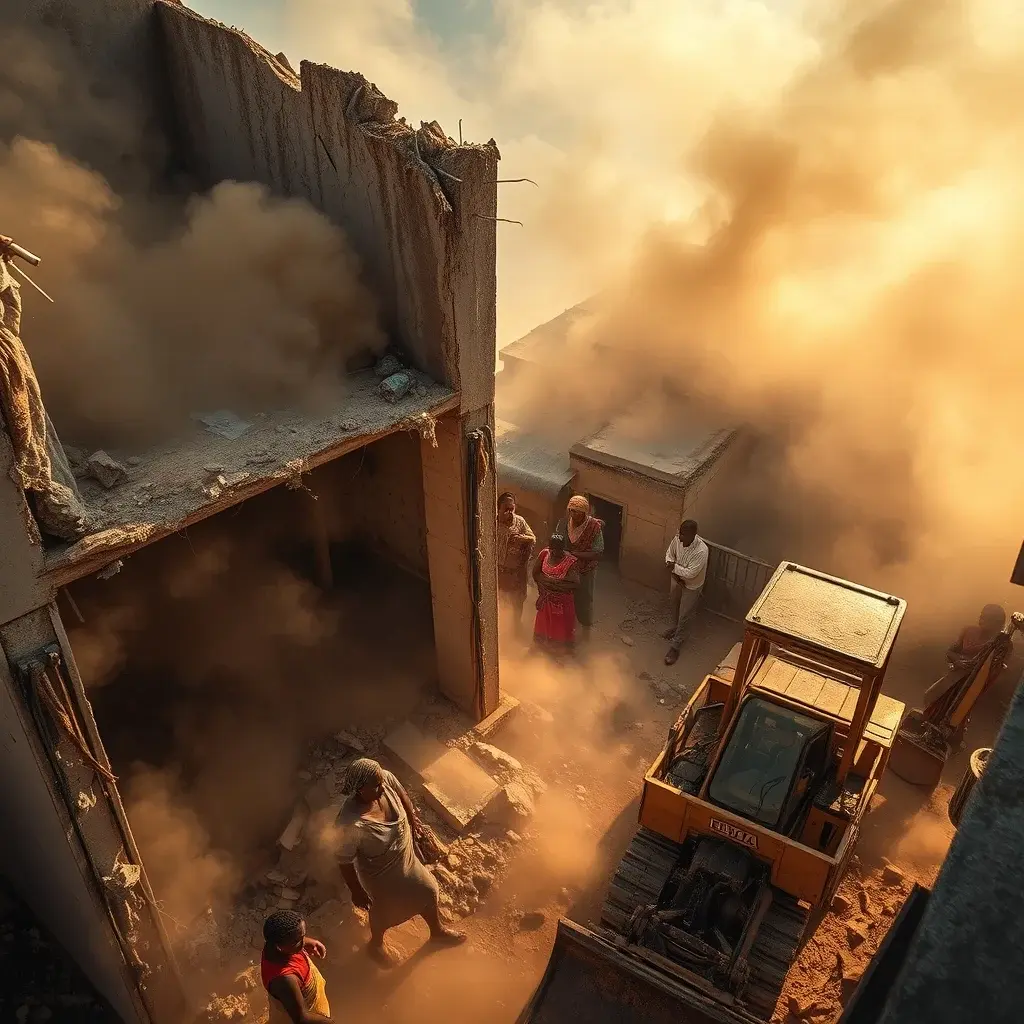
The recent demolition of homes and businesses on Sakumono Ramsar site and other locations in Ghana has exposed a deep-seated issue of illegal development, compounded by years of institutional failure and societal indiscipline. The heartbreaking scenes of families losing their homes, often built with life savings, highlight a recurring problem that successive governments have failed to permanently resolve.
The Human Cost of ‘Illegal’ Structures
The sight of bulldozers tearing down homes, while owners clutch their keys in despair, is a stark reminder of the human impact of these exercises. Many affected individuals report having obtained permits, had utilities connected, paid property taxes, and even received campaign promises from politicians in these areas. The sudden declaration of these structures as “illegal” after elections, leading to their destruction, points to a pattern of what critics call “institutionalized complicity” and “convenient blindness” by authorities.
Understanding Ramsar Sites and Their Importance
Ramsar sites are internationally recognized wetlands vital for environmental sustainability. Ghana, as a signatory to the Ramsar Convention, has several such protected areas, including those around Accra like Sakumono Lagoon and Densu Delta. These sites act as natural flood defenses, preserve biodiversity, and maintain water quality. Their destruction for development, often facilitated by illegal land sales and approvals, directly undermines these critical ecological functions, leading to increased flooding and environmental degradation.
Greed and Complicity Fueling Illegality
The article argues that the pervasive issue of illegal construction is fueled by widespread greed and a normalization of lawlessness. Both those selling and buying land in protected areas are often aware of the illegality but driven by profit. Officials allegedly approve permits for “something small,” politicians overlook these settlements for votes, and traditional authorities sell off reserved lands. This creates a situation where ordinary homeowners become the “sacrificial goats” when demolitions occur, while those who enabled the illegality often escape accountability.
Systemic Failures, Not Just Individual Recklessness
Demolitions are presented not as decisive governance but as symptoms of systemic failure. A functional state prevents illegal construction before it begins. By contrast, Ghana’s approach often involves waiting until significant investments are made before intervening with bulldozers. This leads to devastating consequences for individuals, including financial ruin, emotional trauma, and displacement. Taxpayers also bear the cost through compensation lawsuits, security deployment, and lost infrastructure.
Lessons from Global Best Practices
Developed countries like Singapore, the Netherlands, and Germany manage urban development effectively through strong systems, not just periodic demolitions. They employ strict zoning laws, digital land administration, swift enforcement, transparent permitting, and severe penalties for violations. In Singapore, for example, illegal structures are often halted before completion with significant fines and even jail time for offenders. These nations prioritize prevention, recognizing it is far cheaper and more effective than demolition.
The Path Forward: Systemic Fixes and Collective Responsibility
Ghana has laws and enforcement agencies, but lacks a cohesive and functional system. The author advocates for a “system fix” that digitizes land ownership, zoning, and permits for transparency. This would hold both sellers and buyers of illegal lands accountable, along with officials who approve illicit developments. Such a system requires political will to enforce laws consistently, not just seasonally. Ultimately, fixing the system requires the combined efforts of government and citizens, acknowledging that widespread complicity has enabled the current chaos.
Preventing Destruction, Not Just Reacting to It
The article concludes that bulldozing cannot solve lawlessness when governments have long tolerated it. Until greed is overcome by national conscience, demolitions, wetlands loss, and worsening floods will persist, with ordinary citizens bearing the brunt of elite irresponsibility. Ghana’s future security lies not in demolitions, but in building strong institutions that prevent illegality before it necessitates destruction.










Leave a Reply