
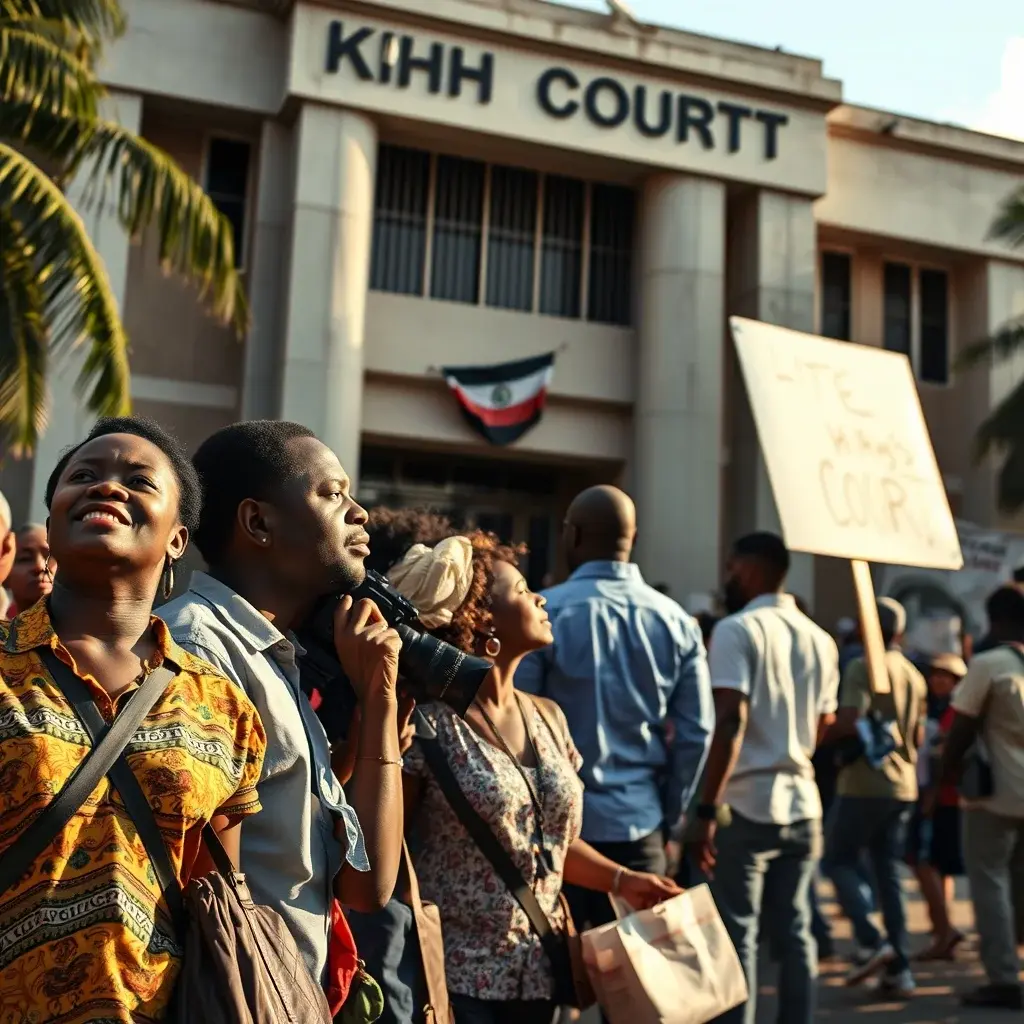
The High Court in Accra has ruled that the Ghana Police Service violated the constitutional rights of journalist Bridget Otoo and two other applicants during the #OccupyJulorbiHouse protest in September 2023. The Human Rights Division 2 of the High Court found that police engaged in unconstitutional conduct, including physical assault and unlawful detention, during the demonstration.
Court’s Findings on Rights Violations
Presided over by Justice Nana Brew, the court delivered its judgment on Thursday in the case brought by Bridget Otoo and two others against the Inspector General of Police and the Attorney-General. Justice Brew held that police officers, who have a duty to protect citizens, instead violated the fundamental rights of the applicants.
Specific instances detailed in the judgment include allegations of physical assault against Bridget Otoo, with her blouse reportedly torn during the protest. Vanessa Edotom Boateng was found to have been unlawfully detained, and her phone was seized to prevent her from documenting alleged police brutality.
George Gyening Anyang, the third applicant, reported being assaulted while livestreaming events at the regional police station. Court documents state he endured attacks including “slaps, punches, a metallic belt, and a baton” from officers.
Remedies Awarded by the Court
The court granted all reliefs sought by the applicants. This included compensatory damages of GH¢100,000 and general damages of GH¢50,000. Additionally, legal costs amounting to GH¢30,000 were awarded.
Justice Brew further mandated that the Ghana Police Service publish an unqualified apology in the state-owned Daily Graphic newspaper. This public apology serves as a formal acknowledgment of the unconstitutional actions taken by its officers.
Context of the #OccupyJulorbiHouse Protest
The #OccupyJulorbiHouse protest, which took place in September 2023, garnered significant national attention. It was organized to raise concerns about governance, economic hardships, and the conduct of law enforcement during demonstrations.
The protest itself led to several arrests and drew widespread criticism from various civil society groups, media freedom advocates, and human rights organizations. These groups alleged excessive force and rights abuses by the police during the event.
Legal Precedents and Judicial Caution
In delivering the ruling, Justice Brew referenced previous court decisions, including the Solomon Joojo Cobinah case. These references underscore a pattern of judicial concern regarding law enforcement’s adherence to human rights standards.
The judge issued a cautionary note against future human rights abuses by law enforcement officers. He expressed hope that the current leadership of the Ghana Police Service would prioritize the protection of the rights of journalists and the general public.
Implications for Law Enforcement and Public Trust
While the court awarded substantial damages, it declined a request for higher legal costs. The court reasoned that excessively high monetary awards could potentially hinder the police service’s ability to function effectively.
This ruling has significant implications for the Ghana Police Service, highlighting the importance of respecting citizens’ constitutional rights, especially during public protests. It reinforces the role of the judiciary in holding law enforcement accountable for misconduct.
The decision is expected to encourage greater transparency and accountability within the police force. It may also empower journalists and activists to exercise their rights more confidently, knowing that legal recourse is available against unconstitutional actions. The emphasis on a public apology and damages underscores the severity of the violations found by the court.
Looking Ahead
Moving forward, the focus will be on how the Ghana Police Service implements the court’s directives, particularly regarding the publication of the apology and potential reforms in training and operational procedures. The public and advocacy groups will likely monitor the service’s adherence to human rights standards in future public order management. The effectiveness of the awarded damages in deterring future misconduct will also be a key point of observation.










Leave a Reply