
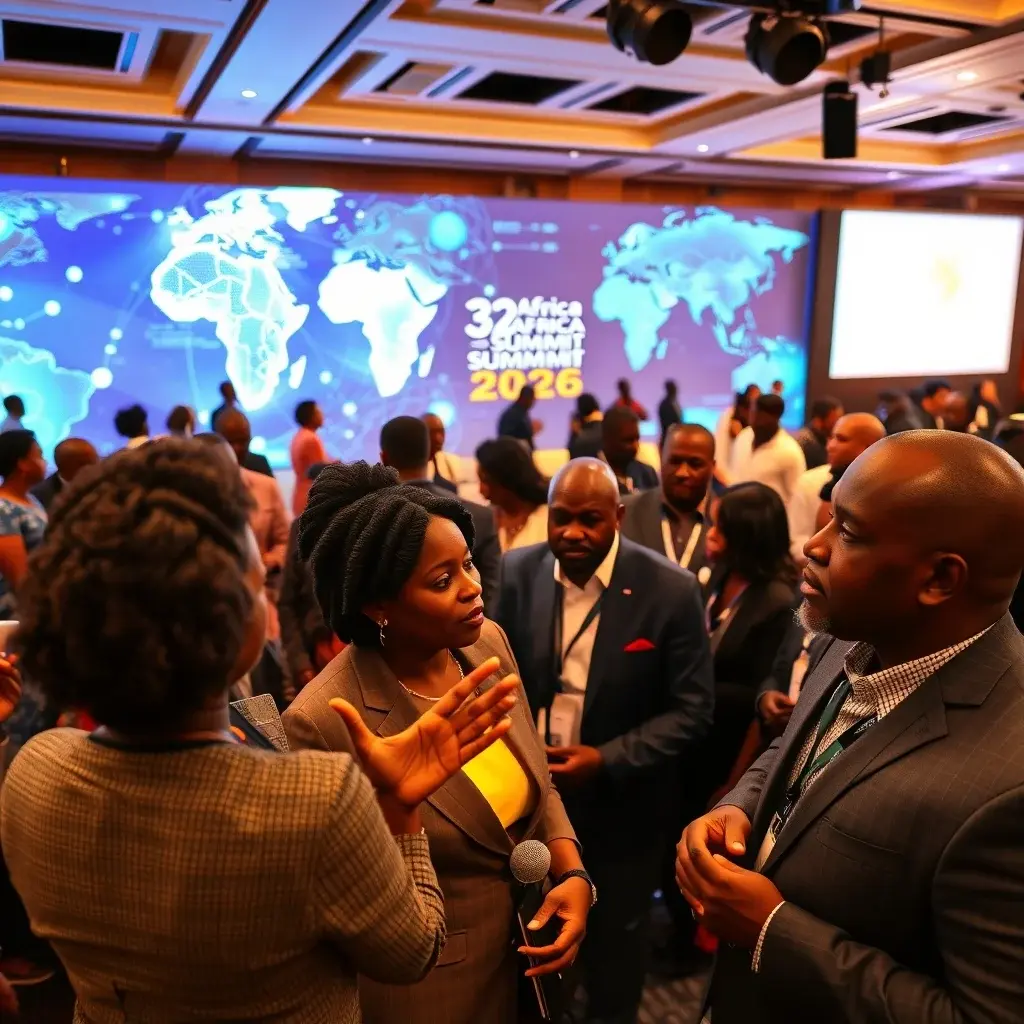
Fidelity Bank Ghana has emerged as a significant advocate for Africa’s digital future, actively participating in the 3i Africa Summit 2026 held in Accra. The bank’s executives engaged in high-level discussions with policymakers, financial institutions, fintech leaders, regulators, and ecosystem players, emphasizing the critical need for Africa to develop and control its own digital infrastructure and foster market-driven innovation to drive inclusive growth across the continent.
Africa’s Digital Infrastructure Imperative
A central theme resonating from Fidelity Bank’s involvement was the urgent call for African nations to build and retain value from their indigenous digital infrastructure. Adeline Aryee, Director of the Financial Institutions Group at Fidelity Bank, stressed this point during a panel on “Digital Public Infrastructure: Building Africa’s Foundations in a Platform-Driven World.” Aryee advocated for a stronger emphasis on African-owned digital rails and payment systems.
“If we build our own rails, it goes without saying that we will get the value from those rails,” Aryee stated, drawing a parallel between traditional infrastructure like roads and bridges and the new digital public infrastructure. She argued that this digital infrastructure is a crucial national asset that must be intentionally developed to bolster economic sovereignty and ensure value retention within Africa.
Aryee highlighted Ghana’s advancements in financial inclusion and digital payments as a replicable model for the rest of the continent. However, she cautioned that Africa must evolve beyond mere inclusion to prioritize ownership and value creation in its digital economy. She questioned the continued reliance on external payment rails for local transactions, even when domestic alternatives like Gh-link exist. This dependence, she warned, places undue pressure on African currencies and economies.
“Global tech is good, and we appreciate what global giants have done, but Africa needs to wake up. It is time to create our own rails and retain value on the continent,” she urged, underscoring the need for a paradigm shift in how Africa approaches its digital future.
Fostering Market-Driven Fintech Innovation
Beyond infrastructure, Fidelity Bank also contributed significantly to discussions surrounding fintech growth, innovation ecosystems, and the expansion of digital markets. Dr. Prince Osei Hyeaman-Addai, Head of Mobile Financial Services at Fidelity Bank, emphasized the importance of developing digital solutions rooted in actual market needs rather than abstract assumptions.
“When you start off, you start with the market,” Dr. Hyeaman-Addai explained. “The market tells you the pain areas, the problems to solve, and even the kind of platform you should build.” He drew upon Fidelity Bank’s extensive experience in digital financial services and mobile money partnerships, noting that successful innovation hinges on a profound understanding of customer behavior, trust dynamics, and local contextual realities.
Dr. Hyeaman-Addai further elaborated that sustainable innovation requires ongoing engagement with users. “The voice of the customer is critical. Even when you need to scale back or improve a product, you must return to the market and ask what you got wrong,” he advised. This customer-centric approach ensures that digital products remain relevant and effective.
He also pointed out that attracting investment into African fintech ecosystems requires more than just innovative technology; it demands trust, robust structures, and credibility. While funding opportunities are available, startups and innovators must demonstrate their viability, integrity, and a commitment to long-term strategic thinking. Dr. Hyeaman-Addai reflected on Fidelity Bank’s long-standing strategy of partnership-led innovation, citing successful collaborations with fintech firms like IT Consortium, which played a pivotal role in pioneering wallet-to-bank integrations and developing innovative digital financial solutions in Ghana.
Implications and Future Outlook
Fidelity Bank’s active participation and sponsorship of the 3i Africa Summit 2026 underscore its commitment to driving Africa’s digital transformation. The bank’s focus on indigenous digital infrastructure and market-driven innovation signals a strategic shift towards greater economic self-sufficiency and value creation on the continent. As African nations continue to embrace digital technologies, the emphasis on building and owning digital rails, coupled with a deep understanding of local market needs, will be crucial for sustainable growth and inclusive development. Stakeholders will be watching to see how these principles translate into tangible actions and further collaborations that shape the future of Africa’s digital economy.







Leave a Reply