
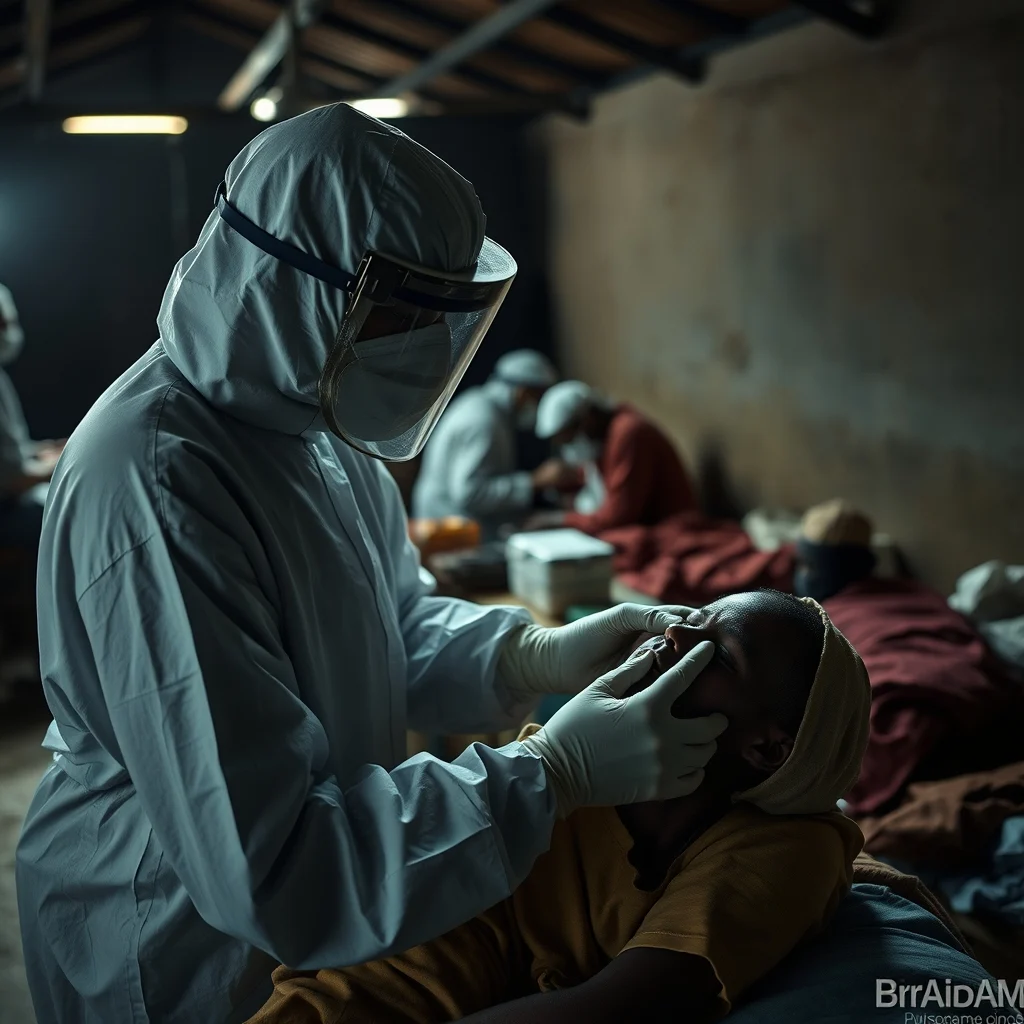
Africa’s top health agency has declared an Ebola outbreak in the Democratic Republic of Congo’s eastern Ituri province. The Africa Centres for Disease Control and Prevention (CDC Africa) reported approximately 246 cases and 65 deaths, primarily in the gold-mining towns of Mongwalu and Rwampara. The agency announced it is convening a meeting with neighboring countries and international partners to coordinate response efforts and cross-border surveillance.
Context of the Outbreak
Ebola, a deadly viral hemorrhagic fever, was first identified in 1976 in the DR Congo and is believed to have originated from bats. This marks the 17th outbreak of the disease in the country. The virus spreads through direct contact with bodily fluids of infected individuals, leading to severe bleeding and organ failure. Symptoms typically include fever, muscle pain, fatigue, headache, and sore throat. Currently, there is no cure for Ebola.
Current Situation and Response
Preliminary tests conducted by the Institut National de Recherche Biomédicale (INRB) in Kinshasa have confirmed the presence of the virus in 13 out of 20 analyzed samples. These findings were shared following consultations with the DR Congo’s Ministry of Health and the National Public Institute. Of the 65 reported fatalities, four were confirmed cases. Additional suspected cases are being monitored in Bunia, the provincial capital of Ituri, with laboratory confirmation pending.
While CDC Africa has declared the outbreak, the Congolese government had not yet officially confirmed it at the time of reporting, with a press conference anticipated. The region of Ituri has been under military rule since 2021, a measure implemented to combat numerous armed groups operating in the area, including the Allied Democratic Forces (ADF), which has ties to the Islamic State group.
Historical Perspective and Data
Globally, Ebola has caused approximately 50,000 deaths across various African nations over the past five decades. The DR Congo has experienced particularly devastating outbreaks. The deadliest occurred between 2018 and 2020, resulting in nearly 2,300 fatalities. In the previous year, an outbreak in the central Kasai province claimed 45 lives.
Implications and Future Outlook
The declaration of this outbreak in eastern DR Congo, a region already facing significant security challenges due to armed conflict, raises concerns about the potential for rapid spread and the difficulties in implementing effective containment measures. The proximity of affected areas to gold mines could also facilitate transmission among transient populations. The planned meeting involving DR Congo, Uganda, South Sudan, and international partners is crucial for establishing robust surveillance systems, particularly along border regions, to prevent cross-border transmission. The effectiveness of the response will depend on swift coordination, resource allocation, and community engagement. Public health officials will be closely monitoring the confirmation of suspected cases in Bunia and the progress of containment strategies in Ituri province. The ability to quickly deploy medical teams and resources into a volatile security environment will be a key determinant in controlling this latest Ebola threat.










Leave a Reply