
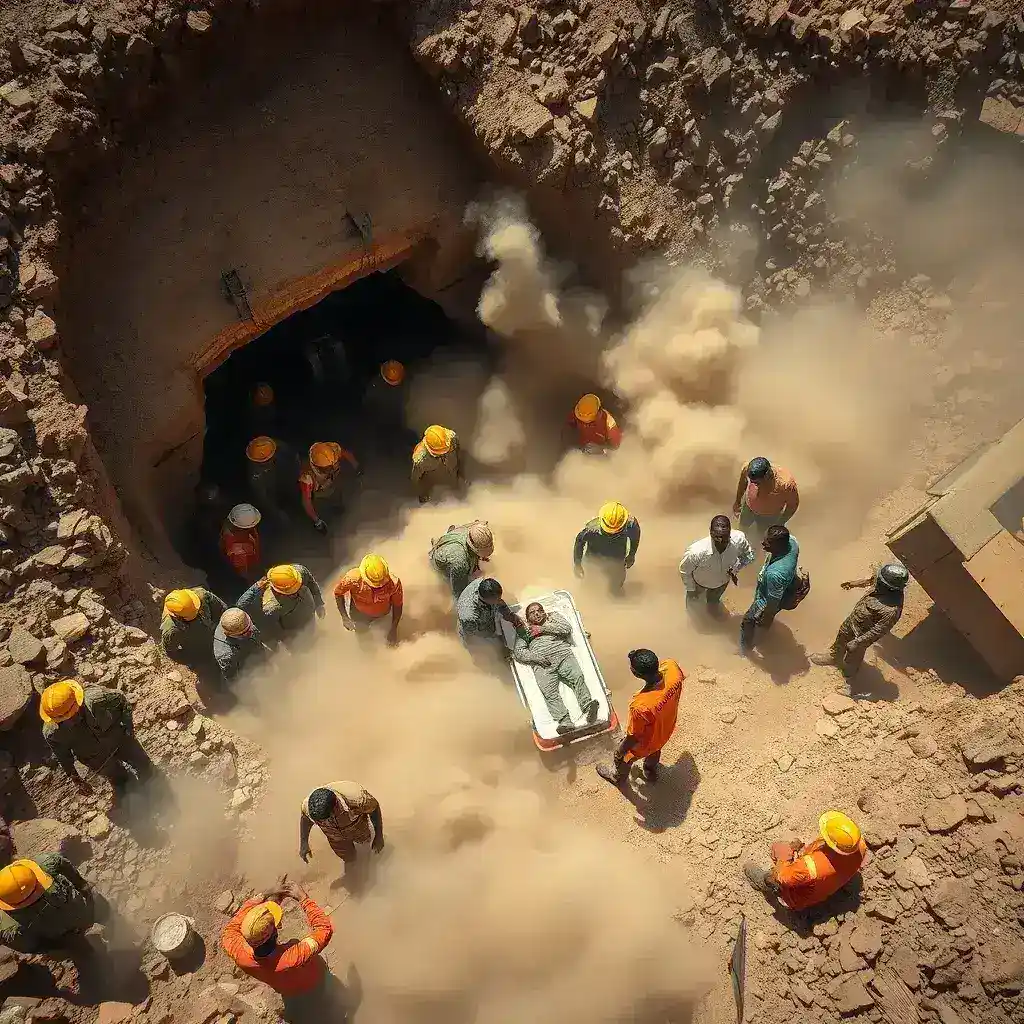
Ten miners were rescued from a collapsed underground pit at a Northern Mines Limited concession in Konongo, Ashanti Region, on Friday, May 15, with one individual in critical condition. The incident, which saw nine miners emerge with minor injuries, underscores a broader safety crisis plaguing Ghana’s gold mining industry, particularly within medium-to-small-scale and illegal operations.
Context of the Collapse
The cave-in occurred when an unsupported section of the underground tunnel unexpectedly gave way. Emergency responders and fellow miners initiated a rapid rescue operation, employing manual tools and heavy machinery to reach those trapped. The swift response, while successful in extracting most victims, could not prevent severe injuries to one miner, who is currently receiving critical care.
A Recurring Safety Hazard
This incident in Konongo is not an isolated event but rather a symptom of systemic safety issues within Ghana’s mining sector. While large multinational corporations often adhere to stringent safety protocols, smaller concessions, both licensed and unlicensed, present significant dangers.
The geological instability of the Asante Akyem Central Municipality, a known gold mining hub, exacerbates these risks. Areas subjected to unregulated or poorly managed small-scale mining activities are particularly vulnerable. These operations often leave the earth riddled with unsupported tunnels, creating precarious underground structures.
Factors such as heavy rainfall or minor structural shifts can trigger collapses in these compromised tunnels. The resulting pressure can turn these excavations into unstable formations, akin to sandcastles, highly susceptible to failure.
The Human Cost of Gold Mining
The pursuit of gold in Ghana, often referred to as a gold rush, comes at a staggering human cost. Reports indicate that lives are lost annually due to unsafe mining practices. Young Ghanaians, in particular, are drawn to these operations, seeking livelihoods in often hazardous conditions.
Official data on mining-related fatalities is often difficult to consolidate, especially concerning the informal and illegal mining sectors. However, anecdotal evidence and the frequency of such incidents suggest a crisis requiring urgent attention.
Industry Response and Regulatory Challenges
Ghana’s Minerals Commission is responsible for regulating the mining sector. While efforts are made to enforce safety standards, the sheer number of small-scale operations, coupled with the challenges of monitoring remote and often clandestine sites, presents significant hurdles.
The government has previously implemented measures to formalize the small-scale mining sector, aiming to improve safety and environmental practices. These initiatives, however, face ongoing challenges in enforcement and oversight.
Implications for Workers and the Industry
The Konongo mine collapse serves as a stark reminder of the inherent dangers faced by miners in less regulated segments of the industry. It highlights the urgent need for enhanced safety inspections, improved training, and stricter enforcement of regulations for all mining operations.
For the communities reliant on mining for employment, the incident raises concerns about job security versus personal safety. The economic benefits of gold extraction are often juxtaposed against the potential for devastating accidents.
Looking Ahead
Moving forward, attention will likely focus on the effectiveness of current regulatory frameworks and the government’s commitment to enforcing safety standards across the entire mining spectrum. Observers will be watching for any new initiatives aimed at mitigating risks in small-scale and artisanal mining. The long-term sustainability of Ghana’s gold mining industry hinges on its ability to prioritize the safety and well-being of its workforce.









Leave a Reply