

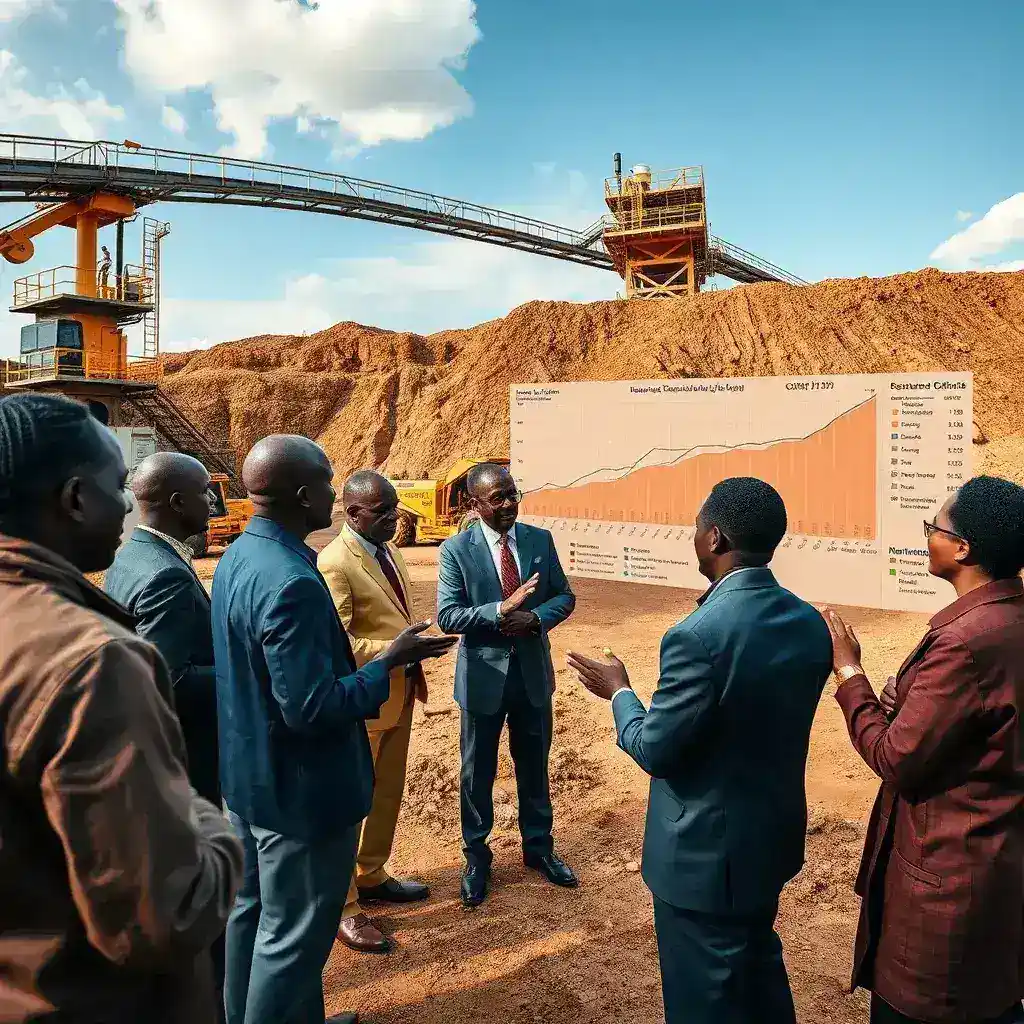
Kofi Bentil, Senior Vice President of IMANI Africa, is advocating for a thorough review and renegotiation of all existing mining contracts in Ghana. Speaking on JoyNews’ Newsfile on Saturday, May 16, Bentil argued that Ghana’s current economic and geopolitical standing provides a stronger bargaining position than when many of these agreements were initially signed, necessitating a reset of terms to better serve national interests.
Shifting Bargaining Power
Bentil highlighted that many past mining contracts were negotiated during periods when Ghana possessed weaker leverage. “At the time we were signing them, we were on a weaker foot. Today, we are not on the same weak position,” he stated. This shift in power dynamics, he contends, presents a crucial opportunity for the nation to redefine the terms of its mineral resource exploitation.
The call for renegotiation stems from a desire to ensure that Ghana benefits more equitably from its rich mineral endowments. The current framework, established during times of lesser negotiation strength, may no longer align with the country’s developmental goals and economic realities.
Addressing Local Value Addition Challenges
Beyond contract terms, Bentil also addressed Ghana’s persistent challenges in establishing robust local gold refining capacity. He noted that numerous initiatives over the past three decades have faltered due to structural impediments and a lack of skilled human resources.
He cautioned against relying on mere aspirations to overcome these deep-seated industrial hurdles. “Wishing and hoping is not enough. We need collaboration and structured engagement to figure out how we are going ahead,” Bentil emphasized. This underscores a need for practical, actionable strategies rather than wishful thinking.
The Imperative of Collaboration and Partnerships
Bentil stressed the necessity for a paradigm shift away from isolated efforts towards building strong, collaborative partnerships. These partnerships should involve capable local players and discerning investors who possess the appetite and capacity for large-scale business operations.
He observed that no single local entity currently possesses the comprehensive capability to manage the entire mining value chain independently. Therefore, mobilizing groups rather than relying on individual actors is the strategic path forward. “If you look at the value chain, we don’t have everything. We should mobilise groups, not individuals,” he advised.
Navigating Resource Nationalism
While acknowledging the understandable concerns surrounding resource nationalism, Bentil warned against emotionally driven policy decisions. He recalled that such approaches have historically led to detrimental outcomes, often starting with a focus on local ownership only to see resources quickly divested.
“This emotional resource nationalism has led us into trouble in the past. We start by giving it to Ghanaians and then we sell off,” he noted. This historical perspective suggests a need for a more measured and strategically sound approach to managing national resources.
A Gradual, Strategic Path Forward
Bentil urged policymakers to adopt a more deliberate and strategic methodology. This approach should prioritize contract renegotiation, enhancing value addition within the country, and fostering structured, collaborative partnerships.
“We should go slowly but surely. What we need is to rewrite the contracts better and build value chain collaboration,” he concluded. This suggests a focus on incremental improvements and sustainable development rather than rapid, potentially destabilizing reforms.
Future Outlook
The ongoing discourse initiated by Bentil’s call signals a critical juncture for Ghana’s mining sector. The coming months will likely see increased pressure on the government to revisit existing contracts and explore new models for local participation and value retention. The success of these efforts will depend on the ability to foster genuine collaboration between government, local businesses, and international investors, moving beyond emotional appeals to implement pragmatic, long-term strategies for resource management and economic development.








Leave a Reply