
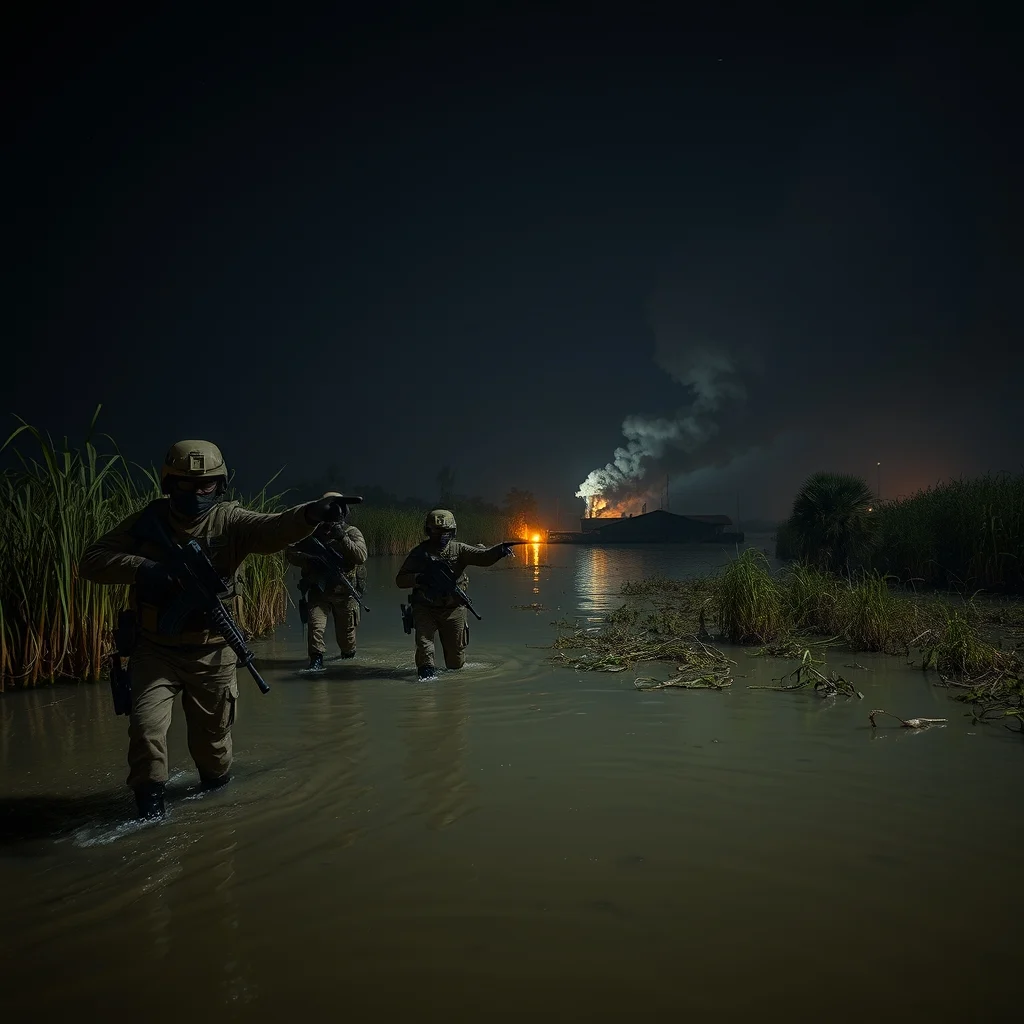
Nigeria and the United States announced the successful culmination of a joint operation that resulted in the death of Abu-Bilal al-Minuki, a high-ranking Islamic State (IS) leader. The operation, which targeted al-Minuki’s compound in the Lake Chad Basin, dealt a significant blow to the terrorist organization’s operational capacity in the region, according to officials from both nations.
Context of the Operation
The strike occurred in Metele, Borno State, a strategically important area within the vast Lake Chad Basin, known for its challenging waterways and swampland. This region has historically served as a stronghold for extremist groups, including Boko Haram and its splinter faction, the Islamic State West Africa Province (ISWAP).
Intelligence gathering and reconnaissance efforts over several months preceded the operation, which commenced shortly after midnight on Saturday. The Nigerian military confirmed that the operation was meticulously planned to ensure no casualties or loss of assets on their side, highlighting a growing and effective partnership with US forces.
Al-Minuki’s Role and IS’s Shifting Focus
Abu-Bilal al-Minuki was identified by US President Donald Trump as the “second in command of ISIS globally” and “the most active terrorist in the world.” Washington had designated him a Specially Designated Global Terrorist in 2023. His responsibilities included overseeing IS-linked operations across the Sahel and West Africa, with a focus on attacks targeting civilians and minority communities.
The Nigerian military stated that al-Minuki had been promoted to “Head of General Directorate of States,” placing him among the most senior figures within the global IS hierarchy. He was also linked to the 2018 Dapchi schoolgirls kidnapping, a significant event where over 100 girls were abducted by Boko Haram.
Al-Minuki’s militant career began as a senior commander within Boko Haram before he pledged allegiance to IS in 2015. Boko Haram, which launched its insurgency in northern Nigeria in 2009 with the aim of establishing an Islamic caliphate, formally aligned with IS through an audio statement from its then-leader Abubakar Shekau in 2015.
The geographical focus of IS has dramatically shifted in recent years. Approximately 90% of its attacks now occur in sub-Saharan Africa, with its Nigeria-based branch being the most active globally. This shift underscores the critical importance of operations like the one that neutralized al-Minuki.
Expert Perspectives and Data Points
Nigerian President Bola Tinubu described the joint operation as a “daring joint operation that dealt a heavy blow” to IS. The neutralization of al-Minuki is expected to disrupt funding channels and command structures for IS operations in Africa and globally, as noted by President Trump.
The operation’s success is seen as a testament to the increasing cooperation between Nigerian and US forces. This collaboration has intensified as Nigeria works to combat the persistent extremist insurgency that has plagued the nation for over a decade. The US has previously conducted joint operations with Nigeria, including an airstrike in Sokoto State targeting IS-linked groups on Christmas Day last year.
Implications and Future Outlook
The death of Abu-Bilal al-Minuki represents a significant victory in the ongoing fight against IS in West Africa. It signals a strengthened resolve and enhanced capability in joint counter-terrorism efforts between Nigeria and the United States.
President Tinubu has previously defended Nigeria’s engagement with international partners on security matters, emphasizing that such challenges cannot be tackled in isolation. “You cannot operate the world in isolation,” he stated recently, advocating for “pragmatic cooperation and partnerships” to enhance the security of lives and property.
While this operation marks a critical success, the persistent activity of IS and its affiliates in sub-Saharan Africa means the threat remains substantial. The coming months will reveal the extent to which the neutralization of al-Minuki impacts ISWAP’s operational tempo and its ability to conduct further attacks in the region. Observers will be watching for any signs of leadership restructuring within ISWAP and the potential emergence of new threats or shifts in operational strategy.










Leave a Reply