
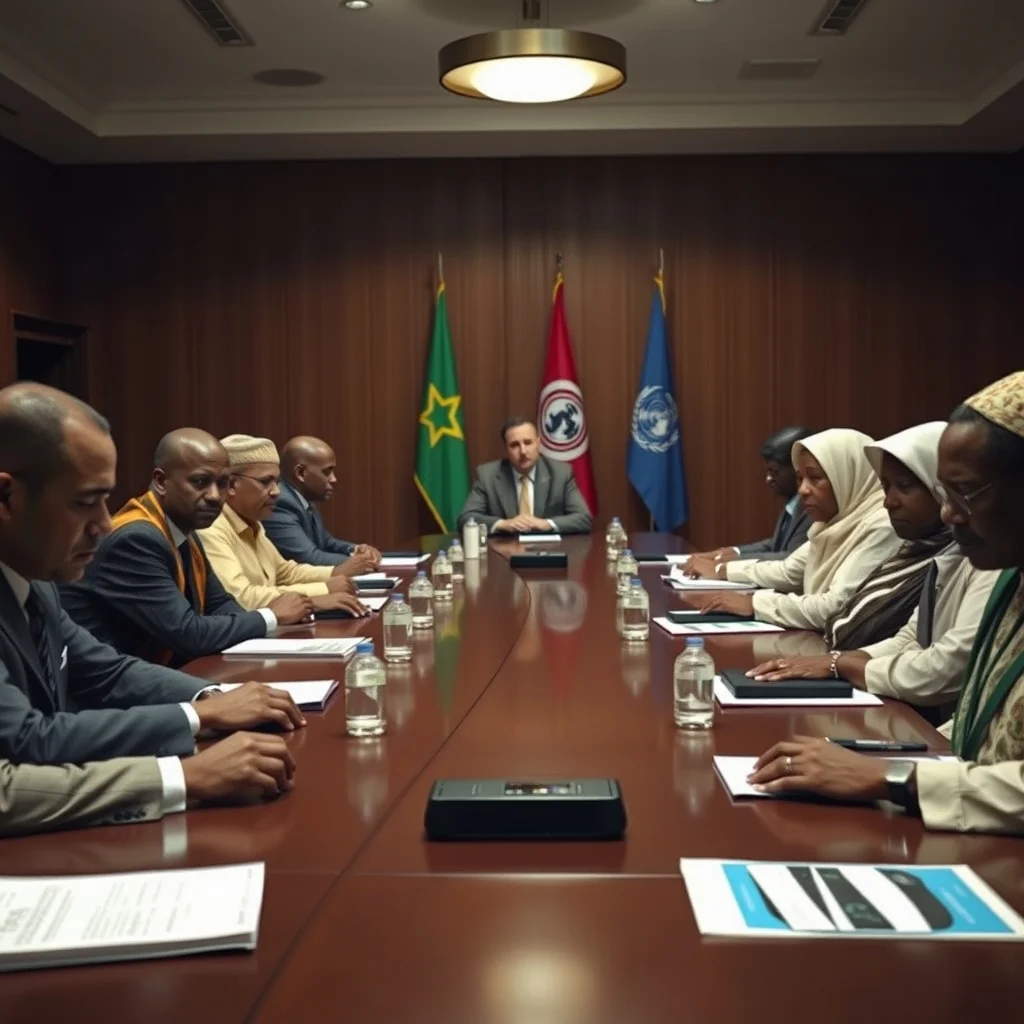
The African Union Commission (AUC) has voiced concern after high-level negotiations between Somalia’s Federal Government and the Somali Future Council concluded in Mogadishu on May 15, 2026, without reaching a consensus. The talks, held from May 13th to 15th, aimed to bridge significant political divides within the nation.
Context of the Negotiations
These critical discussions brought together President Hassan Sheikh Mohamud’s administration and key opposition leaders. Their primary objective was to address pressing political differences and establish a unified path forward for Somalia. The engagement was seen as a crucial step towards fostering national cohesion and stability.
Details of the Talks and AU’s Response
The African Union Commission closely monitored the proceedings. In a statement released on Saturday, May 16, the AUC acknowledged the willingness of both sides to engage in direct and inclusive dialogue. They described these efforts as being in the higher interest of Somalia and its people.
However, the statement also noted with concern that the negotiations ended without an agreement. The Commission commended the participation of all parties, emphasizing their readiness for dialogue aimed at advancing the Somali people’s interests. They urged political stakeholders to prevent the hardening of opposing stances.
The AUC called upon all parties to promptly recommit to substantive and inclusive political dialogue. They stressed that progress must be driven by genuine negotiation, mutual compromise, and strict adherence to the nation’s constitutional order. This highlights the AU’s emphasis on established legal and political frameworks.
International Facilitation and Support
The African Union reaffirmed its unwavering support for Somalia. The Commission reiterated its commitment to fully implementing its mandate, which includes the presence and operations of the African Union Mission in Somalia (AUSSOM). This mission plays a vital role in supporting security and stability efforts in the country.
Furthermore, the AUC praised the ongoing facilitation efforts by the United Nations, the African Union, and various bilateral partners. The Commission encouraged sustained and coordinated international diplomatic engagement to help reconcile the existing political differences. This underscores the collaborative approach to supporting Somalia’s political process.
Implications and Future Outlook
The failure to reach a consensus at these high-level talks presents a significant challenge for Somalia’s political stability and national unity. It raises questions about the immediate path forward for addressing internal political disputes and could potentially prolong existing tensions. The AU’s call for renewed commitment to dialogue signals a continued international push for resolution.
The coming weeks will be crucial in determining whether the parties can indeed recommit to constructive engagement. The effectiveness of continued international facilitation will also be closely watched. Observers will be looking for signs of flexibility and a willingness to compromise from all sides to break the current impasse and advance Somalia’s national interests.







Leave a Reply