
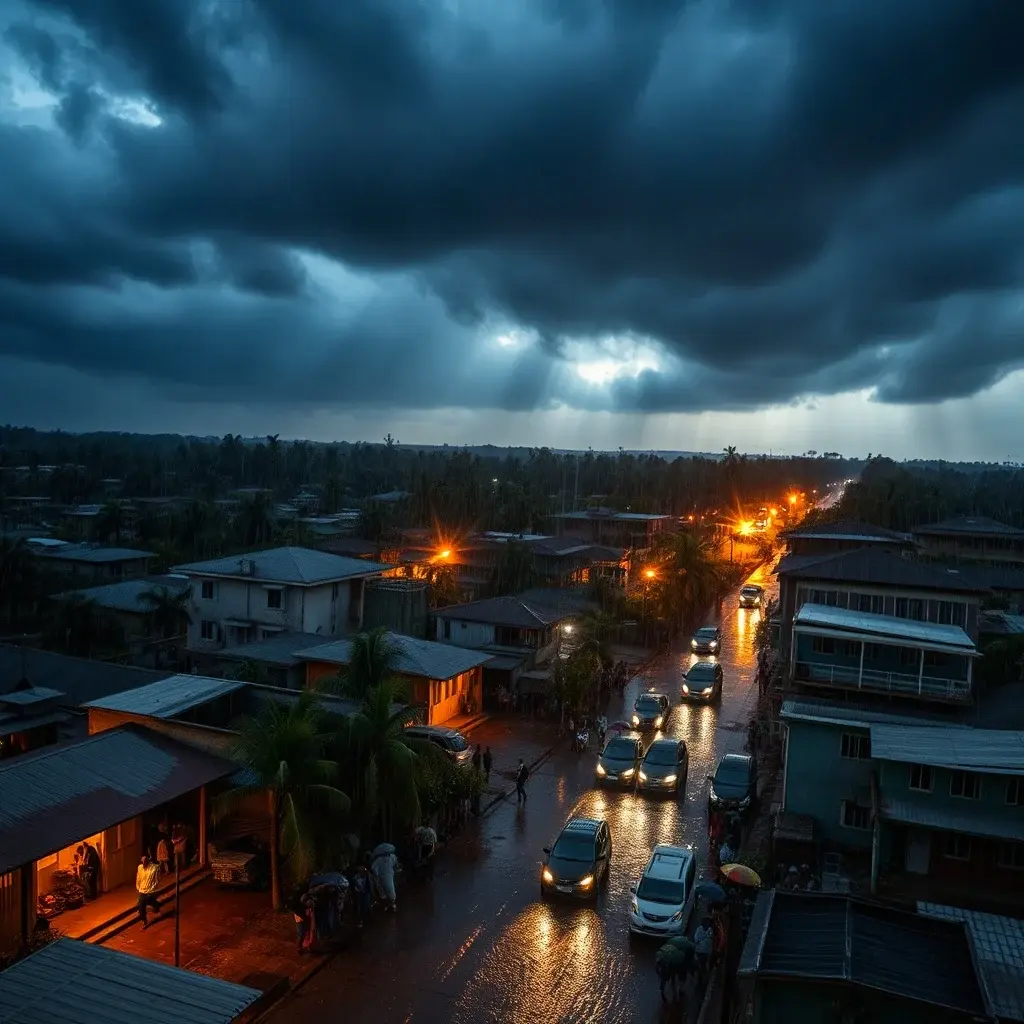
The Ghana Meteorological Agency (GMet) issued a severe weather warning on Sunday evening, May 17, 2026, forecasting moderate to heavy rainfall across significant portions of Ghana. The alert, effective from Sunday evening into the night, specifically identified the Greater Accra, Eastern, Central, and Western regions as likely to experience the most intense weather conditions.
Developing Storm Systems and Cloud Formations
According to a 1700 UTC weather update, a band of rain clouds had formed over inland areas within the coastal sector and parts of the forest zone. This initial formation was projected to trigger moderate rainfall, with potential for isolated heavy downpours.
Compounding these conditions, a separate storm system was observed developing along the southern Ghana-Togo border. This system, advancing from southern Benin, was predicted to generate widespread moderate to heavy rainfall across most of the coastal, middle, and transition sectors of the country.
Specific Areas and Timelines at Risk
The GMet identified specific geographical areas and corresponding timeframes for the expected rainfall. Between 5:00 p.m. and 10:00 p.m. on Sunday, areas such as Ho, Kpando, Akatsi, Anloga, Tema, Accra, Dodowa, Aburi, Koforidua, Akosombo, Akuse, and Kete Krachi were flagged for potential impact.
Further south and west, the warning extended to Winneba, Twifo Praso, Elmina, Cape Coast, Akim Oda, Assin Fosu, and Assin Bereku. These locations were expected to experience the rainfall between 5:00 p.m. and 11:00 p.m.
In the Ashanti and Bono regions, more severe weather conditions were forecast. Obuasi, Kumasi, Ejura, Sefwi Wiawso, Sefwi Bekwai, and New Edubiase were alerted to potential severe weather from 6:00 p.m. until midnight.
Precautionary Measures Advised
The Ghana Meteorological Agency strongly cautioned residents in the affected areas about the potential for strong winds preceding the main storm systems. In light of these forecasts, GMet urged citizens to implement precautionary measures to ensure their safety.
Key advice included avoiding areas known to be prone to flooding. Residents were also instructed to secure any loose outdoor objects that could be dislodged by strong winds and to remain vigilant and alert throughout the forecasted period.
Broader Context of Rainfall in Ghana
Ghana experiences distinct rainy seasons, typically with a major season from April to June and a minor season from September to November. These seasonal rains are crucial for agriculture, which forms a significant part of the nation’s economy. However, periods of intense rainfall, especially when accompanied by poor drainage infrastructure, can lead to widespread flooding.
Recent years have seen increased discussion and concern regarding the impact of climate change on weather patterns globally, including in West Africa. Extreme weather events, such as sudden heavy downpours and prolonged dry spells, are becoming more frequent, posing challenges to infrastructure, livelihoods, and disaster preparedness.
Expert Perspectives and Data
Dr. Emmanuel K. K. Quartey, a climatologist at the University of Ghana, previously noted in a 2025 report that Ghana’s coastal areas are particularly vulnerable to increased rainfall intensity due to urbanization and rising sea levels. “While rainfall is essential, unmanaged intensity coupled with inadequate urban planning can exacerbate flood risks significantly,” he stated.
Data from the National Disaster Management Organization (NADMO) consistently shows that floods are among the most frequent and damaging natural disasters in Ghana, affecting thousands annually and causing considerable economic losses. Preparedness and early warning systems, like the one issued by GMet, are therefore critical components of national disaster risk reduction strategies.
Implications for Residents and Infrastructure
The immediate implication of the GMet warning is the need for heightened awareness and proactive safety measures among residents in the specified regions. Avoiding low-lying areas and securing property can mitigate personal risk and property damage.
For local authorities and emergency services, the warning signals a period requiring increased readiness. Monitoring weather patterns, preparing response teams, and disseminating safety information are crucial steps to manage potential emergencies effectively. Disruptions to transportation, power supply, and daily economic activities are also potential consequences of heavy rainfall and associated flooding.
Looking Ahead: Monitoring and Preparedness
As the country navigates its rainy seasons, continued monitoring by the Ghana Meteorological Agency remains paramount. The agency’s ability to provide timely and accurate forecasts is vital for public safety and national planning. Citizens and relevant agencies will be watching for any updates or changes to the forecast, particularly concerning the potential for flash floods and the duration of the rainfall.
The long-term implications involve the ongoing need for robust urban planning, improved drainage systems, and public education campaigns on disaster preparedness, especially in the face of potentially intensifying weather events linked to climate change. Adapting infrastructure and community resilience strategies will be key to managing future rainfall patterns effectively.








Leave a Reply