
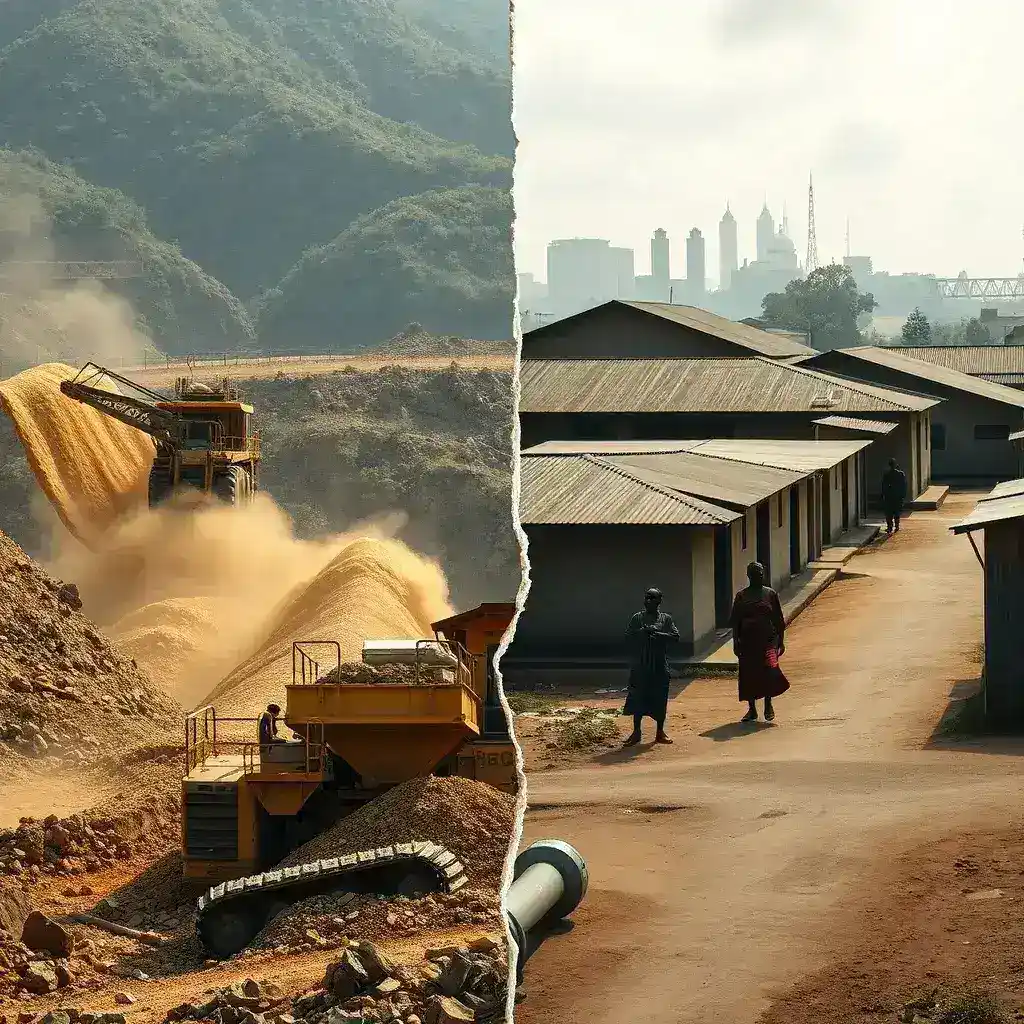
Accra, Ghana – The public discourse in Ghana frequently places blame on mining companies for the underdevelopment of mining communities, with widespread accusations that firms profit from gold extraction while leaving local areas impoverished. This narrative has gained significant traction across media platforms, yet it often sidesteps a critical question: what has the Ghanaian state accomplished with the billions of cedis collected from mining royalties and taxes? The absence of this inquiry suggests a potential failure in the state’s own developmental responsibilities, shifting the focus from corporate actions to governmental accountability.
The Shifting Blame Game
In many mining-affected regions, essential infrastructure such as roads, hospitals, and schools remain underdeveloped, and job opportunities are scarce. The prevailing public sentiment, amplified by media and social commentary, directs immediate calls for action towards mining companies when these deficiencies arise. This has normalized an expectation that mining firms should assume roles typically fulfilled by local government structures, such as district assemblies.
The expectation extends to a wide range of community needs. If roads are in poor condition, the mine is called upon. If a school requires repairs, mining companies are approached. When unemployment figures rise, the mining sector is often singled out as the solution. This has led to a situation where private entities are increasingly seen as providers of public services, a trend that critics argue is unsustainable and misdirected.
Revenue Allocation and State Responsibility
Mining companies in Ghana are obligated to pay various statutory dues to the state, including royalties, corporate taxes, Pay As You Earn (PAYE) taxes, and other levies. A significant portion of these revenues, particularly mineral royalties, is specifically earmarked for local development and is allocated to district assemblies and other government bodies charged with improving conditions in mining communities. Despite these substantial financial inflows to the state, the expected developmental transformation in many areas remains elusive.
Reports suggest that some local assemblies utilize these funds for recurrent expenditures, administrative costs, and allowances, rather than solely for capital development projects. This allocation practice raises questions about the efficacy and transparency of public fund management. Consequently, when communities remain underdeveloped, public anger often bypasses the state institutions directly responsible for development and is instead directed at the visible presence of mining companies.
Mining Companies vs. State Governance
This dynamic has, in effect, normalized a scenario where the state collects revenues while private mining companies are expected to perform the functions of governance and development. This arrangement is viewed by many as illogical from both an economic and institutional standpoint. Mining firms are businesses with primary objectives of investment, job creation, tax compliance, and shareholder returns.
While corporate social responsibility and community engagement are important facets of their operations, these efforts are intended to supplement, not substitute, the constitutional obligations of the state. The argument that foreign mining companies should be replaced by Ghanaian-owned ones with the expectation that profits will remain domestically is also being debated. However, critics point out that regardless of ownership, mining remains a business that must operate profitably, manage costs, and account to investors.
Broader Implications for Economic Sectors
The increasing pressure on mining companies to fill developmental gaps poses a risk to the broader economic landscape. If this expectation continues, other profitable private sectors, such as telecommunications and banking, could face similar demands. This could inadvertently stifle investment and growth in vital economic sectors by imposing responsibilities that are constitutionally assigned to the government.
The focus on mining companies distracts from a crucial national conversation about the development of a coherent and transparent plan for utilizing mineral revenues. The lack of visible development, despite decades of revenue collection, suggests a systemic issue within public administration and resource management.
The Path Forward: Accountability and Transparency
Holding mining companies accountable for responsible operations, environmental stewardship, and meaningful community engagement is essential. Many companies already invest significantly in local development initiatives such as scholarships, infrastructure, and social programs. However, these contributions should be viewed as complementary to government-led development efforts.
The core issue Ghana faces is the need for a clear, transparent national development strategy that effectively channels mining revenues into tangible improvements for affected communities and the nation. Citizens deserve accountability and transparency regarding the utilization of these substantial funds. The public debate needs to shift from a one-sided criticism of mining firms to a comprehensive examination of state performance and governance.
Ultimately, the responsibility for driving national and local development rests with the state. Until Ghana demands the same level of accountability from its governing institutions as it does from mining companies, the fundamental questions surrounding resource management and development will remain unresolved, overshadowed by misplaced blame.









Leave a Reply