
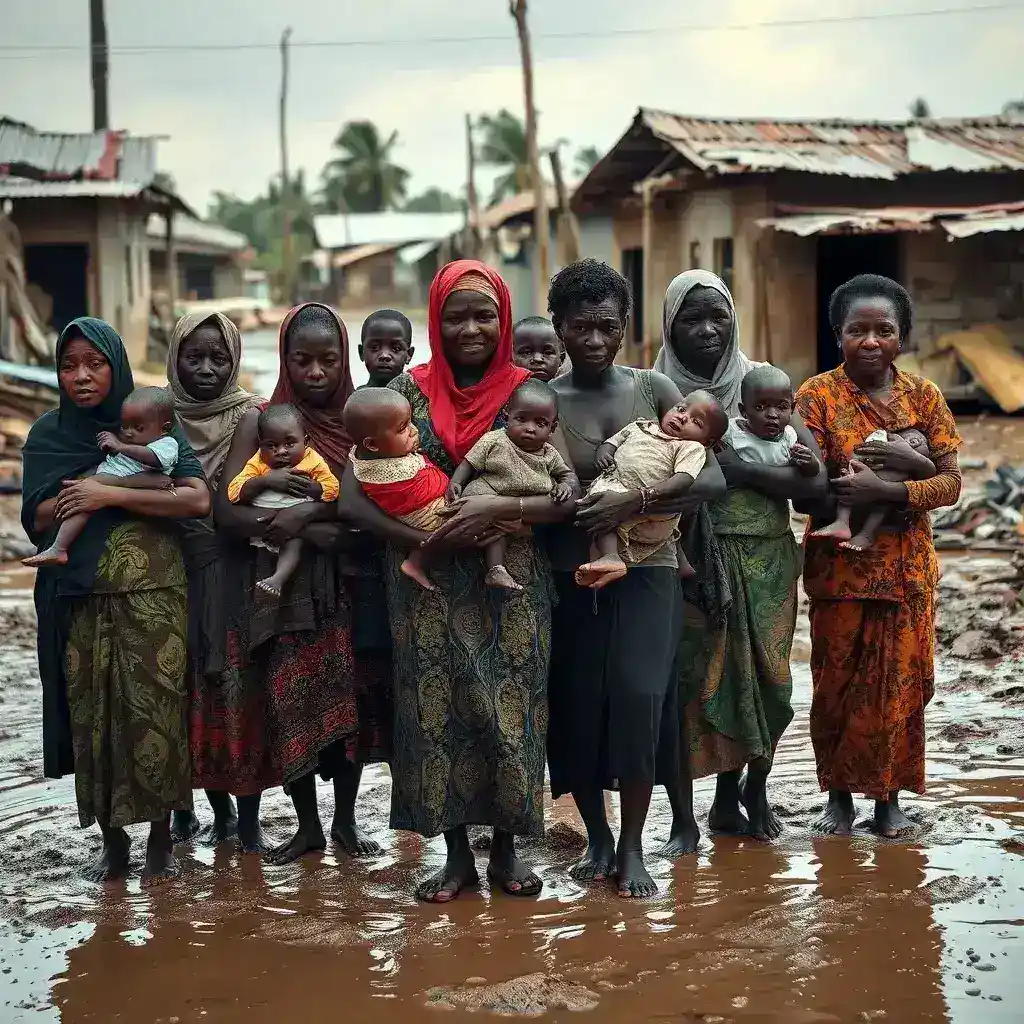
Women in vulnerable communities are shouldering the heaviest social and economic burden following climate disasters, a critical issue highlighted at a national multi-faith dialogue on climate-responsive social protection in Accra. The event, organized by GreenFaith Ghana, convened faith leaders, government officials, civil society organizations, and traditional authorities to address community preparedness and recovery from climate shocks. This discussion arises amidst heightened national focus on climate resilience and shock-responsive social protection systems in Ghana.
Context of Climate Vulnerability
Climate change is increasingly impacting Ghana, leading to more frequent and severe weather events such as floods and droughts. These disasters not only destroy infrastructure and livelihoods but also disrupt the social fabric of communities. The national conversation has therefore shifted towards building resilience and ensuring that social protection systems can effectively respond to these shocks.
Women as Pillars of Recovery
Meryne Warah, Executive Director of GreenFaith Africa, emphasized that women often become the primary caregivers and community organizers in the aftermath of climate-related calamities. “Women at the grassroots communities are always left with the burden of holding the community, holding the family, holding everybody together in the aftermath of disasters,” Warah stated on the sidelines of the dialogue.
Beyond immediate survival needs, climate disasters exacerbate the loss of essential documentation, such as birth certificates, marriage certificates, and medical records. This loss can erase identities and hinder access to vital services and aid for affected families. “The impacts of climate change in most cases tend to take away the identity of people in the community,” she added.
Faith Leaders as First Responders
The dialogue underscored the vital role of faith institutions as first responders. Affected individuals frequently turn to places of worship for refuge, emotional support, and material assistance during crises. “People run to places of worship either for refuge, either to seek support, but sometimes also to lift their spirits,” Warah explained.
This reality necessitates stronger collaboration between government agencies, faith communities, and civil society organizations to bolster grassroots resilience systems. Faith leaders are uniquely positioned to provide immediate, localized support, bridging the gap until formal aid arrives.
Community Impacts of Energy Projects
Concerns were also raised regarding the environmental and social impacts of energy infrastructure projects. Nana Morkeh Kpanyinli IV, Chief of Ngalekyi in the Ellembelle District, highlighted the ongoing struggles of residents near the Ghana Gas enclave. For the past decade, their traditional livelihood as a fishing community has been severely undermined by gas operations.
“For the past ten years, our job being fishing community, we cannot get any fish to fish for our livelihood,” the Chief lamented. While acknowledging the importance of national development and Ghana Gas operations, he called for enhanced support systems and alternative livelihood programs for affected communities.
Government Initiatives and the Path Forward
Officials from the Ministry of Energy and Green Transition acknowledged the need for broad societal participation in climate action. Dr. Robert Sogbadji, Deputy Director for Renewables and Green Emerging Technologies, stated, “Climate change is not only a government initiative, but it’s supposed to be implemented by everyone.”
The Ministry is implementing initiatives such as solar mini-grids for island communities, solar irrigation systems, and LPG expansion programs, alongside efforts to reduce gas flaring as part of its energy transition strategy. These measures aim to reduce emissions and improve energy access across the country.
Focus on Vulnerable Populations
Despite these efforts, stakeholders at the dialogue stressed that climate action must move beyond policy pronouncements to tangible protection for vulnerable communities. The disproportionate burden placed on women, who often lead recovery efforts long after disasters strike, requires specific attention and targeted support mechanisms.
The discussions signal a growing recognition that effective climate resilience and social protection strategies must be gender-sensitive and deeply rooted in community needs. Future interventions will likely need to integrate support for documentation recovery, alternative livelihoods, and strengthen the capacity of local institutions, particularly faith-based organizations, to respond to climate shocks.







Leave a Reply