
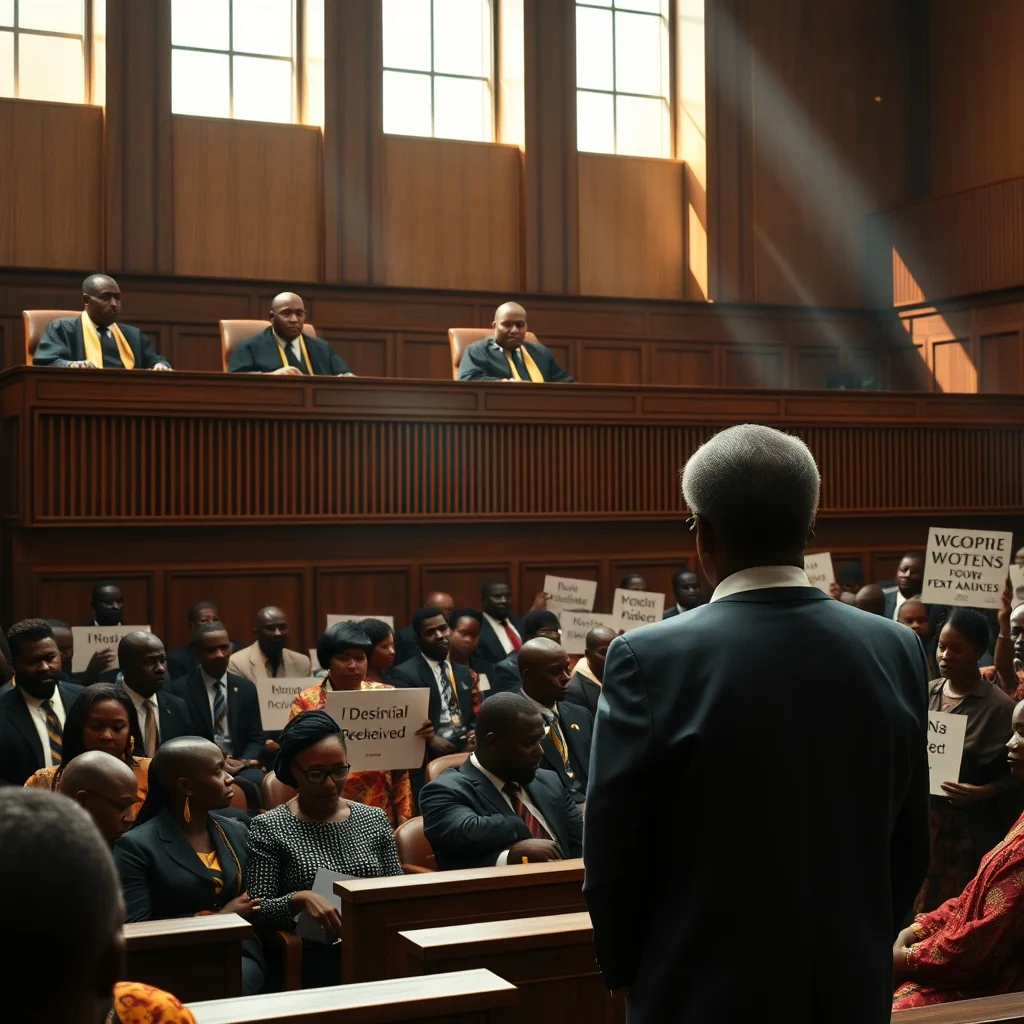
In a landmark decision delivered in Accra on Thursday morning, a three-member panel of the Court of Appeal has unanimously overturned the Bank of Ghana’s (BoG) August 2019 revocation of GN Savings and Loans Company Limited’s operating license. The court ruled that the central bank’s action was unfair and unreasonable, ordering the Receiver, Eric Nana Nipah, to return possession, management, and control of the company to its shareholders, led by Groupe Nduom founder Dr. Papa Kwesi Nduom. This ruling marks a significant legal setback for the BoG’s 2018-2019 banking sector clean-up exercise.
The appellate panel found that the grounds cited by the Bank of Ghana for the revocation did not meet the standard of reasonableness required by law. The judgment effectively nullifies all subsequent actions, including the appointment of the Receiver and the High Court’s January 2024 decision that upheld the revocation. On legal standing, GN Savings and Loans is now a licensed financial institution, though not yet an operational one.
Background to the Revocation
The saga began in January 2019 when the Bank of Ghana downgraded GN Bank, then operating as a universal bank, to a savings and loans company, renaming it GN Savings and Loans Company Limited. The central bank cited persistent breaches of prudential requirements, including capital adequacy shortfalls, liquidity challenges, significant exposures to related parties, and weak governance.
Seven months later, on August 16, 2019, the BoG, under Governor Dr. Ernest Addison, revoked the company’s license entirely. This action was part of a wider financial sector clean-up that saw over twenty savings and loans and finance house companies, in addition to nine commercial banks, lose their operating licenses.
The Bank of Ghana’s Case
The regulator presented a detailed case against GN Savings and Loans. According to the BoG’s figures, the institution’s capital adequacy ratio stood at a negative 61.20% by May 2019, with an adjusted net worth of negative GH¢30.70 million. These figures indicated a violation of the Banks and Specialised Deposit-Taking Institutions Act, 2016 (Act 930).
Further allegations included consistent breaches of the 25% regulatory limit on exposures to related companies, a failure to publish 2018 audited accounts, and the alleged transfer of over $62 million in depositor funds to an affiliated US-based entity, International Business Solutions, without adequate documentation. The BoG characterized these actions as violations of the Foreign Exchange Act and related central bank notices.
Groupe Nduom’s Defense
Groupe Nduom consistently rejected the Bank of Ghana’s narrative. The company asserted that a proper assessment of its financial records would demonstrate solvency. They highlighted a portfolio of government infrastructure receivables, managed through Gold Coast Advisors, valued at over GH¢2.2 billion. Groupe Nduom maintained that these receivables, owed by the state and its agencies, represented the true source of any liquidity strains.
Groupe Nduom argued that the revocation was politically motivated rather than a regulatory necessity, implemented without considering the government’s own payment arrears. The family also contended that the action violated their fundamental human rights and constituted discrimination, pointing to what they perceived as differential treatment compared to other struggling financial institutions.
The Legal Journey
Dr. Nduom and shareholders initiated legal proceedings on August 30, 2019, filing a suit at the Human Rights Division of the Accra High Court to quash the revocation and regain control of the company. The case experienced significant delays, including a jurisdictional dispute that led the Court of Appeal to refer the matter to the Ghana Arbitration Centre in 2022.
However, the Supreme Court ruled in July 2023 that the High Court retained jurisdiction, marking the shareholders’ first major judicial victory. The case returned to the High Court, where Justice Gifty Agyei Addo dismissed the application on January 24, 2024. The judge found that the BoG had acted within its powers, GN Savings and Loans had failed to prove its solvency, and allegations of malice, unreasonableness, and discrimination were unfounded. The applicants were ordered to pay GH¢50,000 in costs.
Undeterred, Dr. Nduom’s legal team, led by Dr. Justice Srem-Sai, filed an appeal just five days later, on January 29, 2024.
Years of Speculation and Rumors
Throughout 2025 and into early 2026, the appeal process generated considerable social media discussion, often fueled by rumors. Claims circulated on platforms like TikTok, Facebook, and X, suggesting that President John Dramani Mahama, who took office after the December 2024 elections, had restored GN Bank’s license. These rumors were repeatedly debunked by fact-checking organizations and the Bank of Ghana’s official registry.
Tensions escalated in February 2026. An interview in the Daily Graphic with the new BoG Governor, Dr. Johnson Asiama, appeared to rule out any reinstatement for GN Savings and Loans. However, a clarification issued by the newspaper three days later stated that the Governor’s remarks pertained to a different defunct bank. The Court of Appeal heard the substantive appeal on February 10, 2026.
What Happens Next
The Bank of Ghana has yet to issue a formal response to the Court of Appeal’s ruling. The central bank has limited options, including applying for a stay of execution to halt the order returning assets to shareholders or pursuing a further appeal to the Supreme Court. Given the BoG’s historical defense of its clean-up actions and the political significance of the GN Savings and Loans case, both are considered likely.
Even if the ruling stands, a significant practical challenge remains in transforming a court-ordered license restoration into a functioning bank. GN Savings and Loans is not currently listed on the Bank of Ghana’s registry of licensed institutions. The Receiver’s six-year tenure involved asset disposal, partial depositor claims settlement, and the winding down of the company’s operations. Reconstituting the entity as a going concern would necessitate substantial recapitalization and regulatory cooperation.
This appellate court decision is the first of its kind to find a clean-up era revocation unreasonable. It could influence other pending legal claims from former owners of collapsed financial institutions who have argued they faced similar unfair treatment. For Groupe Nduom, the judgment serves as a vindication of their long-held position. It also represents a tangible legal step forward for the over 3,000 former GN employees and their families who have campaigned for restoration.
For the Bank of Ghana, this ruling is the most significant judicial rebuke concerning the banking sector clean-up. It arrives at a time when the political narrative surrounding the exercise has shifted, potentially impacting the central bank’s standing and future regulatory actions.







Leave a Reply