
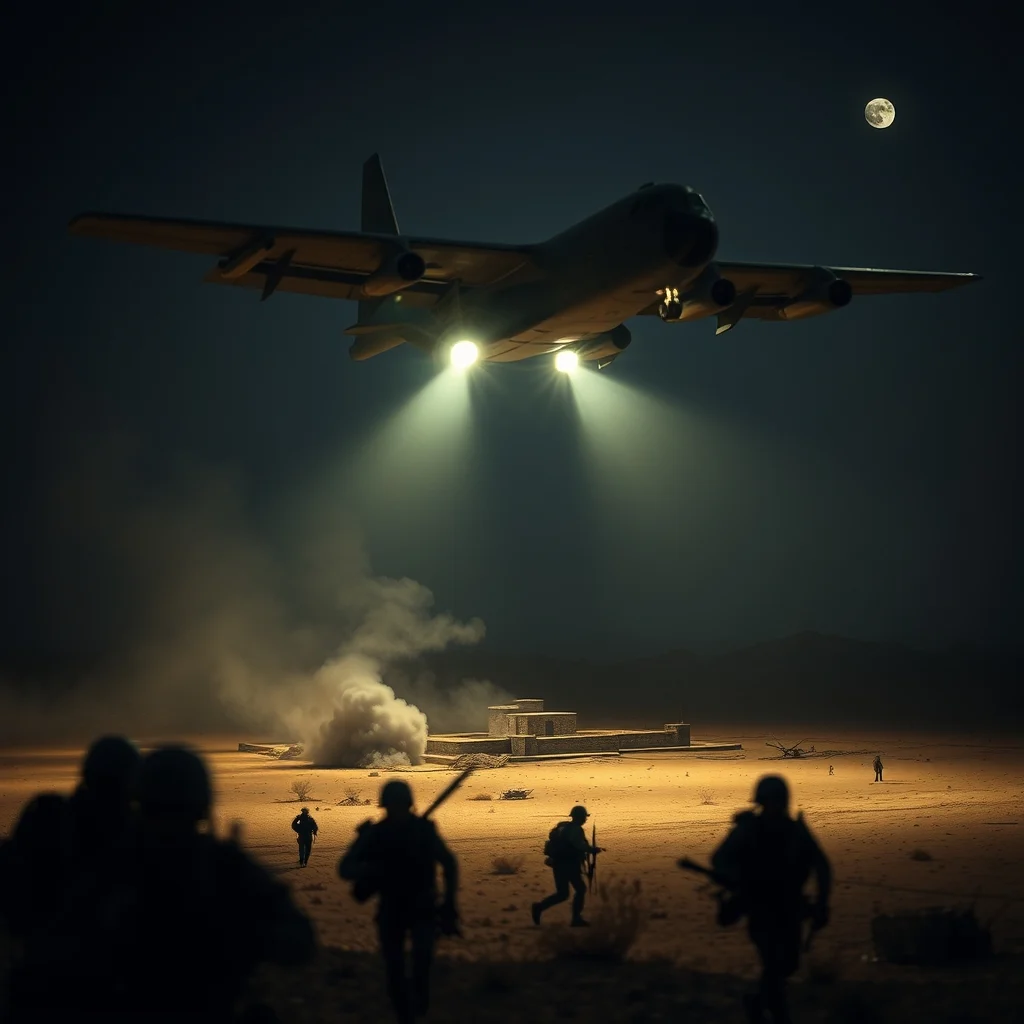
A coordinated US-Nigerian military operation in northeastern Nigeria on Saturday eliminated Abu-Bilal al-Minuki, identified by Washington as the global second-in-command of the Islamic State group, in a significant counterterrorism mission in the Lake Chad Basin. The strike, which occurred shortly after midnight on May 16, underscores Africa’s growing strategic importance in the international fight against ISIS.
Operation Details and Official Statements
The four-hour operation, designated a “precision air-land assault,” targeted a fortified compound in Metele, Borno State, a known stronghold for the Islamic State West Africa Province (ISWAP). Months of intelligence gathering, surveillance, and infiltration preceded the mission, which reportedly involved US military assets like MQ-9 Reaper drones and an AC-130 gunship, supported by Nigerian human intelligence.
US President Donald Trump announced the operation on X, stating that brave American forces and the Nigerian Armed Forces “flawlessly executed a meticulously planned and very complex mission to eliminate the most active terrorist in the world.” He added that al-Minuki would no longer terrorize Africa or plan operations against Americans, diminishing ISIS’s global operations.
Nigerian President Bola Ahmed Tinubu confirmed the operation, calling it a “daring joint operation that dealt a heavy blow to the ranks of the Islamic State.” He stated that early assessments confirmed the elimination of al-Minuki, also known as Abu-Mainok, and several lieutenants.
AFRICOM Commander Gen. Dagvin Anderson described the mission as evidence of deepening military cooperation, emphasizing that the US and Nigeria will “relentlessly pursue and neutralise terrorist threats.” The Nigerian Defence Headquarters clarified that while al-Minuki was prematurely reported dead in 2024, this operation definitively eliminated him.
The Target: Abu-Bilal al-Minuki
Little is publicly known about al-Minuki, who operated under aliases including Abu-Mainok. US officials designated him a ‘Specially Designated Global Terrorist’ in 2023, accusing him of supervising ISIS operations across West Africa and the Sahel. He was believed to play a central role in ISIS’s global coordination of international affiliates.
According to AFRICOM, al-Minuki oversaw global financial operations, weapons procurement, drone programs, explosives manufacturing, and propaganda for ISIS-linked groups in Africa and the Middle East. He was also linked to hostage-taking and had prior associations with Boko Haram before its splinter group pledged allegiance to ISIS in 2015. Reports also tie him to the 2018 abduction of schoolgirls in Dapchi.
A Region Scarred by Violence
For residents of northeastern Nigeria, the news brought cautious relief but also painful memories of nearly two decades of conflict. Since the Boko Haram insurgency began in 2009, violence linked to jihadist groups has killed tens of thousands and displaced millions across Nigeria, Chad, Niger, and Cameroon.
In Maiduguri, residents expressed a learned skepticism, noting that extremist organizations often adapt quickly after leadership losses. “The killing of one person doesn’t mean the network or the armed group is obliterated,” commented a Research Fellow at the Kofi Annan International Peacekeeping Training Centre, advocating for comprehensive operations against these groups.
Security analysts suggest that addressing root causes like marginalization, injustice, corruption, and economic disparity is crucial to preventing the rise of such armed groups. They also call for enhanced collaboration among sub-regional organizations like ECOWAS and the AU, and the active deployment of forces like the African Standby Force.
Africa’s Growing Role in Counterterrorism
The strike highlights Africa’s increasing centrality in global counterterrorism efforts, particularly as ISIS has lost territory in the Middle East. Its affiliates in Africa, especially in the Sahel and Lake Chad Basin, have expanded their influence.
US intelligence has warned of increasingly sophisticated extremist groups in West Africa, possessing growing access to weapons, financing, and drone technology. The operation against al-Minuki reflects a broader US strategic shift to contain jihadist expansion on the continent.
This operation follows a series of targeted strikes against ISWAP commanders, including Ammar Bin-Umar in April 2022 and two senior commanders, Ya Muhammad and Abou Dawuda, in February 2024. The death of former ISWAP leader Abu Musab al-Barnawi was also announced in 2021.
Despite these military successes, insecurity persists. Security Consultant Richard Kumadoe emphasized the need for greater collaboration, resource pooling, and robust security infrastructure among African nations to mitigate attacks and their devastating socio-economic impact.
For civilians in northeastern Nigeria, the war is measured by tangible improvements in safety, such as children attending school and farmers returning to fields. “What we want is peace, not just announcements,” said Musa Ibrahim, a displaced trader, reflecting the sentiment of many who await lasting peace rather than symbolic victories.
Looking Ahead
The effectiveness of this strike in degrading ISWAP’s capabilities and the potential for retaliation remain key points to watch. Observers will also monitor the ongoing collaboration between US and Nigerian forces and whether this operation signals a sustained, intensified effort to eradicate extremist threats in the region, while also addressing the underlying socio-economic factors that fuel insurgency.










Leave a Reply