
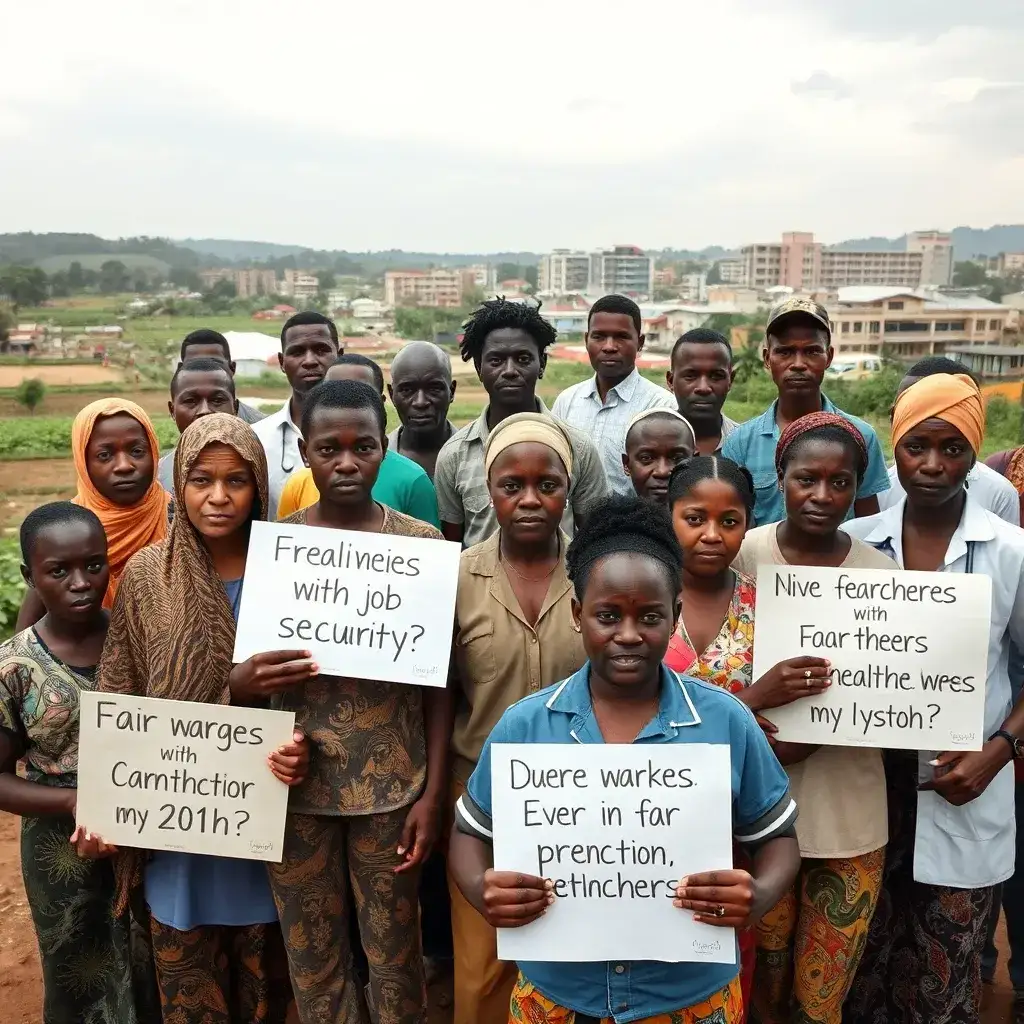
Accra, Ghana – The Minority caucus on Parliament’s Employment, Labour Relations and Pensions Committee has voiced significant concerns regarding the deteriorating conditions faced by Ghanaian workers, citing widespread issues such as delayed salary payments, job losses, and mounting uncertainty across various economic sectors. The statement, released in observance of International Workers’ Day, calls for immediate governmental intervention to address what they describe as a deepening labour crisis.
Context of Worker Discontent
Ghanaian workers, recognized for their crucial role in national development, are currently experiencing a period of heightened economic stress. The caucus highlights that the foundational strength of the economy and the stability of communities are directly tied to the efforts of the workforce.
However, this year’s International Workers’ Day serves as a stark reminder of the hardships many are enduring. The current economic climate has created a challenging environment, contrasting sharply with the intended spirit of honouring and supporting the labour force.
Key Sectors Under Strain
The distress is particularly evident in the agricultural sector, where cocoa farmers, the backbone of Ghana’s agricultural exports, are reportedly facing declining and uncompetitive producer prices. This situation is significantly eroding their incomes and posing a direct threat to their livelihoods.
Beyond agriculture, fears of job insecurity are escalating across multiple sectors. The caucus reports growing concerns about mass dismissals and a general lack of employment stability, leaving numerous families without reliable income sources and contributing to widespread economic uncertainty.
Public Sector Payment Delays
Delays in salary payments are also a major point of contention, especially within the public sector. Teachers have reportedly endured prolonged waits for their salaries and postings, impacting their financial stability and morale.
Similarly, health professionals have been compelled to resort to protests to secure payments that are rightfully theirs. These actions underscore the severity of the payment delays and the frustration experienced by essential service workers.
Broader Economic and Social Implications
The Minority caucus emphasizes that these conditions extend beyond individual hardship, having broader implications for national development. They argue that such unfair treatment not only undermines worker morale and productivity but also threatens the very fabric of the nation’s progress.
The caucus is urging the government to transition from mere expressions of appreciation to concrete policy actions. The call is for a strategic approach that protects jobs and ensures fair remuneration for all workers, charting a course that is both just and equitable.
Call for Action and Unity
In its statement, the Minority caucus strongly condemned the ongoing unfair treatment of Ghanaian workers and demanded its immediate cessation. They are advocating for reforms that align with the principle of placing people at the centre of development initiatives.
Furthermore, the caucus appealed for unity among various labour groups and stakeholders. They encourage workers and unions to stand together in safeguarding the rights, dignity, and welfare of the entire labour force.
Looking Ahead
As Ghana graves with these labour challenges, attention will be on the government’s response to the Minority’s concerns. The effectiveness of any policy interventions will be critical in restoring confidence and ensuring the well-being of the nation’s workers. Observers will be watching to see if immediate actions are taken to address salary delays and job security issues, particularly in the agricultural and public sectors, and what measures will be implemented to foster a more stable and equitable labour environment moving forward.








Leave a Reply