
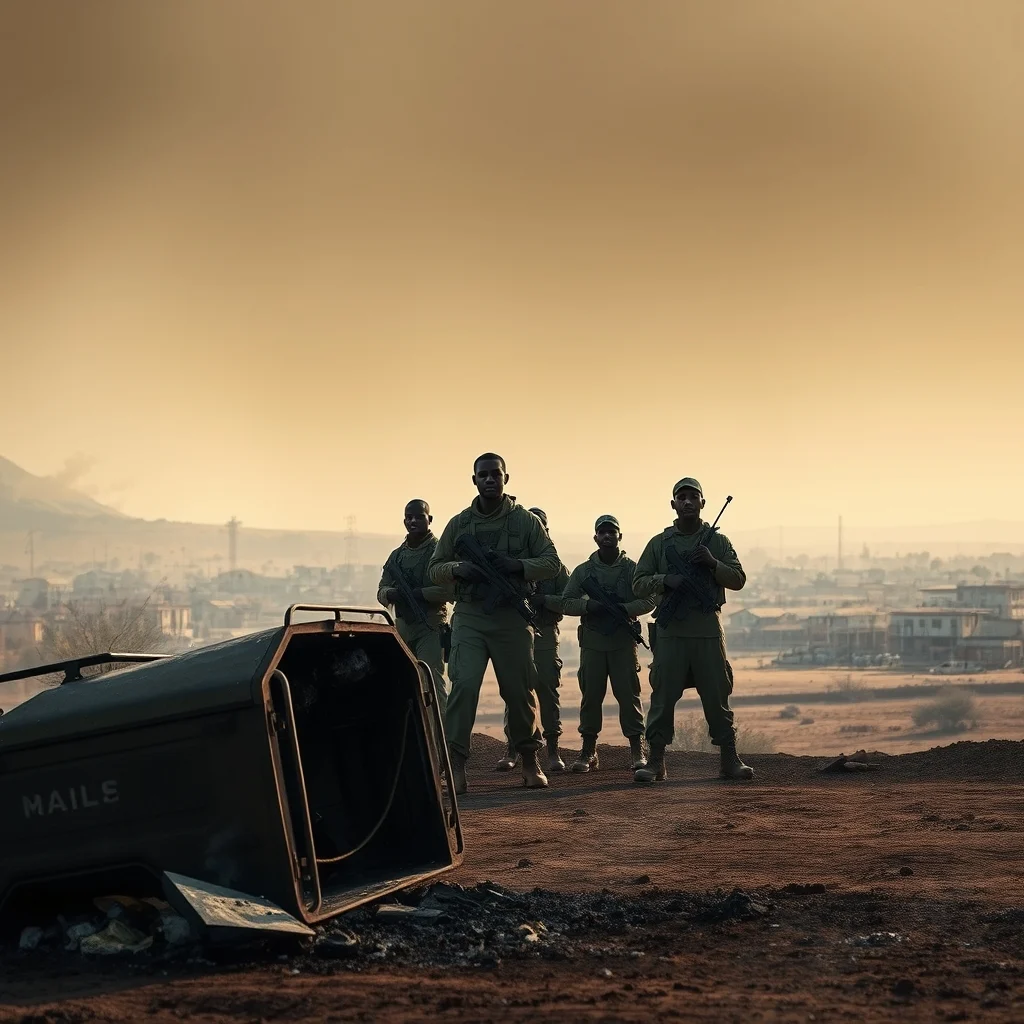
The assassination of Mali’s Defence Minister Sadio Camara in coordinated April 2026 attacks, claimed by Jama’at Nusrat al-Islam wal-Muslimin and Tuareg separatist factions, marks a dangerous escalation of the nation’s crisis. The attacks, which included a car bomb at Camara’s residence in Kati and assaults on military installations near Bamako, signal an erosion of state authority and raise critical questions about the cost of sovereignty without stability.
Context: A Fractured Landscape
Mali has been grappling with a complex crisis involving jihadist insurgencies and Tuareg separatism for years. The ruling military junta, which seized power in a 2020 coup, has increasingly pursued an independent foreign policy, notably withdrawing from the Economic Community of West African States (ECOWAS) alongside Burkina Faso and Niger in early 2024. This withdrawal was framed as a reclaiming of sovereignty, but it has significantly narrowed Mali’s diplomatic and economic options.
Assassination Exposes Deep Vulnerabilities
The April 2026 attacks were not isolated incidents but strategic operations that exposed critical vulnerabilities within Mali. Firstly, the ability of insurgents to penetrate the regime’s most secure zones, including the Defence Minister’s residence, demonstrates a severe security breach.
Secondly, Mali’s significant investment in alternative external security partnerships, reportedly including Russian Wagner Group forces, has not yielded the expected resilience on the ground. This suggests that external security arrangements alone are insufficient to counter the multifaceted threat.
Thirdly, the conflict is no longer confined to peripheral regions but is demonstrably closing in on the political centre of power in Bamako. The attempts to blockade the capital and seize strategic northern towns indicate a growing ambition by insurgent groups to control territory and undermine state authority directly.
ECOWAS: Irrelevance or Evolving Necessity?
Mali’s withdrawal from ECOWAS, while presented as a move towards self-determination, has practical implications. It has limited its access to regional economic and diplomatic support at a time of heightened need. However, geographical realities and shared security threats mean that ECOWAS remains relevant.
Jihadist networks operate across borders, destabilizing the Sahel and increasingly impacting West African coastal states. Even outside formal membership, Mali needs to engage in regional intelligence sharing, border monitoring, and counterterrorism coordination. A flexible “security compact” could offer a pathway for such cooperation.
Economic interdependence further underscores the need for regional engagement. As a landlocked nation, Mali relies heavily on its neighbours for trade routes, port access, and energy. ECOWAS states hold leverage that could be used for calibrated pressure and incentives, potentially linking transit route access and economic cooperation to political progress.
Regional Stakes and Shifting Strategies
The implications of Mali’s deepening instability extend far beyond its borders. The contagion risk for neighbouring countries like Senegal, Côte d’Ivoire, and Ghana is significant, as fragile institutions and security capacities are already strained.
Past approaches involving sanctions and suspensions have proven limited in moderating Mali’s leadership or improving security. Instead, isolation appears to have hardened positions and accelerated Mali’s pivot towards new alliances. Experts suggest a shift is needed from punitive measures to conditional engagement, offering pathways back into regional cooperation tied to clear benchmarks, electoral timelines, humanitarian access, and structured security collaboration.
The Path Forward: Rebuilding Legitimacy
The assassination of Minister Camara highlights that the current trajectory—militarized governance, externalized security, and regional disengagement—is unsustainable. There is a mutual mistrust between Mali’s leadership and ECOWAS, and external interventions have yet to deliver lasting stability.
Rebuilding overlapping layers of legitimacy is crucial. This includes domestic legitimacy through a credible and time-bound political transition, local legitimacy via community-centered security and governance approaches, and regional legitimacy through pragmatic re-engagement with ECOWAS, even outside formal structures.
Regional Stress Test
Mali’s current trajectory serves as a critical stress test for West Africa. The region must adapt its institutions to new political realities, balance principles with pragmatism, and foster collective action against shared threats. The cost of failure will be widespread, impacting security, cooperation, and prospects for democratic recovery across the entire region. The situation in Mali is not just a national crossroads but a reflection of the vulnerabilities and the ongoing, unfinished project of regional solidarity in West Africa.










Leave a Reply