
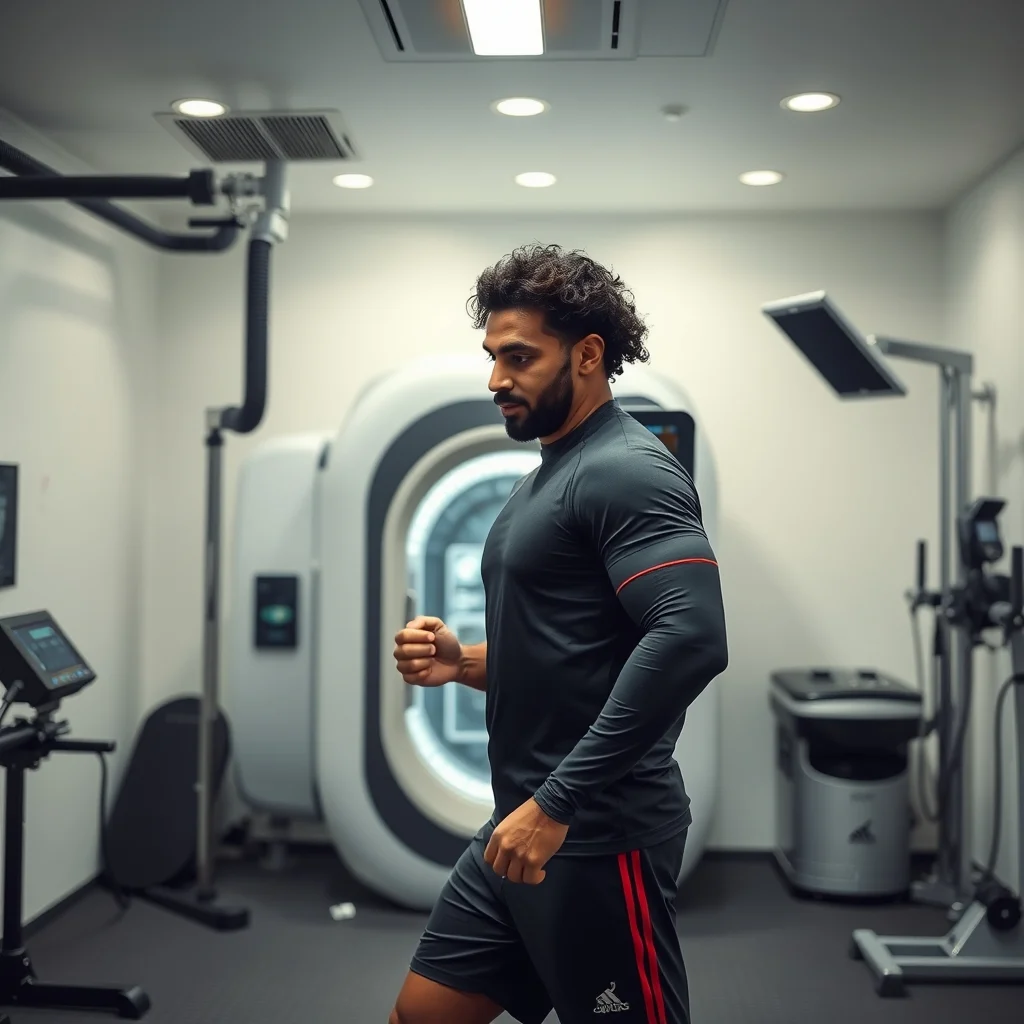
Mohamed Salah, the prolific Egyptian forward, is set to depart Liverpool at the end of the season, marking the end of a transformative era under manager Jürgen Klopp. During his tenure, Salah netted 156 goals, securing numerous titles including the Champions League and Premier League, cementing his status as an “all-time great” and a global icon whose influence extends far beyond the pitch.
A Journey Forged in Persistence
Salah’s path to footballing greatness began in Nagrig, a small village in Egypt. From the age of 14, his dedication was evident as he endured a nine-hour daily bus journey to train in Cairo with Al Mokawloon Al Arab. This early commitment was crucial, as he later recalled a period of bench-warming that tested his resolve.
“I was on the bench for two months,” Salah shared with Sports Illustrated. “I told my father, ‘I can’t go… every day and be on the bench.’ I was crying.” His father’s words of encouragement, emphasizing that great success often follows significant struggle, became a pivotal moment. “Just keep focused, train hard and I’m sure you will play again and be great,” he advised, a sentiment that resonated deeply with Salah.
European Ambitions and Career Evolution
After several years in Egyptian club football, Salah’s talent earned him a move to Europe, signing with Basel in the Swiss Super League. He approached this new chapter with a clear objective: to transform himself into a player of global recognition and admiration.
His European journey wasn’t an immediate triumph. Struggles for consistent game time at Chelsea led him to Serie A, where he revitalized his career with Fiorentina and Roma. Upon his return to England with Liverpool in 2017, Salah expressed his eagerness to succeed in the Premier League, vowing to give his all for the club and win silverware.
“If you look at me now and five years ago, everything has changed both mentally and physically,” Salah told BBC Sport during his debut season at Anfield. He emphasized a relentless drive for self-improvement, stating, “I’m trying to improve myself every day. I always like to put myself under pressure to improve more.” His life revolved around football, a singular focus that defined his approach.
The Making of an “Egyptian King”
Salah’s impact at Liverpool transcended statistics, inspiring passionate terrace chants like “Mo Salah, Mo Salah, Mo Salah, running down the wing, Salah, la-la, la-la, the Egyptian king!” This anthem, set to the tune of James’ “Sit Down,” even drew praise from the band’s frontman, Tim Booth, who acknowledged Salah’s exceptional talent as a worthy recipient of their music.
Another fan favorite, a re-write of Dodgy’s “Good Enough,” highlighted Salah’s cultural significance and his pride in his Muslim faith. The lyrics, “If he scores another few, then I’ll be Muslim too,” reflected a deep admiration and connection that resonated with fans from diverse backgrounds.
Statistically, Salah’s speed is remarkable. Official Opta statistics recorded him reaching a top speed of 36.64 km/h in 2021, making him one of the fastest players in Premier League history. His signature move involves attacking from the right flank, cutting inside, and utilizing feints and explosive pace to beat defenders before finishing with his favored left foot. Recognizing the need for versatility, Salah also dedicated himself to strengthening his weaker right foot through rigorous training.
Elite Lifestyle: Diet, Recovery, and Mental Fortitude
Salah’s commitment extends far beyond the training pitch. His post-training routine is meticulously crafted, focusing on diet, exercise, and recovery. He has equipped his home with elite facilities, including a hyperbaric oxygen chamber, to accelerate recovery and combat fatigue, describing his home setup as “like a hospital.”
His regimen includes twice-daily gym sessions, followed by ice baths to reduce inflammation and soreness. Yoga and Pilates are incorporated to enhance flexibility and prevent injuries. Nutrition is paramount, with Salah adhering to a strict diet rich in protein and greens, consuming five to six balanced meals daily. He avoids sugar and opts for gluten-free brown bread, though he enjoys traditional Egyptian dishes like koshary when back home.
Mental well-being is equally prioritized. Salah dedicates 15-20 minutes daily to meditation, focusing on his aspirations and maintaining mental clarity. Chess is a regular practice, sharpening his concentration and decision-making abilities.
A Symbol of Hope and Social Cohesion
In Egypt, Salah is a national hero, embodying “hope for every Egyptian child.” He embraces this role, encouraging others to strive for self-improvement and to “dream and feel they can do something.” His philanthropic efforts through the Mohamed Salah Charity Foundation in Nagrig provide support to orphans, widowed women, and the less fortunate.
In Liverpool, Salah has become a symbol of pride, contributing to social cohesion and reportedly even a reduction in hate crime. His presence has also attracted a growing number of Muslim fans to Anfield, fostering a more inclusive atmosphere.
Jürgen Klopp lauded Salah’s innate goal-scoring instinct, calling it something that “cannot be trained or learned. It is inside him.”
Future Prospects and Enduring Legacy
Speculation about Salah’s next career move is rife, with Saudi Pro League clubs reportedly showing continued interest following a rejected $200 million offer in 2023. Potential destinations also include Major League Soccer, the Turkish Süper Lig, or a return to Italy.
Internationally, winning the Africa Cup of Nations remains a significant ambition. He is also expected to lead Egypt in the 2026 World Cup, which will take place shortly after his 34th birthday. Maintaining his elite performance level, heavily reliant on pace and acceleration, may present challenges as he navigates the later stages of his career.
Regardless of his next destination, Mohamed Salah’s legacy as “the Egyptian king” is secure. For his millions of fans, from the Mersey to the Nile, his journey represents inspiration, dedication, and the realization of dreams.





Leave a Reply