
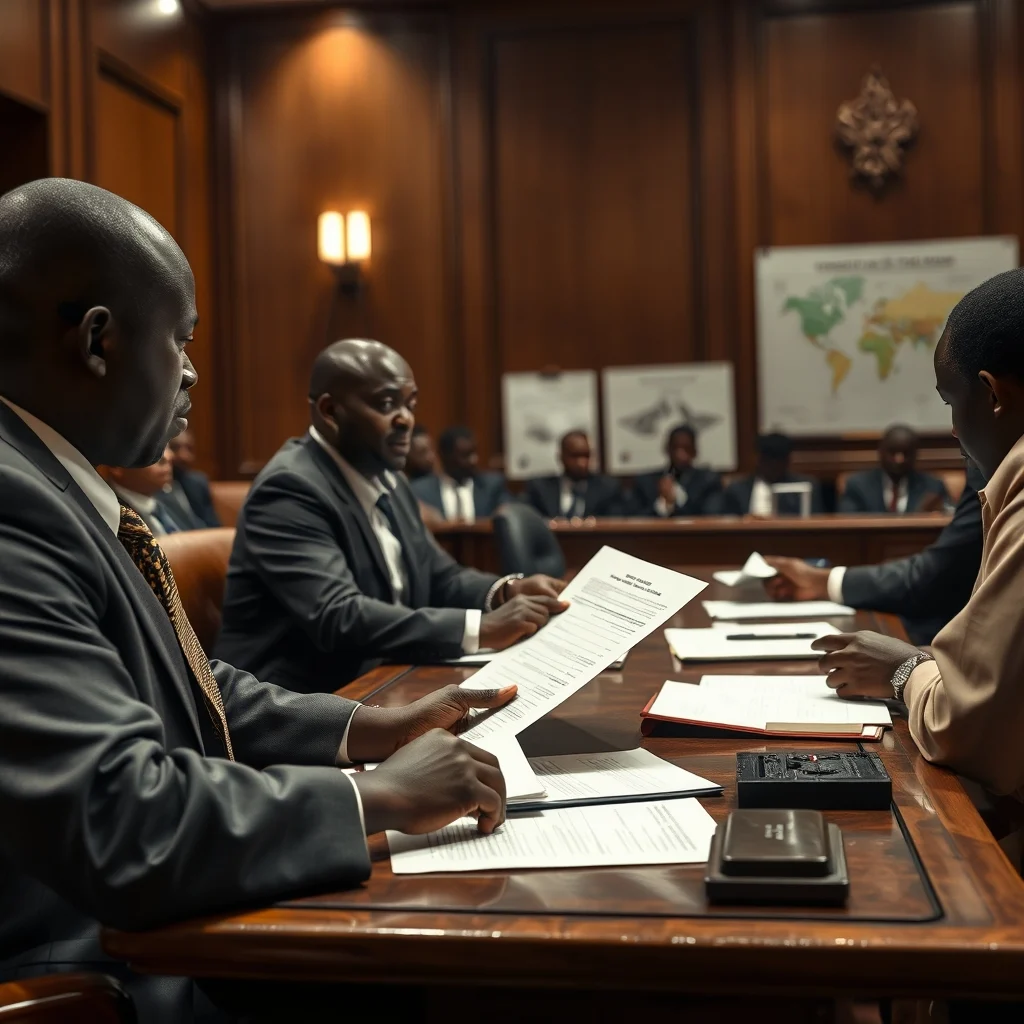
Proceedings at the Criminal Court 4 Division of the High Court in Accra have revealed significant weaknesses in the Republic’s case against Bernard Antwi-Boasiako, also known as Chairman Wontumi, and Akonta Mining Limited. The prosecution has failed to present credible evidence demonstrating that Chairman Wontumi assigned mining rights, authorized illegal mining, or personally profited from alleged unlawful activities, according to testimony and defense arguments.
Context of the Allegations
The case, which garnered considerable public attention from its inception, involves serious allegations of illegal mining and the unauthorized transfer of mining rights. These accusations were widely publicized, but the focus has now shifted to the courtroom where evidence is paramount.
Legal Requirements for Mining Rights Assignment
Under Ghana’s Minerals and Mining Act, 2006 (Act 703), the assignment or transfer of mineral rights is a legally regulated process. It requires formal written documentation, adherence to strict regulatory procedures, and explicit ministerial approval. The law mandates statutory compliance under Ghana’s mining regulations for any such transfer to be considered lawful.
Evidence Presented in Court
Expert mining testimony presented during the proceedings has underscored these legal requirements. Crucially, the prosecution has yet to produce several key pieces of evidence. These include any written assignment agreement, ministerial approval for the transfer of rights, or a payment trail linking Chairman Wontumi to alleged illegal mining proceeds.
Furthermore, there is a lack of operational authorization proving Akonta Mining engaged in illegal mining. No evidence has been presented showing Chairman Wontumi directed, supervised, or financed illegal mining activities, nor have any gold proceeds been traced to him. The defense contends that the prosecution relies on assumptions and conjectures, attempting to criminalize alleged verbal interactions that do not meet the legal threshold for assignment of mining rights.
Distinguishing Reclamation from Rights Assignment
The court also heard expert evidence clarifying the distinction between reclamation activities and the assignment of mining rights. Testimony indicated that providing support services for reclamation within mining concessions does not inherently constitute a transfer of mineral rights.
A defense witness emphatically stated that any assignment not conveyed in a deed and expressly approved by the Minister responsible for Mines is not recognized by Ghanaian law. This statement directly addresses a core element of the prosecution’s case.
Burden of Proof and Legal Standards
The defense argues that after months of investigation and public commentary, the prosecution has failed to produce the basic documentary evidence expected in a criminal prosecution of this nature. Suspicion, public opinion, political commentary, and media headlines cannot substitute for legal proof. The constitutional standard for conviction remains proof beyond a reasonable doubt.
This principle aligns with established legal precedents, such as the Ghanaian Supreme Court case of Kpebu v Attorney-General, which reaffirmed constitutional protections, due process, and the presumption of innocence. The defense maintains that courts must act as guardians of fairness and the rule of law, especially when political attention surrounds a case.
Implications and Future Outlook
Chairman Wontumi has reportedly cooperated with lawful procedures and demonstrated confidence in the judiciary. The defense asserts that the case must be decided solely on evidence, law, and constitutional fairness, free from political emotions or public pressure. The Republic bears the burden of proof, which cannot be shifted.
Based on the evidence currently before the court, the defense argues that serious and reasonable doubt persists. The outcome of this case hinges on the court’s assessment of the presented evidence against the stringent legal requirements for mining rights and the constitutional standard of proof. Observers will be watching to see if the prosecution can bridge the evidential gaps or if the court finds merit in the defense’s arguments regarding the lack of legal basis for the charges.










Leave a Reply