
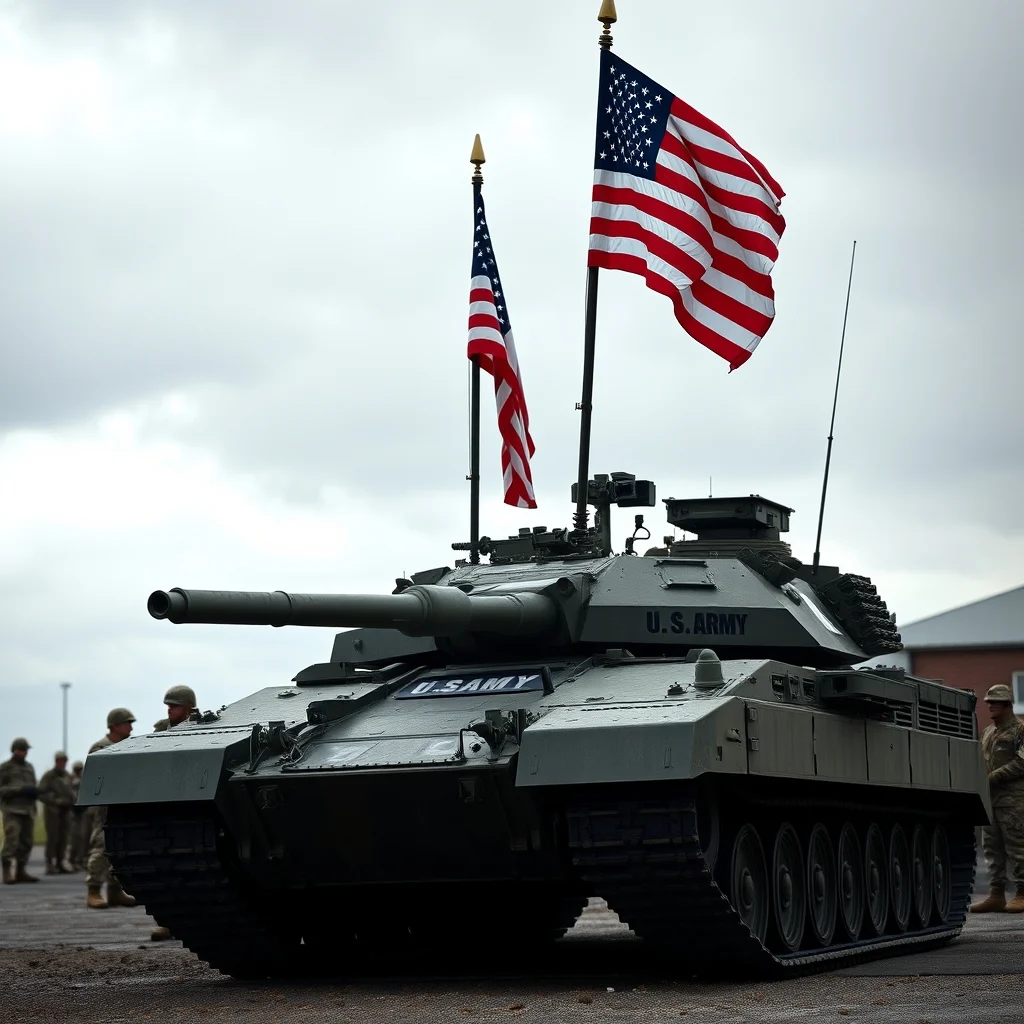
President Donald Trump announced Thursday that the United States will send an additional 5,000 troops to Poland, a significant reversal just a week after the Pentagon had canceled a planned deployment of 4,000 troops to the same nation. NATO Secretary General Jens Stoltenberg welcomed the decision ahead of a crucial foreign ministers’ meeting, while acknowledging a broader trend towards Europe reducing its reliance on the U.S. for security.
Context of Shifting Alliances and ‘America First’
The announcement comes amid a broader strategic re-evaluation by the Trump administration regarding its troop commitments in Europe. The White House has consistently signaled its intention to reduce overall troop levels across the continent as part of its “America First” foreign policy agenda. This has led to concerns among some allies about U.S. commitment to collective security.
Earlier this month, the U.S. announced a withdrawal of 5,000 troops from Germany, reportedly following a disagreement between President Trump and German Chancellor Friedrich Merz concerning the U.S. approach to Iran. President Trump had expressed disappointment with some NATO allies’ responses to U.S. operations in the Middle East and their perceived lack of burden-sharing.
Poland as a Strategic Pivot Point
Poland, under President Karol Nawrocki, has been a staunch supporter of President Trump and has actively sought a stronger U.S. military presence. Nawrocki previously endorsed Trump, stating in January that Trump was the only world leader capable of stopping Russian aggression and ending the war in Ukraine. Despite Trump’s past criticisms of NATO, Nawrocki maintains that the U.S. remains the indispensable guarantor of European security.
The initial cancellation of the 4,000-troop deployment to Poland was described by U.S. Defense Secretary Pete Hegseth as a “temporary delay.” He assured that the U.S. would continue to ensure a strong military presence in Poland. The latest announcement of 5,000 additional troops raises questions about whether this new contingent is related to the previously canceled deployment or represents an entirely new strategic move.
Broader NATO Concerns and Burden Sharing
U.S. officials, like Senator Marco Rubio, are expected to use upcoming meetings to press NATO partners for increased burden-sharing. Rubio has voiced “disappointment” with some allies’ contributions, particularly concerning operations in the Middle East. He emphasized that the U.S. maintains global commitments requiring constant re-evaluation of troop deployments, framing these adjustments as practical rather than punitive.
The potential for the U.S. to reduce its overall troop numbers in Europe, even in the event of an attack on a NATO country, has been a subject of discussion. This uncertainty has drawn criticism from some Republican lawmakers who argue that such moves could send the wrong message to Russia. The U.S. military presence in Germany is its largest in Europe, with over 36,000 active-duty troops, significantly more than in Italy or the United Kingdom.
Implications for European Security and NATO Dynamics
The fluctuating U.S. troop commitments create an environment of uncertainty for European security architecture. While Poland benefits from a bolstered U.S. presence, other allies may interpret these moves as a sign of diminishing U.S. engagement, potentially encouraging greater defense autonomy within Europe. The ongoing discussions about burden-sharing and troop deployments underscore the complex dynamics within NATO as it navigates evolving geopolitical threats and differing national interests.
The recent developments highlight the ongoing tension between the U.S. “America First” doctrine and the principles of collective security that underpin NATO. The strategic value of Poland as a frontline state bordering Ukraine and Russia, coupled with its strong bilateral relationship with the U.S., appears to be a key factor in these deployment decisions. What remains to be seen is whether this increased focus on Poland signals a broader recalibration of U.S. military posture in Eastern Europe or a localized response to specific geopolitical needs.










Leave a Reply