
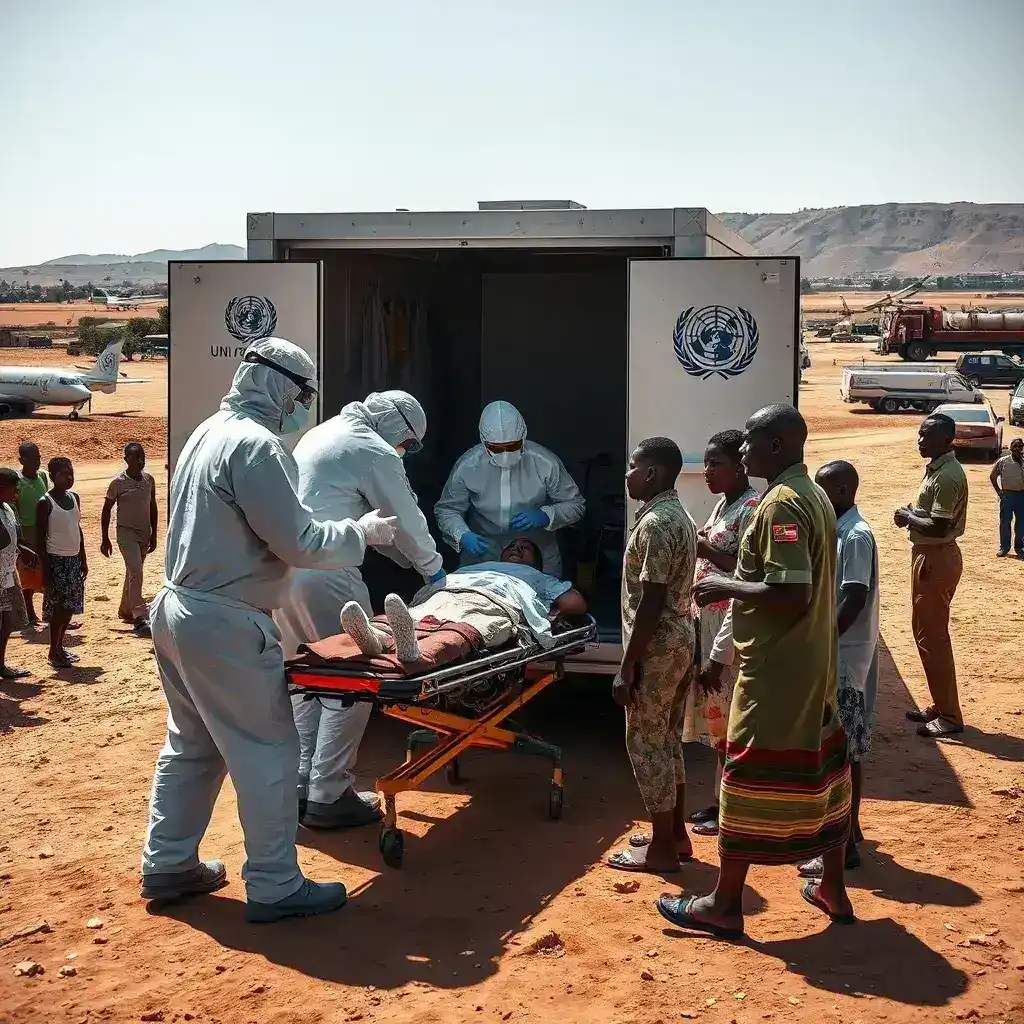
The United Nations has authorized the immediate release of $60 million from its central emergency response fund to combat a deadly outbreak of the Ebola virus, deploying this critical financial injection to spearhead an aggressive containment strategy across the Democratic Republic of the Congo and a network of vulnerable nations within the wider central and eastern African region. This allocation comes amidst growing concerns from global epidemiologists that the highly contagious hemorrhagic fever could breach international borders if containment measures are not scaled up immediately.
Financing Critical Interventions
Operational briefs from international health coordinators indicate that the $60 million emergency fund will bypass administrative overheads, with capital directed straight into high-priority, boots-on-the-ground medical interventions where resources have been stretched thin.
A significant portion of this financial package is earmarked to fund and fortify contact tracing networks. Tracking down every individual exposed to a confirmed case is considered the baseline for breaking the chain of transmission, as Ebola spreads through direct contact with bodily fluids.
Specialized field teams are being equipped with digital tracking assets and personal protective equipment (PPE). This allows them to map out transmission trees effectively in both dense urban centers and remote, hard-to-reach forest enclaves.
Expanding Clinical Infrastructure and Supply Chains
Simultaneously, the funds are driving the rapid establishment of specialized treatment centers and mobile isolation units. These emergency clinical hubs are designed to provide immediate, advanced supportive care to infected patients, thereby increasing survival rates.
They also serve the crucial purpose of effectively quarantining active cases away from the general populace. Medical supply chains, including experimental therapeutic drugs, intensive rehydration fluids, and advanced bio-secure containment gear, are already being airlifted into the epicenters of the outbreak using these newly allocated UN cash reserves.
Leveraging Local Trust for Containment
Recognizing that medical interventions can falter when met with local suspicion, the UN’s containment blueprint places a premium on aggressive community engagement initiatives. Past outbreaks in the sub-region have demonstrated that public distrust, misinformation, and resistance to safe burial protocols can cause transmission rates to surge uncontrollably.
Consequently, a substantial portion of the $60 million is being channeled to local leaders, youth groups, and trusted traditional authorities. These community networks will spearhead grassroots public education campaigns.
The goal is to ensure that families can recognize early symptoms, voluntarily report suspected cases, and cooperate with international decontamination squads. The UN has signaled that it will continue to monitor regional transmission data closely.
While this $60 million strike fund provides an essential logistical lifeline, the total eradication of the outbreak will require sustained diplomatic solidarity and unyielding cross-border surveillance by all regional health ministries.







Leave a Reply