
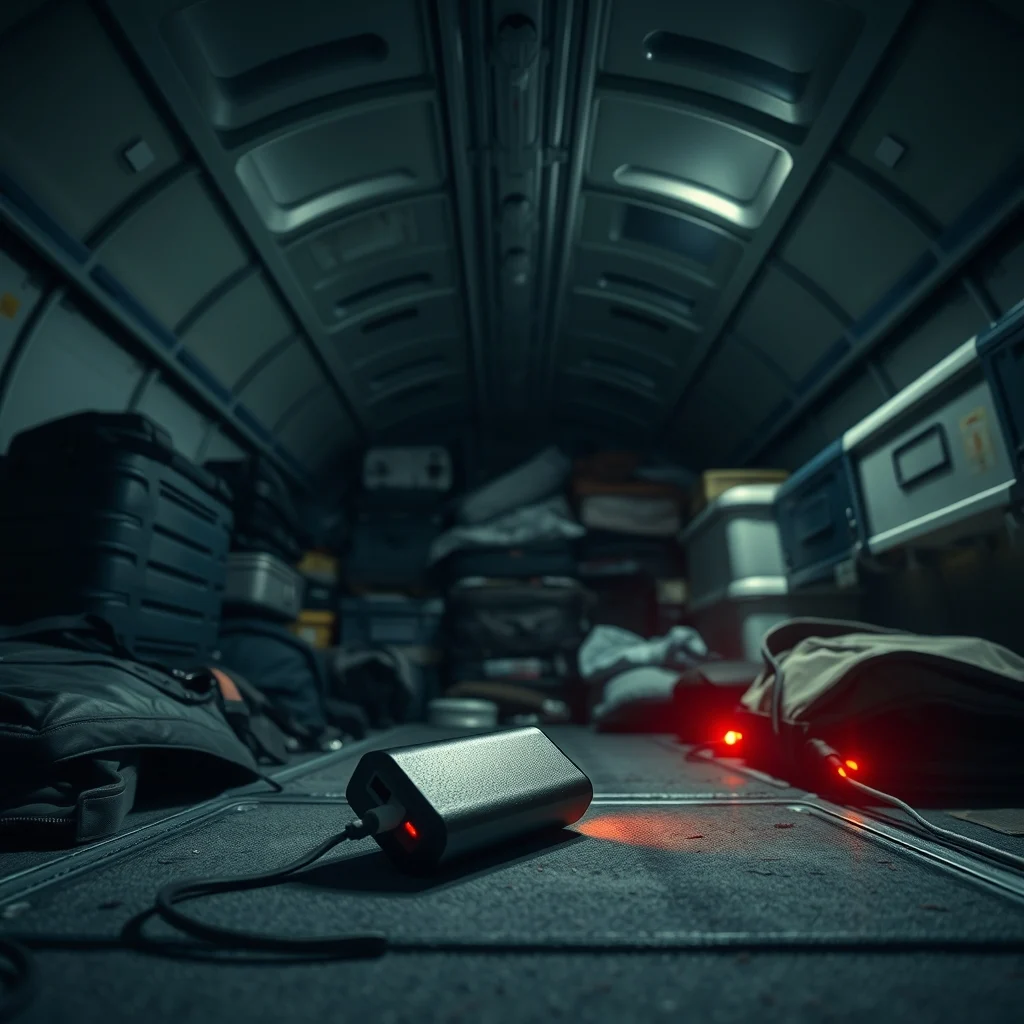
An EasyJet flight from Hurghada, Egypt, to London Luton was diverted to Rome on Tuesday night after a passenger’s power bank was discovered charging in the aircraft’s hold, triggering a precautionary landing.
The incident involved flight EZY2618, which was en route to the UK when the decision was made by the captain to divert. A passenger alerted the crew mid-flight to the presence of the charging power bank in the checked luggage.
This event underscores the increasing scrutiny and strict regulations surrounding lithium-ion batteries, commonly found in power banks, due to their potential fire hazards. Many airlines now mandate that these devices be stored in cabin baggage, not the cargo hold.
Context of Power Bank Regulations
The safety protocols for portable electronic devices, particularly those containing lithium-ion batteries, have been significantly tightened by aviation authorities and airlines worldwide. These batteries are known for their high energy density but also carry a risk of thermal runaway, leading to overheating or fire.
Airlines like EasyJet have specific rules prohibiting power banks from being used to charge other devices during flight and requiring them to be carried in hand luggage. EasyJet’s policy permits a maximum of two power banks per customer, with a limit of 160 Watt-hour (Wh) for lithium batteries, and each must be individually protected.
Other major carriers have implemented similar restrictions. Ryanair, for instance, forbids power banks in checked baggage and prohibits their use during taxi, take-off, and landing. British Airways imposes a 100Wh limit and requires power banks to be stored in seat pockets or under the seat in front, explicitly forbidding their charging via aircraft sockets.
The Incident and Safety Measures
According to data from FlightRadar24, the EasyJet flight was cruising at 36,000 feet over the Adriatic Sea, nearly three hours into its journey, when it made a sharp turn towards Rome. The aircraft landed safely at Rome Fiumicino Airport approximately 20 minutes later.
While the power bank in question reportedly posed no immediate issue, its placement in the hold while charging violated standard aviation regulations. These regulations are designed to mitigate the risk of a fire, which is far more manageable in the passenger cabin where crew can intervene, than in the sealed cargo hold.
An EasyJet spokesperson stated that the diversion was a precautionary measure in line with safety regulations. The airline confirmed that passengers disembarked routinely and were provided with hotel accommodation and meals where possible. They also apologized for the inconvenience caused by the diversion and delay.
Broader Implications and Past Incidents
The incident highlights the critical importance of passenger awareness and adherence to airline safety guidelines. The potential for lithium-ion batteries to cause fires, though rare, has led to significant regulatory action.
The International Civil Aviation Organization (ICAO), a UN agency, introduced new restrictions on power banks in March, reflecting global concerns. These incidents are not isolated; a man suffered burns at Melbourne International Airport in November 2025 when a lithium power bank in his pocket ignited. In January 2025, a passenger plane in South Korea was destroyed by a fire, with a portable power bank identified as the likely cause.
These events underscore the rationale behind the strict rules: fires involving lithium-ion batteries can escalate rapidly and are difficult to extinguish. By keeping power banks in the cabin, crews have a better chance of detecting and managing any potential issues before they become critical.
Looking Ahead
As air travel continues to be a primary mode of transportation, passengers are urged to familiarize themselves with and strictly adhere to airline policies regarding electronic devices and batteries. The ongoing vigilance of both passengers and crew, coupled with robust regulatory frameworks, remains paramount to ensuring flight safety. Travelers should anticipate continued emphasis on these regulations and potential updates as technology evolves and incidents are reviewed.







Leave a Reply