
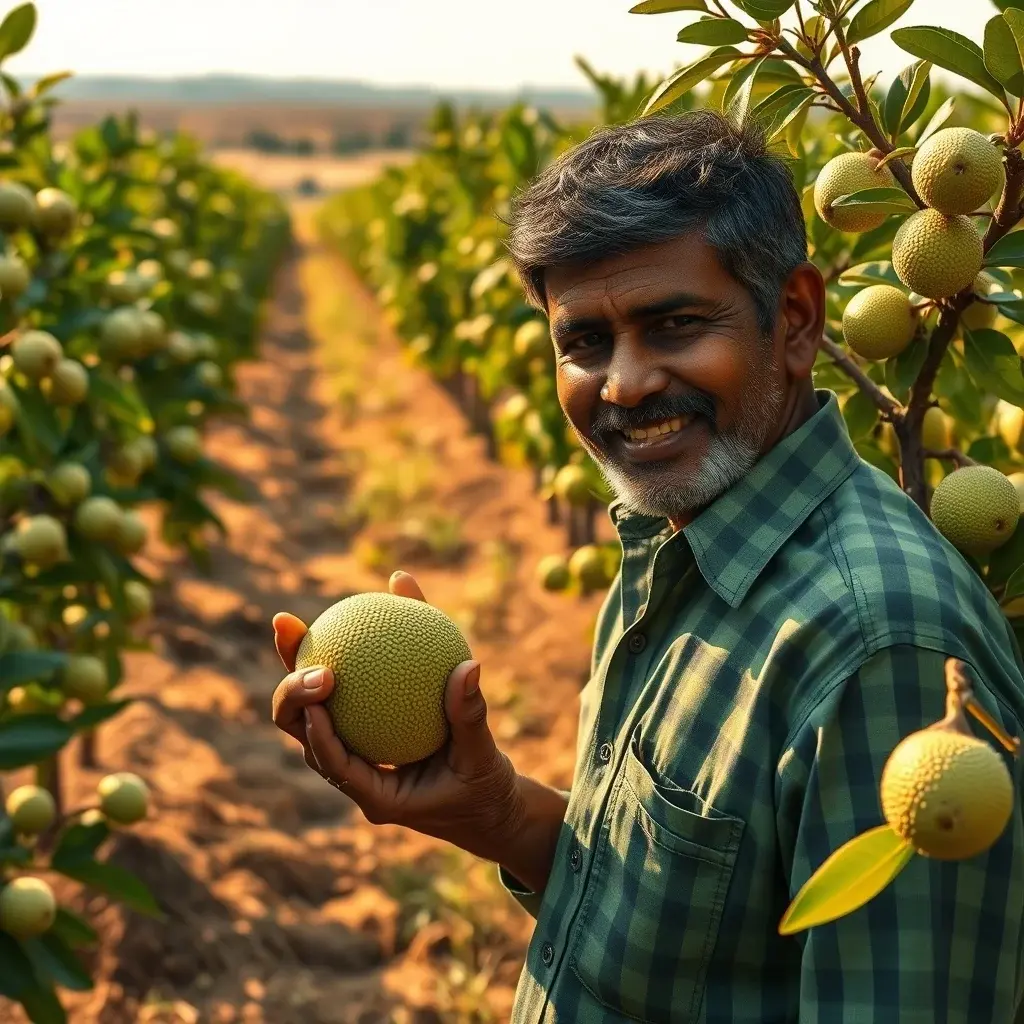
In the drought-prone Kolar district of southern India, Ashoka Shivareddy, a former AI software engineer, is revitalizing his family’s struggling farm by cultivating custard apples, a hardy fruit with a creamy, custard-like taste. This shift, driven by the need for low-water, low-pesticide crops, has seen Shivareddy’s yield increase significantly, tapping into a growing demand both domestically and internationally for this unique fruit.
From Farming Losses to Tech Ambitions
Shivareddy’s family, like many in their region, faced mounting losses due to scarce rainfall, forcing them to abandon farming for city life and a vegetable business in Bengaluru. Despite pursuing a career in AI, the call of agriculture remained strong.
In 2018, Shivareddy returned to the land with a modern vision. He sought a crop resilient to arid conditions, capable of thriving on rainfall alone, and requiring minimal pesticide use.
Custard Apple: A Promising Solution
The custard apple, a knobbly fruit with sweet, creamy flesh, emerged as an ideal candidate. It grows wild in the area, suggesting natural hardiness and local market familiarity. Shivareddy adopted a more intensive planting strategy and selected specific varieties to maximize his output.
His efforts have yielded impressive results, with production rising from 20 tonnes last year to an estimated 25 tonnes this year, driven by robust demand.
Overcoming Traditional Limitations
Despite its resilience, traditional custard apple varieties present challenges. The popular Balangar variety suffers from a short shelf life, often lasting only three to four days, and a high seed count, making it less appealing to consumers.
Dr. Sakthivel T, a principal scientist at the Indian Institute of Horticulture Research (IIHR) in Bangalore, explains that while traditional types boast excellent flavor, they lack pulp content and have poor shelf life.
To address this, IIHR developed the hybrid variety ‘Arka Sahan.’ This hybrid boasts an extended shelf life of up to a week at room temperature, fewer seeds, and significantly more pulp.









Leave a Reply