
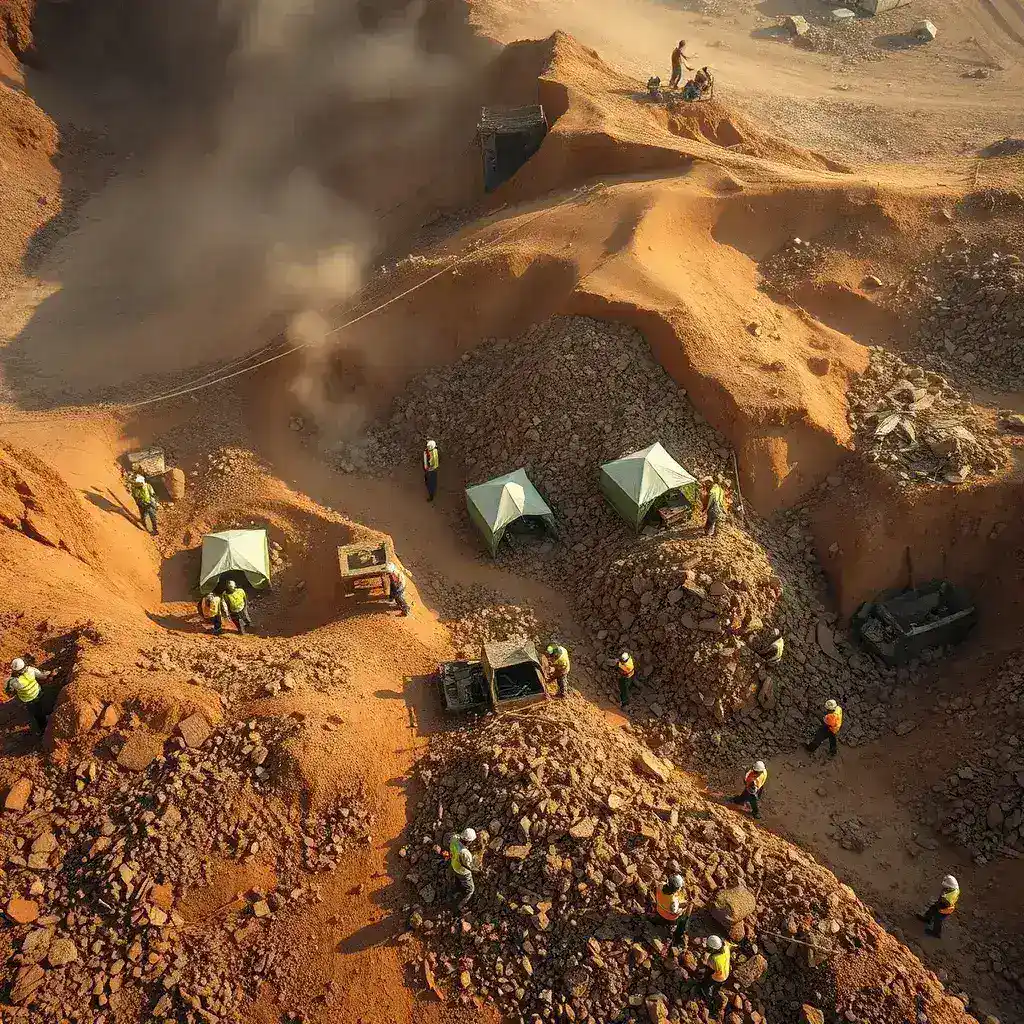
At least 28 people perished when a landslide buried an illegal gold mining site in Angola’s northwestern Bengo province on Saturday, marking one of the nation’s deadliest accidents linked to illicit mining operations. Four individuals were successfully rescued from the debris, and search efforts have since concluded, according to a statement released Sunday by the province’s civil protection and fire service.
Context of Artisanal Mining Boom
The victims of the tragic incident, which occurred on Saturday, were all young adults, aged between 16 and 35 years old. This disaster underscores the significant risks associated with unregulated mining activities that have seen a recent surge in Angola.
Historically, illegal mining in Angola was predominantly associated with its rich diamond industry. However, the country’s strategic push towards diversifying its mineral exports has inadvertently fueled a boom in artisanal and small-scale mining (ASM) for other valuable commodities, most notably gold.
Economic Diversification and Rising Risks
Angola, a prominent global diamond producer, is actively seeking to reduce its reliance on diamonds. This economic diversification strategy is driven by falling diamond prices and the increasing market share of synthetic diamonds. The government aims to develop its copper and gold sectors as alternative revenue streams.
This shift has led more individuals to engage in artisanal gold mining, often in areas with inadequate safety regulations and oversight. Such operations are frequently carried out in unstable geological conditions, increasing the vulnerability to natural hazards like landslides.
Safety Concerns and Government Oversight
The Bengo province incident highlights critical safety concerns within the burgeoning artisanal mining sector. The lack of formal infrastructure, safety equipment, and geological assessments at many illegal sites makes them inherently dangerous.
Local authorities face a significant challenge in monitoring and regulating thousands of these informal mining operations scattered across the country. The pursuit of economic opportunity in these often remote and difficult terrains can lead individuals to take extreme risks.
Broader Implications for Angola’s Mining Sector
The tragic loss of life at the Bengo site serves as a stark reminder of the human cost of unregulated resource extraction. It raises questions about the effectiveness of current regulatory frameworks and enforcement mechanisms designed to protect artisanal miners.
As Angola continues its diversification efforts, there is an urgent need to address the safety and sustainability of its artisanal mining sector. This includes implementing stricter regulations, providing training and resources to miners, and improving geological surveys to identify high-risk areas.
What to Watch Next
Moving forward, attention will likely focus on the government’s response to this tragedy and any potential policy changes aimed at enhancing safety in artisanal mining. Observers will be watching for increased enforcement actions against illegal operations and initiatives to formalize and regulate the sector. The long-term success of Angola’s mining diversification strategy may depend on its ability to balance economic growth with the paramount need for worker safety and environmental protection.










Leave a Reply