
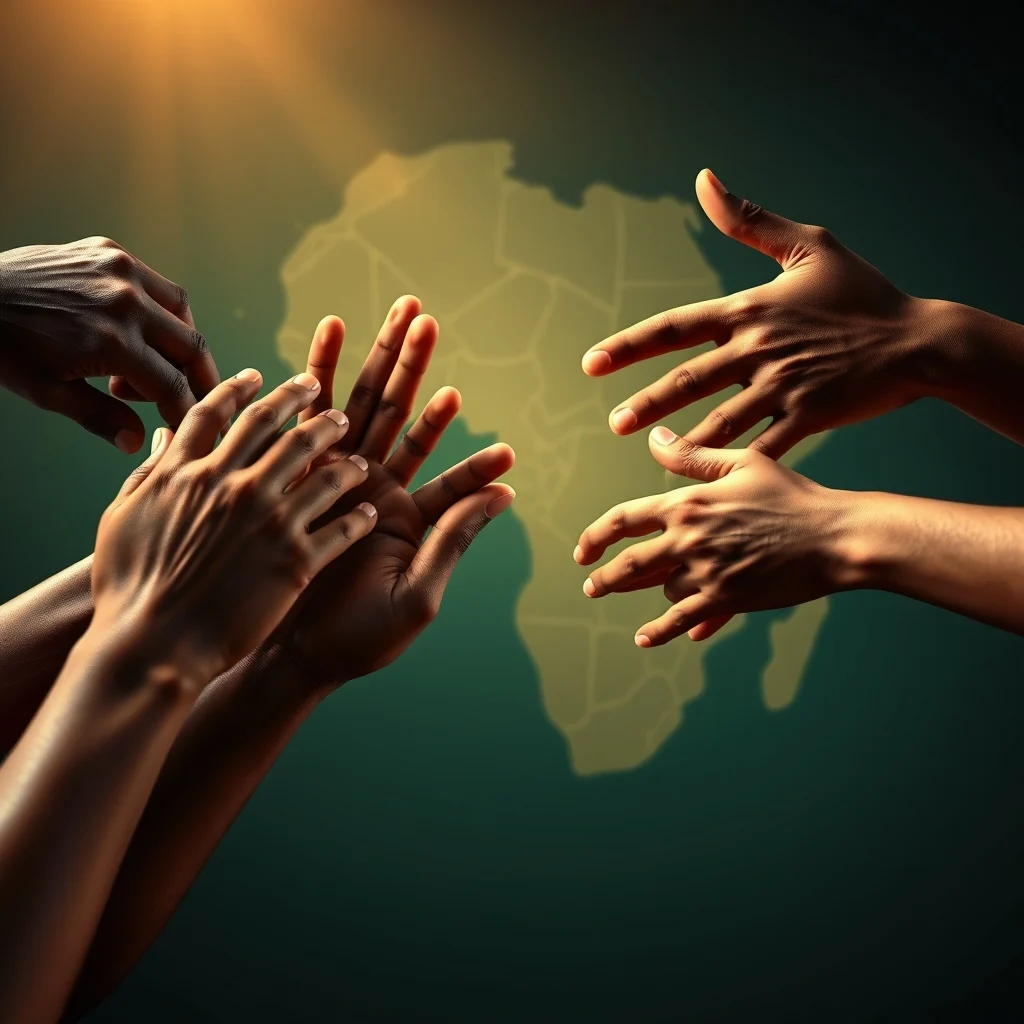
Disturbing images of African migrants being attacked and their businesses looted in South Africa have dominated news cycles this month, overshadowing even high-profile events like the Africa Forward Summit in Nairobi. These incidents, where individuals were targeted solely for being from other African nations while seeking livelihoods, highlight a pervasive issue of ‘Afrophobia’ – a hostility directed by Africans against fellow Africans, stemming from a colonial-era ‘divide and rule’ mentality that continues to hinder the continent’s progress towards economic integration.
This phenomenon is not confined to South Africa; several African nations, including Ghana, have laws restricting African foreigners from participating in certain retail sectors. Historical precedents, such as Ghana’s deportation of Nigerians in 1969 and Nigeria’s retaliatory ‘Ghana Must Go’ expulsions in the 1980s, illustrate a recurring pattern of Africans turning on one another during economic stress.
The Roots of Afrophobia
Afrophobia is more than mere xenophobia; it represents a crisis in African consciousness and identity. It is a tragic contradiction given that Africa’s liberation struggles were built on Pan-African solidarity. The continent, which once championed unity, now struggles to implement its own integration treaties under the shadow of this prejudice.
Colonial borders played a significant role, not just in dividing territories but in shaping consciousness. They conditioned Africans to view each other as competitors within artificial nation-states rather than as partners in a shared civilization. This contrasts sharply with Africa’s pre-colonial history, where movement, trade, and intermarriage across regions were common, with identities shaped more by culture and kinship than by national boundaries.
Ironically, South Africa’s own development was significantly fueled by migration. The discovery of diamonds and gold attracted Europeans and labor from across Southern Africa, forming the backbone of its mining and industrial sectors. Despite the brutal exploitation under apartheid, regional migration continued, underscoring the fundamental role of human movement in building economies.
A Historical Betrayal and Contemporary Frustrations
For many Africans, the xenophobic attacks in democratic South Africa feel like a historical betrayal, given the continent’s strong support for the anti-apartheid struggle. African nations hosted exiles, trained liberation fighters, and endured economic costs for South Africa’s freedom.
The frustrations within South Africa are undeniable, with high unemployment, severe inequality, and crime contributing to public discontent. However, blaming African migrants for these deep-seated structural failures is misplaced. Migrants from Nigeria, Ghana, Zimbabwe, Somalia, Ethiopia, Congo, and Mozambique did not cause these economic and governance problems; they have become easy scapegoats.
South Africa’s Role in African Integration
South Africa has historically been a key proponent of African integration. The transition from the Organisation of African Unity to the African Union occurred in Durban in 2002, with South Africa under President Thabo Mbeki championing the African Renaissance and institutional Pan-Africanism. South Africa played a crucial role in shaping initiatives like NEPAD, the APRM, the Pan-African Parliament, Agenda 2063, and the push for the African Continental Free Trade Area (AfCFTA).
Under Dr. Nkosazana Dlamini-Zuma, the AU furthered its integration agenda, focusing on free movement, infrastructure, and a single market. Her continued advocacy for a single market aims to achieve economic transformation, shared prosperity, security, and integrity for Africa.
South Africa’s economic future is intrinsically linked to continental integration. Its companies, including MTN, Shoprite, Standard Bank, and MultiChoice, are prominent across Africa, demonstrating the commercial viability of African markets and making South Africa one of the most economically interconnected countries on the continent. These firms generate billions for the South African economy, highlighting that South Africa needs open African markets as much as the continent needs its advanced industrial capacity.
The Ubuntu Philosophy and the Path Forward
The contradiction of South Africa championing continental integration while experiencing national-level xenophobia is stark. The legacies of Nelson Mandela, Thabo Mbeki, and Nkosazana Dlamini-Zuma all point towards the necessity of practical integration.
The Africa Prosperity Network advocates for the implementation of Africa’s single market, leveraging the continent’s large population, rich resources, and shared challenges. This vision is grounded in the philosophy of Ubuntu, meaning “I am because we are,” emphasizing human interconnectedness and shared humanity. Xenophobia, therefore, is not just an attack on migrants but an assault on Africa’s spiritual foundation for future success.
While President Cyril Ramaphosa’s statement that “South Africa belongs to all who live in it” echoes Ubuntu, the leadership’s response to xenophobia has been criticized as lacking decisiveness. Ubuntu requires more than rhetoric; it demands policy, policing, political will, and public education.
Xenophobic attacks must be treated as hate crimes. Communities need engagement, and political rhetoric that fosters suspicion must cease. Migration systems need modernization, balancing free movement with law and order. A borderless Africa does not imply lawlessness but smarter borders utilizing technology, intelligence sharing, and mutual recognition of skills and standards.
The Urgency of Implementation
Africa’s commitment to integration is evident in treaties from the Abuja Treaty to the AfCFTA Agreement and its Digital Trade Protocol. The critical challenge now is implementation. Accelerating economic integration is the most potent protest against Afrophobia.
As Africa marks AU Day, a crucial question arises: will the continent succumb to fear or embrace fraternity? Will it continue to treat fellow Africans as outsiders, or will it finally build the borderless continent envisioned by its founders? Kwame Nkrumah’s call for a United States of Africa resonates with renewed urgency.
The Africa Prosperity Network, through its “Make Africa Borderless Now!” campaign, is hosting a webinar on AU Day titled “Afrophobia or a Borderless Africa? Advancing African Unity Through Economic Integration.” This conversation is vital as rising xenophobia threatens the continent’s aspirations for unity and prosperity.
A prosperous South Africa depends on a prosperous Africa, and a prosperous Africa requires its people to remember their shared heritage and destiny, transcending the artificial divisions of colonial borders. The journey towards true freedom necessitates moving forward together.










Leave a Reply