
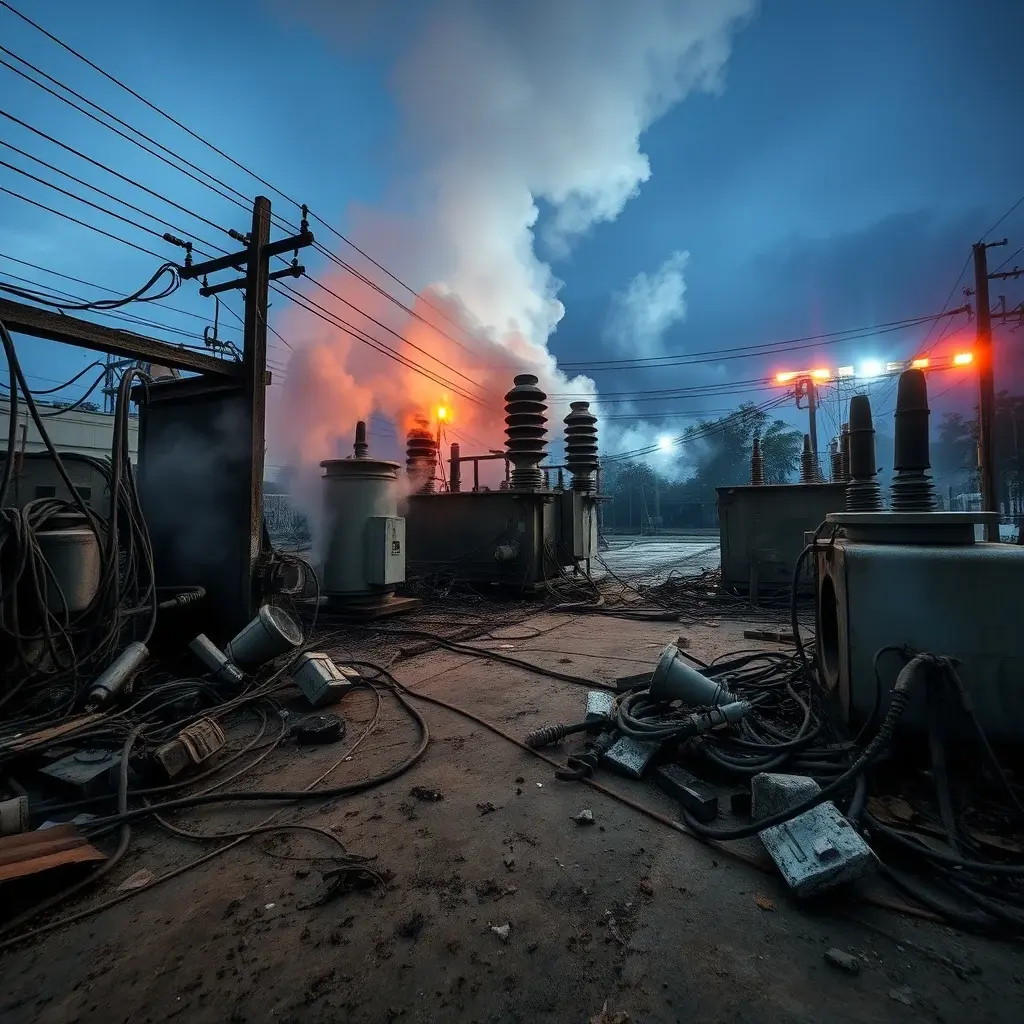
The Executive Director of the African Centre for Energy Policy (ACEP), Ben Boakye, has characterized the recent fire outbreak at the Ghana Grid Company Limited (GRIDCo) substation near Akosombo as a preventable incident, attributing it to persistent negligence and a lack of robust accountability within Ghana’s power sector. The fire, which occurred on Thursday, April 23, significantly disrupted the nation’s power transmission infrastructure.
Context of the Akosombo Substation
The Akosombo substation is a critical component of Ghana’s electricity transmission network. Its infrastructure dates back to the 1960s, making it one of the oldest and most vital facilities for distributing power generated from the Akosombo Dam across the country. While generation assets have seen modernization efforts, the transmission infrastructure, particularly the switchyard, has not received commensurate attention, according to energy policy experts.
Details of the Incident and Expert Analysis
Speaking on JoyNews’ Newsfile on Saturday, May 2, Mr. Boakye expressed his dismay, stating, “It never should have happened.” He highlighted that while turbines have been retrofitted, the control systems and switchyard, which manage the distribution of electricity to homes, have remained largely unchanged from their original 1960s design.
“You have a switchyard and control systems built in the 60s. We have retrofitted turbines, but we did not pay attention to the switchyard that carries the load to our homes,” Mr. Boakye explained. He emphasized the need for adequate maintenance, essential safety upgrades, and modern fire prevention systems, which he argued were inadequately implemented at the Akosombo facility.
In contrast, Mr. Boakye pointed to newer substations like Pokuase and Kasoa, which were built with advanced safety features. “If you look at new substations like Pokuase and Kasoa, they have modern safety systems. These are not expensive things,” he noted. He criticized the reliance on manual response methods instead of automated protection systems for such critical infrastructure.
Critique of Sector Accountability
Beyond the infrastructure issues, Mr. Boakye strongly criticized what he described as pervasive weak accountability within the energy sector. He argued that institutional failures to address basic maintenance and safety concerns lead to significant long-term financial consequences for the nation.
“Accountability is so defective in the energy sector. Basic things don’t get done, and when they don’t get done, they cost all of us billions of dollars,” he stated. This lack of accountability, he suggested, allows critical infrastructure to fall into disrepair, increasing the risk of incidents like the Akosombo fire.
Implications for Ghana’s Power Sector
The Akosombo substation fire serves as a stark reminder of the vulnerabilities within Ghana’s aging power infrastructure. The incident underscores the critical need for sustained investment in transmission assets, not just generation capacity. Furthermore, it highlights the importance of implementing modern safety protocols and ensuring robust accountability mechanisms are in place within state-owned energy entities.
Failure to address these systemic issues could lead to further disruptions, increased operational costs, and potential economic setbacks. The contrast drawn with newer, more technologically advanced substations suggests a clear path forward for upgrading existing facilities and ensuring future infrastructure projects incorporate state-of-the-art safety and monitoring systems. The focus now shifts to how GRIDCo and the Ministry of Energy will address these long-standing issues to prevent future occurrences and ensure the stability of Ghana’s power supply.










Leave a Reply