
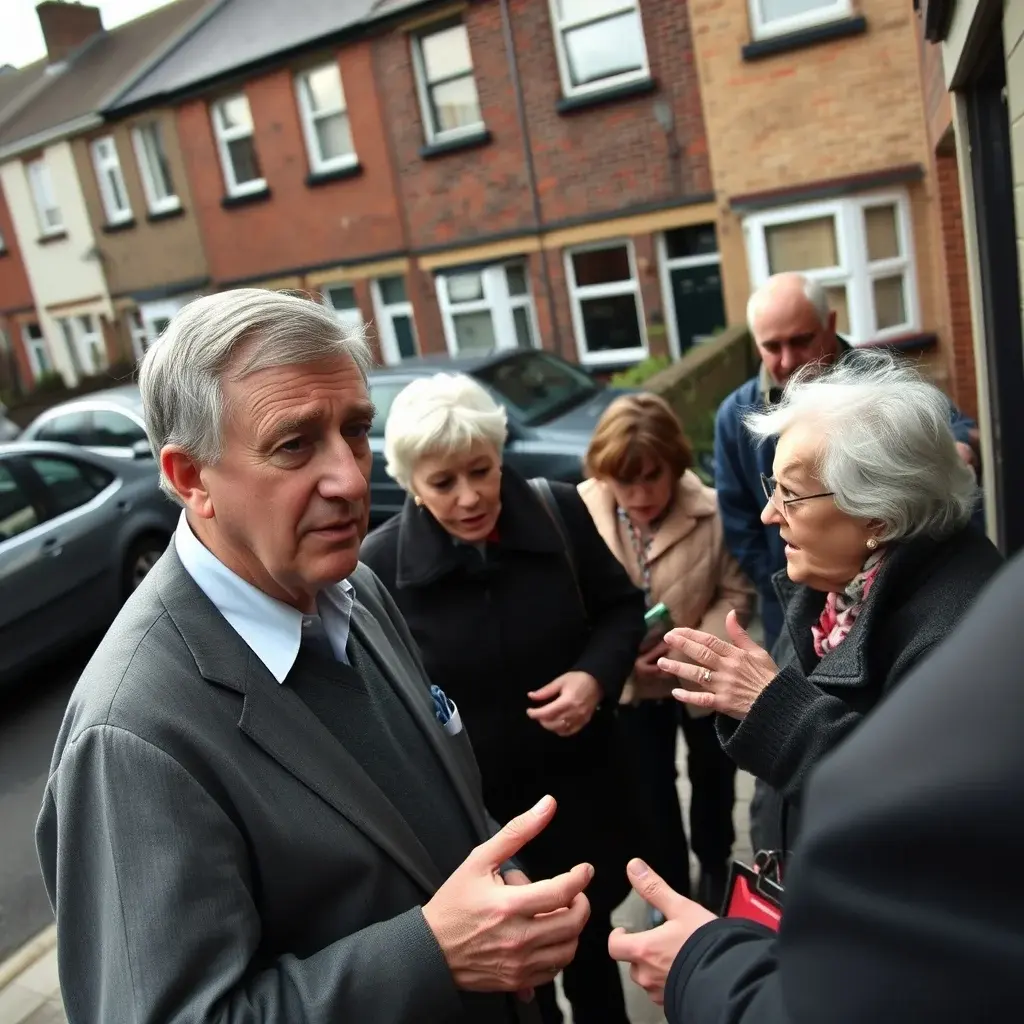
Former Irish Prime Minister Bertie Ahern issued a clarification regarding his stance on immigration following the circulation of a recorded conversation where he expressed concern about migrants from Africa. The remarks, made during a doorstep interaction while canvassing for a by-election candidate in a Dublin housing estate approximately ten days prior to the recording’s release, drew criticism from the current Taoiseach and fellow party members.
Context of the Recording
The video, which has circulated on social media, captures Ahern in conversation with a woman who challenged him directly on immigration issues. The woman expressed concerns about the number of foreigners entering Ireland and questioned the country’s open border policy.
When pressed for his personal view, Ahern stated that while Ireland must accept some migrants, he believed the numbers were becoming excessive. He differentiated between Ukrainian refugees, whom he stated he had “no problem with” due to the war in their country, and migrants from African nations.
“The ones I worry about are the Africans,” Ahern is heard saying in the recording. “We can’t be taking in people from the Congo and all these places. I think there’s too many from those places.” He also voiced concerns about future generations of Muslim migrants, suggesting potential issues related to Sharia Law.
Ahern’s Clarification and Defense
Speaking to RTÉ News, Ahern stated the recording was made without his knowledge and was part of a longer conversation. He clarified his position, asserting, “I have no problem with people who come here through the visa and asylum systems.”
Ahern also highlighted that many individuals of African descent have successfully integrated into Irish society, living and working in his local area. He indicated his support for the current immigration policies, despite the woman in the video accusing him of opposing his party’s stance.
He acknowledged that the asylum process should be efficient, noting that it has seen some improvement recently. The former Taoiseach implied that the recording was taken out of context and did not fully represent his views on the asylum and visa systems.
Official Reaction and Political Fallout
Taoiseach Micheál Martin described Ahern’s reported comments as “not appropriate,” emphasizing that it is incorrect to single out specific ethnicities. He stated that Ireland respects its diverse population and maintains a “fair and robust asylum system” that has been reformed for efficiency.
Martin later informed the Dáil (Irish parliament) that Ahern had “resiled from those comments and says he has no issue with people who come through our asylum process.” Several other Fianna Fáil candidates canvassing with Ahern also reportedly criticized his remarks.
Broader Immigration Landscape in Ireland
Immigration and the asylum system have become significant political issues in Ireland. Recent census data from April 2022 indicated that one in five residents were born outside the country.
The influx of Ukrainian refugees, alongside other nationalities, has intensified concerns, particularly in the context of an existing housing crisis. The Minister for Migration, Jim O’Callaghan, has previously stated that the number of asylum seekers entering the Republic was “too high,” noting a rise from 3,000-4,000 annually before the COVID-19 pandemic to over 18,500.
However, recent data suggests a slight decrease in overall net immigration, falling to 59,700 last year, down from 79,300 in 2024 and 77,600 in 2023.
Who is Bertie Ahern?
Bertie Ahern served as Taoiseach from 1997 to 2008, playing a significant role in the Good Friday Agreement negotiations. His tenure ended amid personal financial controversies. In 2012, a report found he had provided untrue evidence to a tribunal regarding his finances, leading to his resignation from Fianna Fáil.
Looking Ahead
The incident highlights the sensitivity surrounding immigration in Ireland and the challenges politicians face in navigating public sentiment. As the country continues to manage asylum applications and refugee arrivals, the debate over integration, resources, and national identity is likely to persist. Public discourse and policy discussions will need to address these complex issues, balancing humanitarian commitments with domestic concerns. The effectiveness of recent reforms to the asylum system and future immigration targets will be closely watched by both the public and policymakers.










Leave a Reply