
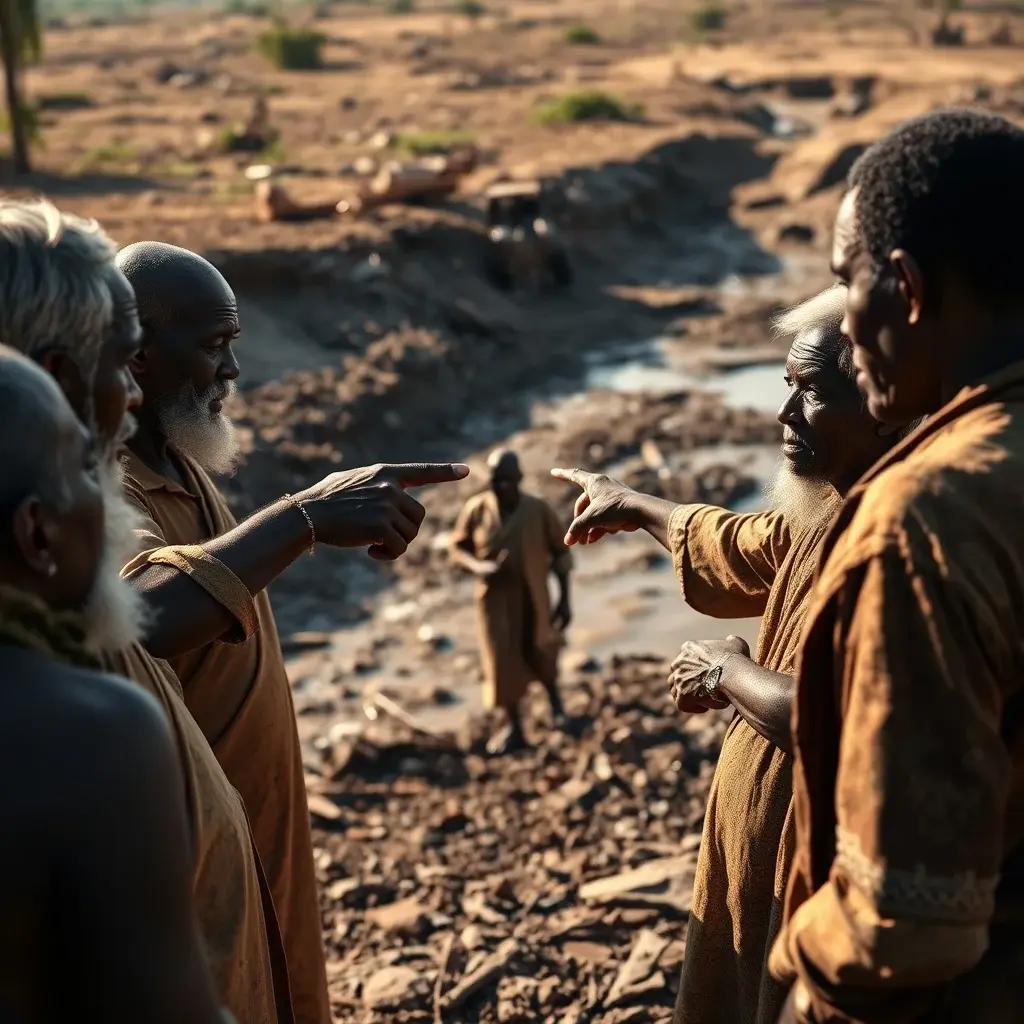
Bono Regional Minister, Joseph Addae Akwaboa, has urged residents and traditional leaders in the Bono Region to actively arrest and report individuals who exploit the names of government appointees to conduct illegal mining operations, commonly known as galamsey. This directive, reported by Adom News on Thursday, May 14, underscores the government’s intensified commitment to combating the destructive practice.
Context: The Pervasive Threat of Galamsey
Illegal mining, or galamsey, has long been a critical environmental and economic challenge in Ghana. The practice involves unregulated mining activities, often carried out by individuals or groups using rudimentary tools or heavy machinery, without regard for environmental regulations or land reclamation. This has led to widespread degradation of landscapes, severe pollution of rivers and water bodies, and the destruction of arable farmlands, impacting agricultural productivity and threatening public health.
The government has, on numerous occasions, declared its resolve to fight galamsey, implementing various strategies including security crackdowns, policy reforms, and community engagement. However, the persistence of the problem highlights the deep-rooted nature of the illegal trade and the challenges in its eradication.
Minister’s Call to Action and Vigilance
During an accountability tour in the Berekum West District, Minister Addae Akwaboa reiterated the government’s unwavering stance against galamsey. He emphasized that security agencies and relevant authorities have been tasked with a robust crackdown on all illegal mining sites within the Bono Region. The primary objective is to safeguard the nation’s natural resources for the benefit of current and future generations.
A significant aspect of the Minister’s address focused on the deceptive tactics employed by some galamsey operators. He warned residents to be wary of individuals who might falsely claim association with government officials, including the Minister himself, to lend legitimacy to their illicit activities. The call for community vigilance is paramount, empowering citizens to act as the first line of defense against such exploitation.
Broader Concerns: Project Execution and Accountability
Beyond the galamsey fight, Minister Addae Akwaboa also addressed issues of project execution and contractor accountability. He issued a stern warning to contractors who receive payments for government-initiated projects but fail to deliver on their contractual obligations. Such actions, he stated, will be met with the full force of the law.
The Minister highlighted a specific case involving a contractor, Kofi Akpaloo, who allegedly received funds for a five-kilometer road construction project in the Berekum West District but did not commence or complete the work. This particular case is currently under investigation by the Economic and Organised Crime Office (EOCO), with legal actions anticipated once the investigation concludes.
Implications and Future Outlook
Minister Addae Akwaboa’s directive empowers citizens to take a more active role in combating galamsey, shifting some responsibility to the local populace. This approach, if effectively implemented, could lead to a more decentralized and responsive enforcement mechanism, making it harder for illegal miners to operate with impunity, especially when they attempt to leverage the names of officials.
The dual focus on galamsey and contractor accountability signals a broader commitment to good governance and resource management in the Bono Region. Residents can expect increased scrutiny of both environmental practices and the execution of public works. The success of these initiatives will depend on sustained community participation, robust law enforcement, and transparent handling of investigations and prosecutions.
Moving forward, the effectiveness of this citizen-led apprehension strategy will be closely watched. Furthermore, the outcomes of the EOCO investigation into the contractor’s alleged non-performance will set a precedent for accountability in public project delivery within the region. The region will be looking to see if this heightened vigilance translates into tangible improvements in environmental protection and infrastructure development.










Leave a Reply