
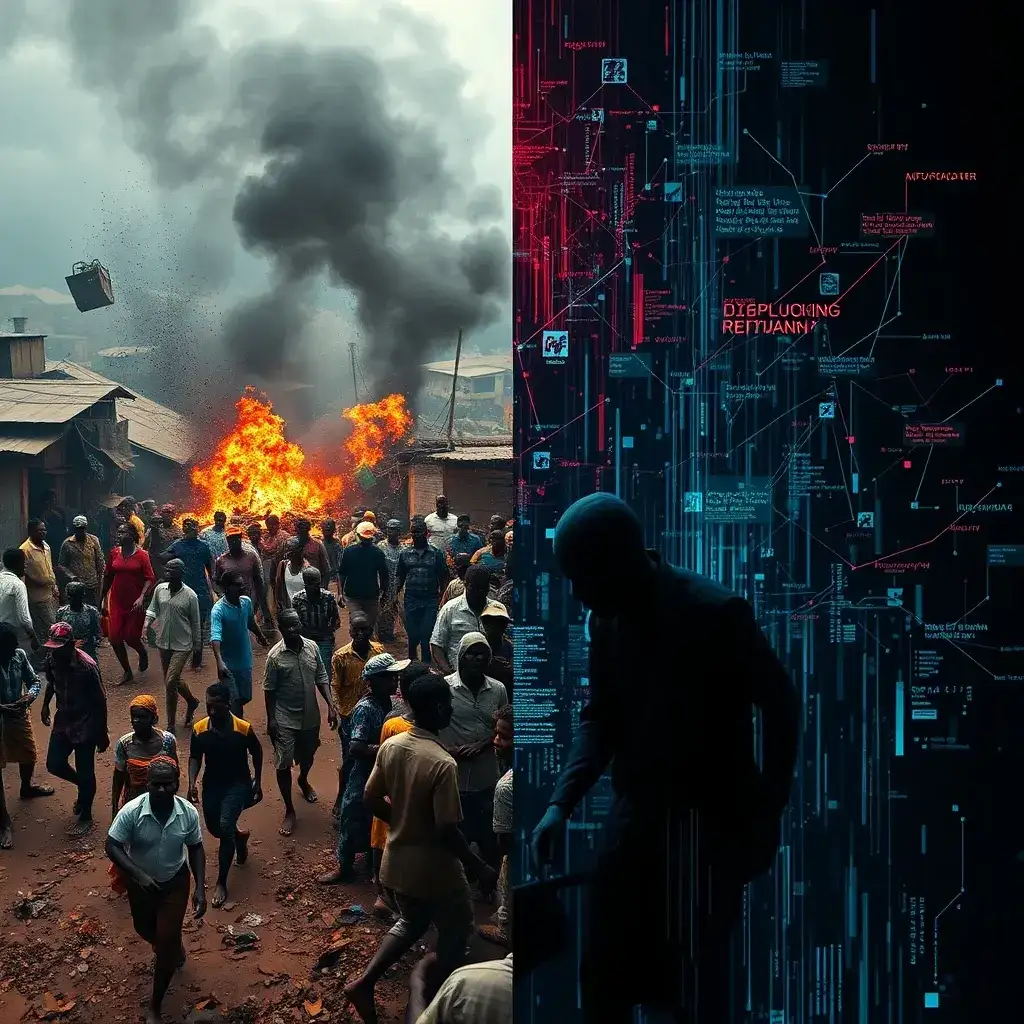
London, UK – On Wednesday, British High Commissioner to Ghana Christian Rogg highlighted the escalating danger of false information in exacerbating local conflicts, specifically pointing to the ongoing tensions in Bawku, Ghana. Speaking at his Accra residence to commemorate World Press Freedom Day, Rogg warned that unchecked misinformation and disinformation pose a significant threat to societal stability and democratic processes.
Digital Age Amplifies Information Risks
Rogg underscored how advancements in digital platforms, while expanding access to information, have simultaneously created fertile ground for the spread of falsehoods. This digital reshaping of information dissemination amplifies the risks of misinformation and disinformation.
“We are also seeing the downside of that trend, the misinformation and disinformation that I’ve mentioned, but also we’re seeing growing pressure and threats towards journalists, and we’re seeing an erosion of public trust as a result,” Rogg stated.
These developments, he cautioned, are not merely isolated incidents but represent broader trends that can undermine democratic institutions, shrink civic spaces, and ultimately incite violence.
Bawku Conflict as a Case Study
The conflict in Bawku was presented as a stark example of how deliberately spread false narratives can inflame local tensions. Rogg noted that both the Ghanaian government and civil society organizations have repeatedly voiced concerns about fake media stories and accounts actively spreading information designed to escalate the conflict.
“When you look at local conflicts, for example, the conflict in Bawku, you can see that both the government and civil society has repeatedly expressed concerns over fake media stories over fake accounts that are spreading information that are inflaming tensions deliberately and unnecessarily,” he explained.
Global Patterns of Disinformation
The threat of disinformation is not confined to Ghana, Rogg emphasized, citing an incident in the UK following the murder of three young girls in Southport. Online misinformation rapidly escalated into riots and street violence in various parts of the country, demonstrating how fabricated or inflammatory content can incite real-world disorder.
“A lot of that, that violence, that disorder, was whipped up online by people who were spreading news, sometimes inflammatory information that had no, no, no basis,” Rogg said.
He further revealed that disinformation campaigns are increasingly organized and operate across borders. Data indicates that since 2022, Russia has sponsored 80 documented disinformation campaigns in 22 African countries, with a primary focus on undermining regional security.
Research from the Africa Centre for Strategic Studies highlights West Africa as the most targeted region, accounting for nearly 40% of these campaigns.
The Crucial Role of Independent Journalism
In the face of these challenges, Rogg asserted that independent journalism is more critical than ever. He stated that credible journalism strengthens information integrity and serves as a vital counterweight to disinformation and propaganda.
“We know that independent journalism strengthens information integrity. We know that it acts as a vital counterweight to Disinformation and Propaganda,” he remarked.
A Call for Collective Action
The British envoy concluded with an urgent call for collective action to safeguard press freedom and combat disinformation. He stressed that press freedom requires continuous vigilance, robust partnerships, and sustained political will.
“Press Freedom is not self-sustaining. It requires vigilance, partnership and political will,” Rogg stated.
He urged a renewal of commitment to truth, accountability, and the democratic values that are intrinsically linked to a free and independent press.
Looking Ahead
The ongoing global struggle against disinformation necessitates a multi-faceted approach involving governments, civil society, media organizations, and technology platforms. Continued monitoring of disinformation campaigns, particularly those targeting vulnerable regions like West Africa, will be crucial. Furthermore, strengthening media literacy programs and supporting independent journalism are vital steps in building resilience against the corrosive effects of fake news, with the success of these efforts likely to shape the future stability and democratic health of affected regions.










Leave a Reply