
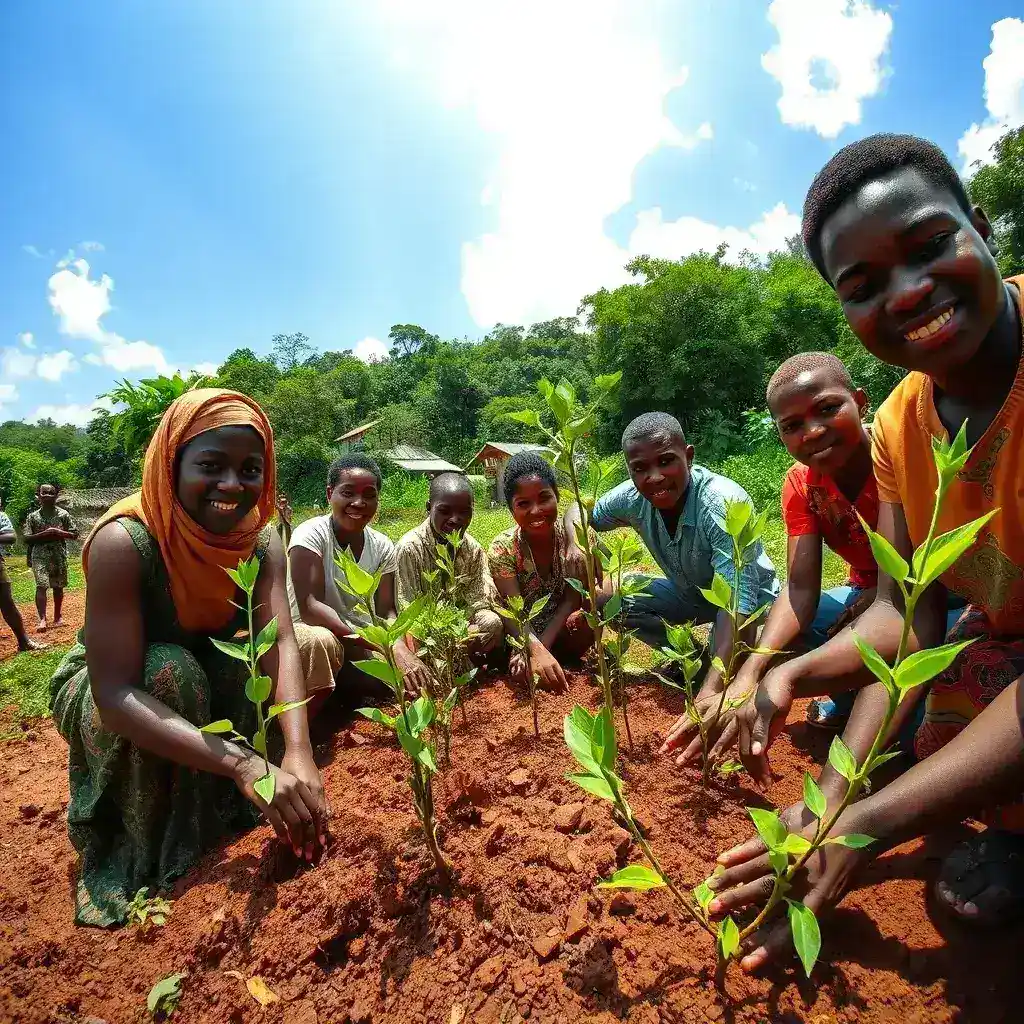
Nviron Hive, in partnership with Tree Aid and a coalition of businesses, has launched a significant reforestation drive in Yendi, Northern Region. The initiative aims to plant 100,000 trees and regenerate an additional 100,000 through assisted natural regeneration across 1,300 hectares, addressing Ghana’s escalating forest crisis.
Context of Ghana’s Forest Emergency
This project arrives as Ghana grapples with severe deforestation, having lost approximately 77,000 hectares of natural forest in 2024 alone. The national annual deforestation rate stands at a concerning 315,000 hectares, highlighting an urgent need for intervention.
The “Tree for Life Campaign” by the President and Ghana’s commitments under the Paris Agreement to reduce emissions are central to these efforts. This private sector-led initiative directly aligns with these national and international climate goals.
Community Impact and Economic Empowerment
The program will span ten communities within the Yendi Municipality, generating over 250 seasonal employment opportunities. Furthermore, 1,250 farmers will receive training in climate-smart agricultural practices.
The initiative is designed to directly benefit 1,550 individuals, with an additional 3,000 people expected to be reached indirectly through its activities. This broad impact underscores the project’s commitment to widespread positive change.
A key focus is on empowering women and youth. Seventy percent of the ten Village Tree Enterprises, which focus on non-timber forest products (NTFPs) and agricultural processing, will be led by women. This ensures inclusive growth and leadership within the project.
Participating farming families are anticipated to experience a significant increase in household incomes, with projections of 20–25% growth. This rise is expected through engagement in inclusive agroforestry value chains, specifically in shea, honey, and moringa production and marketing.
Private Sector Leadership in Climate Action
Otema Yirenkyi, Co-Founder of Nviron Hive, emphasized the motivation behind the business coalition. “Ghana loses 77,000 hectares of forest every year. The Coalition of Businesses exists because we refuse to let that define our country’s future,” Yirenkyi stated.
He further highlighted the project’s significance: “What we are building in Yendi is proof that Ghana’s private sector can — and must — lead on climate action.” This positions the initiative as a model for corporate environmental responsibility.
Expertise and Experience of Implementing Partner
Tree Aid, the implementing partner, brings nearly four decades of experience in Africa’s drylands. Since 1994, they have planted and nurtured over 11.1 million trees in northern Ghana.
Their global experience includes managing 264,000 hectares sustainably and 7,853 hectares in Ghana. Tree Aid’s extensive work in Ghana has reached 511 communities, directly benefiting 13,930 households and indirectly impacting 77,494 individuals.
Jonathan Anecham NAABA, Tree Aid Country Director for Ghana, commented on the partnership’s potential. “Thirty years of working in northern Ghana has shown us what communities can achieve when they have the right support,” he said.
NAABA added, “This Coalition unlocks the scale we need to truly turn the tide — on land loss, on poverty, and on climate vulnerability.” This underscores the critical role of scaled, collaborative efforts.
Joining the Coalition
Organizations interested in joining this business coalition and contributing to the reforestation efforts can contact Nviron Hive. Inquiries can be directed via email to Otema@nvironhive.com for further information and registration.
Looking Ahead
The success of the Yendi initiative will be a key indicator of how effectively private sector coalitions can mobilize resources and expertise to combat deforestation in Ghana. The project’s focus on community benefits, economic empowerment, and climate resilience offers a blueprint for future environmental action. Observers will watch to see if this model can be replicated and scaled across other regions facing similar ecological challenges.










Leave a Reply