
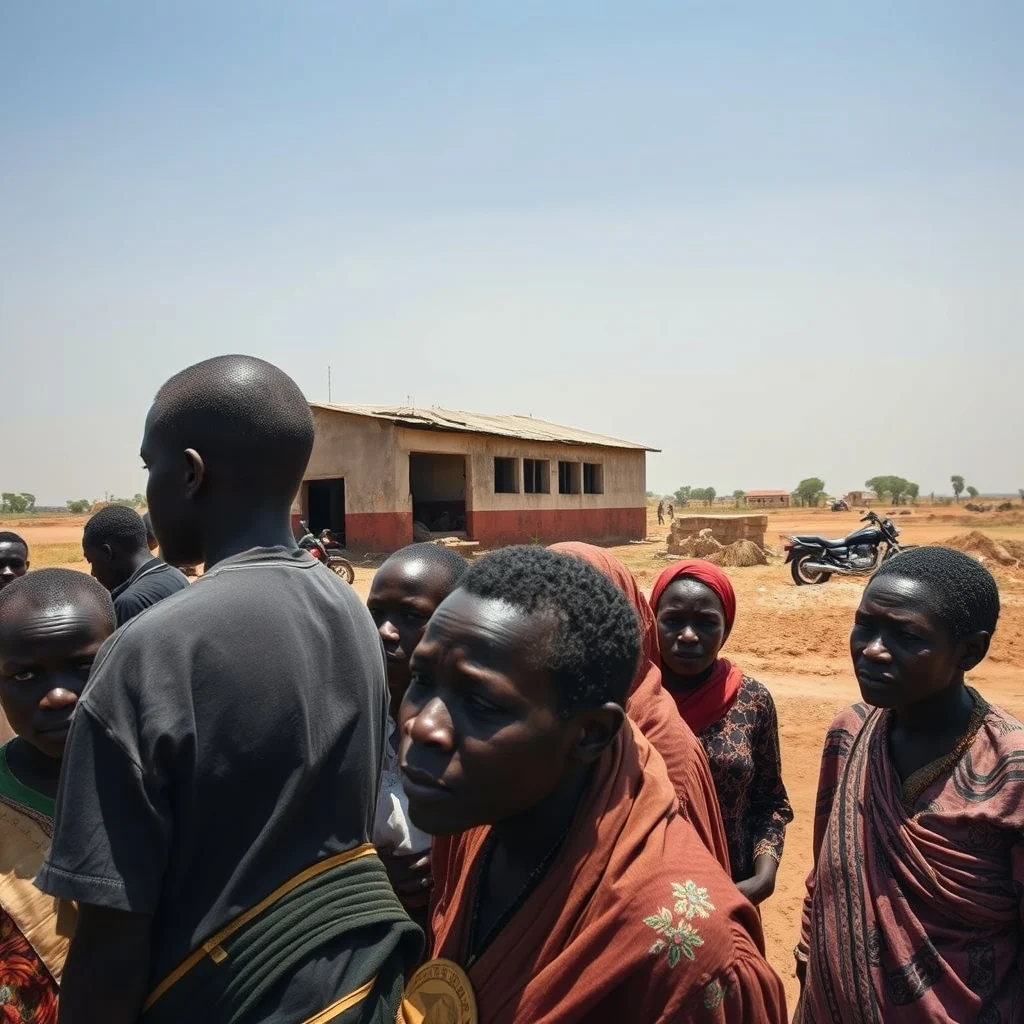
Gunmen suspected of being Islamist militants abducted more than 50 schoolchildren, including toddlers as young as two, from three schools in northeastern Borno State on Friday, according to local teachers and residents. The coordinated morning assault targeted educational institutions in the Askira-Uba Local Government Area, reigniting widespread concerns over the vulnerability of schools in the region.
Assault in Daylight
The attackers arrived on motorcycles around 9:00 a.m. local time, storming the campuses while classes were in session. This sudden violence caused immediate panic among students and staff.
Residents reported that the gunmen struck shortly after military troops conducting patrols had departed the town. Sporadic gunfire erupted during the chaos, forcing locals to seek shelter.
Eyewitnesses described parents watching helplessly from a nearby hill as their children were taken away in vehicles. Ubaidallah Hasaan, a resident near one of the schools, confirmed that several students were taken.
Another resident, speaking anonymously due to fear of reprisal, shared a personal account. “Two of my nieces, both under the age of 10, were among the pupils taken away to an unknown destination,” they stated.
A teacher from one of the affected schools confirmed the scale of the abduction. “Despite some students escaping to the bushes, I can tell you many were taken away,” the teacher said.
Toddlers Targeted and Used as Shields
Disturbingly, a significant number of the abducted children are toddlers, aged between two and five years old. Eyewitnesses reported that the fleeing suspects used these young children as human shields.
This tactic effectively prevented nearby security forces from opening fire to stop the abductors’ escape. Abdu Dunama, headmaster of Mussa Central Primary School, recounted hearing gunfire before the armed men entered the classrooms.
He confirmed that 34 children, primarily nursery pupils aged five and under, were taken directly from his school.
Conflicting Official Responses
Local authorities and security agencies have provided varying accounts of the incident. Nahum Daso, spokesperson for the Borno State Police Command, stated that several students are unaccounted for.
Daso noted that it is unclear if students were explicitly abducted, and police can only confirm that many students “fled for safety during the pandemonium.” A formal headcount is reportedly still underway.
Federal government officials had not yet responded to media requests for comment at the time of reporting. However, Headmaster Dunama maintained close contact with security forces and confirmed ongoing efforts to track the abductors.
Political representatives acknowledged the security breach but remained cautious. Abdullahi Askira, Deputy Speaker of the Borno State House of Assembly, confirmed an attack occurred but declined to specify if pupils were abducted.
Echoes of Past Insurgency
No group has officially claimed responsibility for the raid. However, the Borno police spokesperson attributed the operation to militants from Boko Haram and its splinter faction, the Islamic State West Africa Province (ISWAP).
The community of Mussa is located near the Sambisa Forest, a known stronghold for rebel fighters who have been active in northeast Nigeria for nearly 17 years. The district has experienced previous insurgent raids targeting rural populations.
This latest attack strongly echoes the tactics of Boko Haram, most notably the 2014 kidnapping of over 270 girls in Chibok, Borno State. This event drew significant global condemnation.
Borno State had not witnessed a major school kidnapping of this scale since the Chibok incident.
A Nationwide Kidnapping Crisis
While the northeast has historically been the epicenter of the insurgency, mass kidnappings have increasingly become a lucrative criminal enterprise across Nigeria. This is particularly true in rural areas with limited government presence.
The Borno raid is part of a deeply concerning nationwide trend. Just weeks prior, gunmen raided an orphanage in Lokoja, Kogi State, abducting at least 23 children.
Simultaneously, another incident occurred in Oyo State, where students were abducted from a Baptist Nursery and Primary School. The Oyo state government ordered immediate school closures and launched a manhunt.
Growing Security Concerns
The raid has drawn sharp condemnation from local leaders demanding a more robust federal response to rural insecurity. Lawmaker Midala Usman Balami called the attack “heartbreaking” and urged swift action from authorities.
Mass kidnappings by armed groups pose a significant security challenge in Nigeria. Analysts suggest that groups like Boko Haram often target schools for high ransoms and to gain government attention.
Last year, two mass school abductions in the northern region resulted in the taking of over 300 children. Although such attacks had temporarily waned from their peak, analysts warn of a potential increase, especially in government-uncontrolled rural areas.
Structural Vulnerabilities and State Absence
Gimba Kakanda, a Nigerian writer, points to structural failures within the state as a driver of this violence. “The expansion of territory matters because insurgencies are sustained not by ideology alone, but by terrain, supply routes, local economies, and the ability to move men and materiel through spaces where the state is weak or absent,” Kakanda stated.
He further stressed that instability is fueled by systemic social issues. “Violence in northern Nigeria is sustained by a combination of doctrinal extremism, chronic poverty, educational exclusion, and a state whose presence is often too limited to command confidence in the communities where armed groups seek recruits,” Kakanda observed.
A Persistent Regional Crisis
The latest security breach highlights the complex challenge facing the Nigerian government. It must balance offensive military operations with protecting vulnerable frontier towns.
The affected farming community, already facing economic hardship, is urgently appealing for federal intervention. While federal forces have had successes in dismantling camps and rescuing captives, the vast terrain makes absolute security challenging.
As long as rural educational institutions remain exposed, local communities face a difficult choice between education and their children’s safety.
Implications for Continental Security and the ECOWAS Response
The resurgence of school-targeted raids in Nigeria has implications for West Africa, with neighboring nations viewing rural instability as a shared regional threat. This incident occurs as the Economic Community of West African States (ECOWAS) advances plans for a specialized counterterrorism brigade.
Coastal nations like Ghana, Benin, and Côte d’Ivoire have increased intelligence sharing with Nigeria to prevent militant networks from spreading south. The Borno assault underscores the urgent need for collective African security solutions to protect vulnerable educational infrastructure across porous borders.
Looking ahead, the effectiveness of regional security initiatives and the Nigerian government’s ability to secure educational institutions will be critical in preventing future abductions. The ongoing vulnerability of schools in remote areas remains a primary concern for parents and policymakers alike.










Leave a Reply