
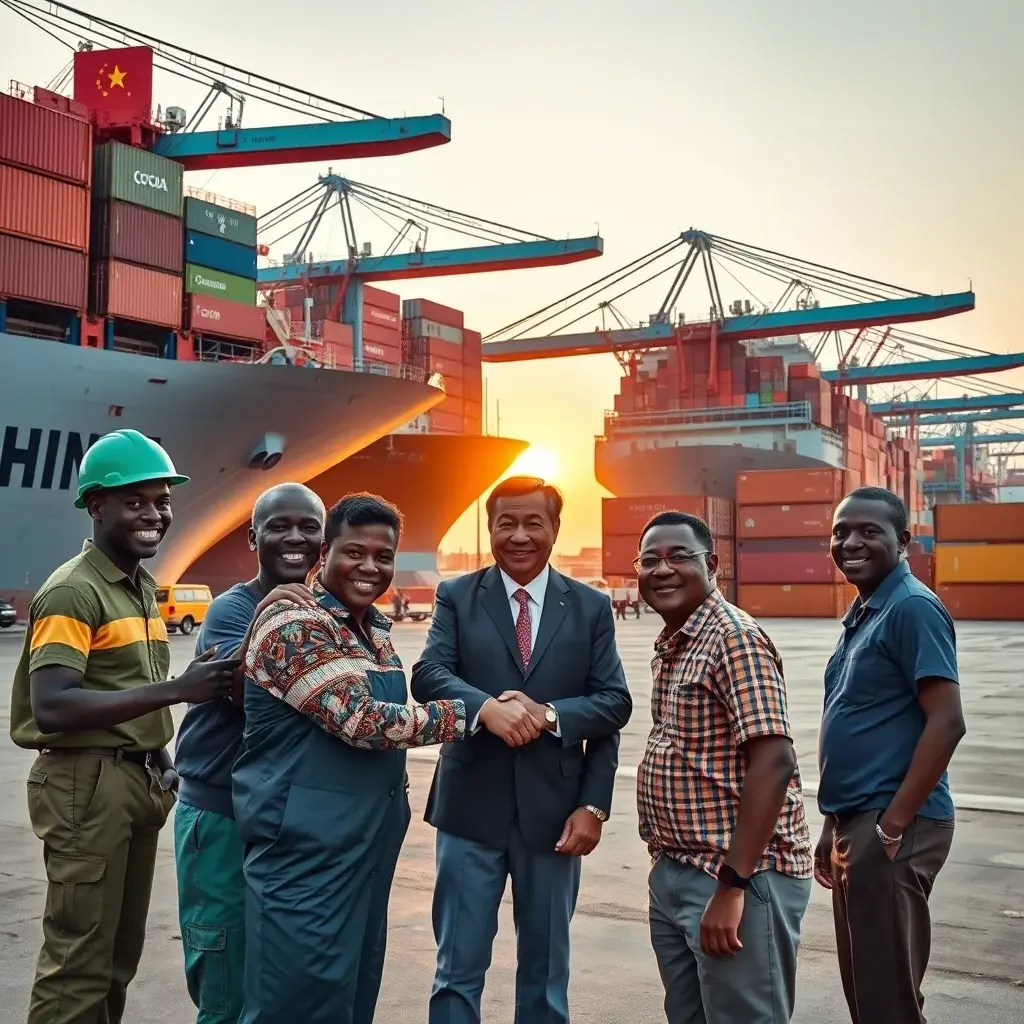
China’s implementation of a sweeping zero-tariff policy for African exports, effective May 1, 2026, is set to unlock significant opportunities for Ghanaian products and accelerate the nation’s industrial transformation. The policy allows duty-free entry for all products from 53 African nations into China, marking a historic move by a major global economy to offer continent-wide preferential trade access.
Expanding Trade Horizons
The initiative, announced by Chinese Ambassador to Ghana, Mr. Cong Song, at a press briefing in Accra, is a key component of China’s strategy to deepen economic ties with Africa under the Forum on China-Africa Cooperation (FOCAC). This policy is expected to substantially lower the cost of exporting Ghanaian goods to China.
Products such as cocoa, cashew, shea butter, textiles, and handicrafts will benefit directly. Previously, Ghanaian cocoa faced tariffs ranging from 8% to 22%. Under the new policy, these goods will enter the Chinese market without any import duties, significantly enhancing their price competitiveness.
Driving Industrialization and Investment
Ambassador Cong highlighted that the zero-tariff policy is designed not only to expand export markets for Ghana but also to stimulate greater Chinese investment in local processing industries. This focus on value addition aims to move Ghanaian exports up the global supply chain.
The influx of capital, advanced technology, modern equipment, and managerial expertise from China is anticipated to bolster Ghana’s industrialization efforts and modernize its agricultural sector. This aligns with Ghana’s development agenda, including the ’24-Hour Economy’ and ‘Resetting Ghana’ initiatives, which share common ground with China’s own industrial modernization strategies.
Strengthening Bilateral Ties
China has solidified its position as Ghana’s largest trading partner in Africa. Bilateral trade reached a record $14.1 billion in 2025, reflecting a robust year-on-year growth of 19.3%. This economic relationship extends beyond trade, with substantial Chinese investments in key sectors.
Chinese companies have made significant contributions to Ghana’s economy through investments in mining, energy, manufacturing, cement, ceramics, steel, and aviation. These ventures have not only supported industrial growth and economic recovery but have also created thousands of jobs within Ghana.
Cooperation Beyond Trade
Beyond economic cooperation, China has pledged continued support for Ghana’s development priorities, including the ambitious Volta Economic Corridor project. This support will encompass increased investment, technology transfer, and industrial collaboration.
The year 2026 has been designated as the China-Africa Year of People-to-People Exchanges, with nearly 600 planned activities across Africa. These initiatives aim to deepen cultural, educational, and youth cooperation. Currently, over 10,000 Ghanaian students are engaged in studying Chinese language and culture, with expanding opportunities in fields like artificial intelligence, film, tourism, and the arts.
Addressing Illegal Mining Concerns
Ambassador Cong also addressed the sensitive issue of illegal mining, known locally as ‘galamsey.’ He reiterated China’s commitment to supporting Ghana’s efforts to combat this environmental and social challenge.
The Chinese government maintains a firm stance against the involvement of its nationals in illegal mining activities and emphasizes adherence to local laws by its citizens abroad. China shares Ghana’s objective of protecting natural resources, restoring mining lands, and promoting sustainable, green mining practices.
Discussions have taken place between Ambassador Cong and Ghanaian ministers responsible for Lands and Natural Resources, and the Interior, to enhance cooperation in tackling illegal mining. The Ambassador also encouraged the Ghanaian media to provide more comprehensive reporting on the positive aspects of China-Ghana cooperation and the contributions of Chinese businesses and communities.
Future Outlook
The Ambassador reaffirmed China’s adherence to the One-China principle and acknowledged Ghana’s consistent diplomatic stance on the Taiwan issue. He expressed strong optimism regarding the future of China-Ghana relations, characterizing the prospects for bilateral cooperation as exceptionally broad and promising.
The zero-tariff policy is expected to foster a new era of economic engagement, driving demand for Ghanaian products and potentially attracting further foreign direct investment into value-added sectors. The success of this policy will be closely watched as a barometer for deepening China-Africa trade relations and Ghana’s industrial development trajectory.










Leave a Reply