
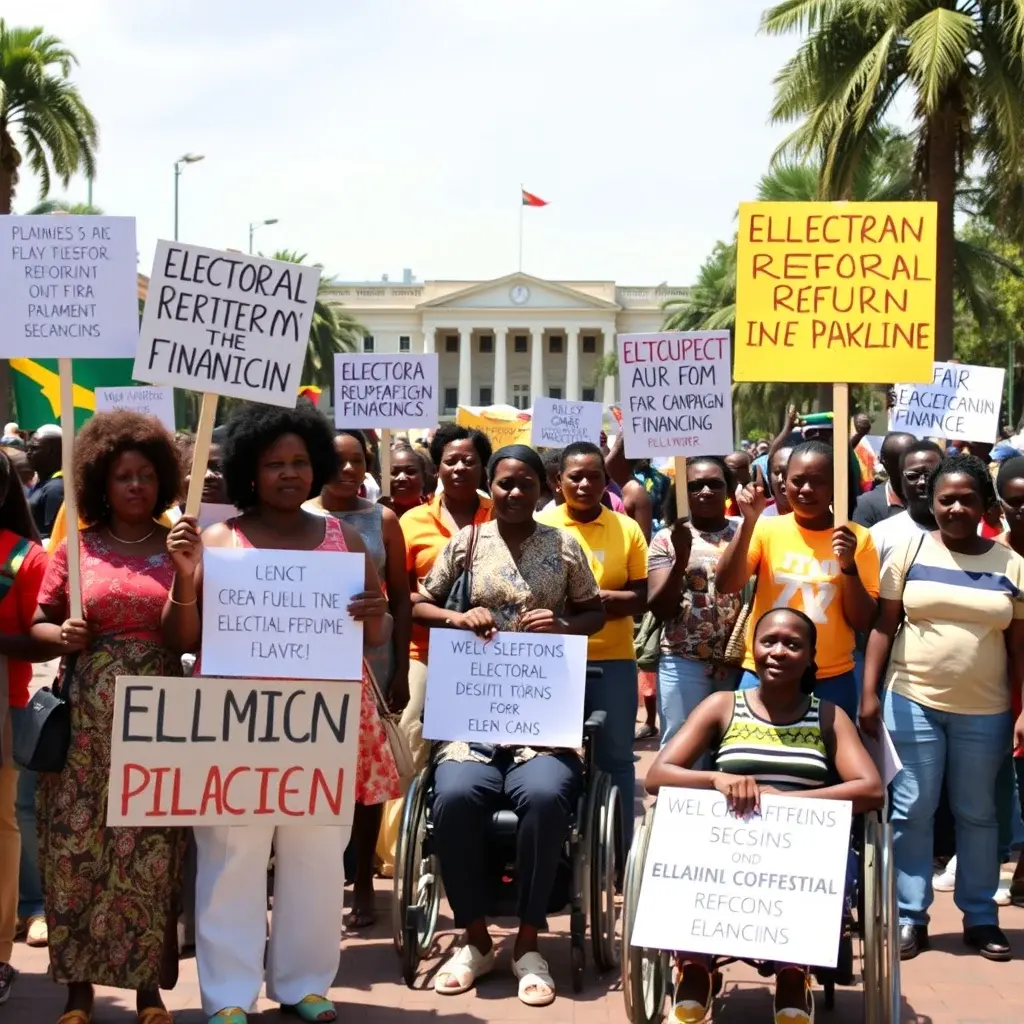
Ghanaian civil society organizations (CSOs) are demanding significant reforms to the nation’s electoral system, proposing a new model law and an independent regulator to govern campaign financing and ensure a level playing field in political contests. These calls follow a recent study highlighting structural barriers within the current electoral framework.
Context of Electoral Challenges
The current electoral laws in Ghana, including the Constitution and the Political Parties Act, 2000 (Act 574), provide a regulatory framework for political parties. However, significant deficiencies persist, particularly in the area of campaign financing.
Experts point out that existing legislation primarily focuses on regulating the operations of political parties themselves, rather than establishing clear rules and limits for the financing of individual candidates or specific campaign activities.
The Proposed Model Law and Regulator
Civil society groups advocate for the adoption of a draft model law specifically designed to regulate political party campaign financing. This proposed legislation aims to address the identified gaps in the current system.
A key proposal is the establishment of an independent electoral party regulator. This body would be tasked with overseeing campaign finances, promoting transparency, and enforcing regulations to ensure fairness in political campaigning across the country.
Disadvantage for Marginalized Groups
A study conducted by the Gender Centre for Empowering Development revealed that the escalating costs associated with political campaigns disproportionately disadvantage women, persons with disabilities, and other marginalized groups. Political parties often favor candidates who possess greater financial resources, creating an uneven playing field.
Joseph Oti Frimpong, Programme Officer at CDD-Ghana, has expressed concern that the increasing influence of money in elections threatens the credibility of Ghana’s democratic processes. He emphasized that without adequate regulation, the system risks becoming inaccessible to those without substantial financial backing.
Gaps in Current Financing Regulations
A critical gap identified is the absence of spending limits for political parties. The draft model law seeks to introduce such limits, which are considered essential for preventing excessive expenditure and promoting more equitable competition.
The current framework’s focus on party regulation over candidate-specific financing means that expenditure by individual candidates, which can be substantial, remains largely unchecked. This allows for a situation where financial power can heavily influence electoral outcomes.
Expert Perspectives and Data
The research by the Gender Centre for Empowering Development, conducted in January 2026, provides empirical evidence for the challenges faced by under-resourced candidates. It highlights how high campaign costs act as a barrier to entry for many qualified individuals, particularly those from disadvantaged backgrounds.
“We don’t have spending limits for political parties. So that’s the gap that the draft model law seeks to address,” stated Joseph Oti Frimpong, underscoring the urgency of legislative intervention.
Implications for Ghana’s Democracy
The push for these reforms signals a growing recognition among civil society of the need to strengthen Ghana’s democratic institutions. Addressing campaign financing is seen as crucial for fostering a more inclusive and representative political landscape.
Implementing these changes could lead to a more competitive electoral environment where ideas and policies take precedence over financial might. It could also enhance public trust in the electoral process by ensuring greater transparency and accountability.
Looking Ahead
The coming months will likely see continued advocacy from CSOs for the adoption of the proposed electoral reforms. Attention will be on how lawmakers respond to these calls and whether the government will prioritize the establishment of a robust campaign financing regulatory framework. The effectiveness of any new regulator and the impact of spending limits will be critical factors to monitor in future elections.








Leave a Reply