
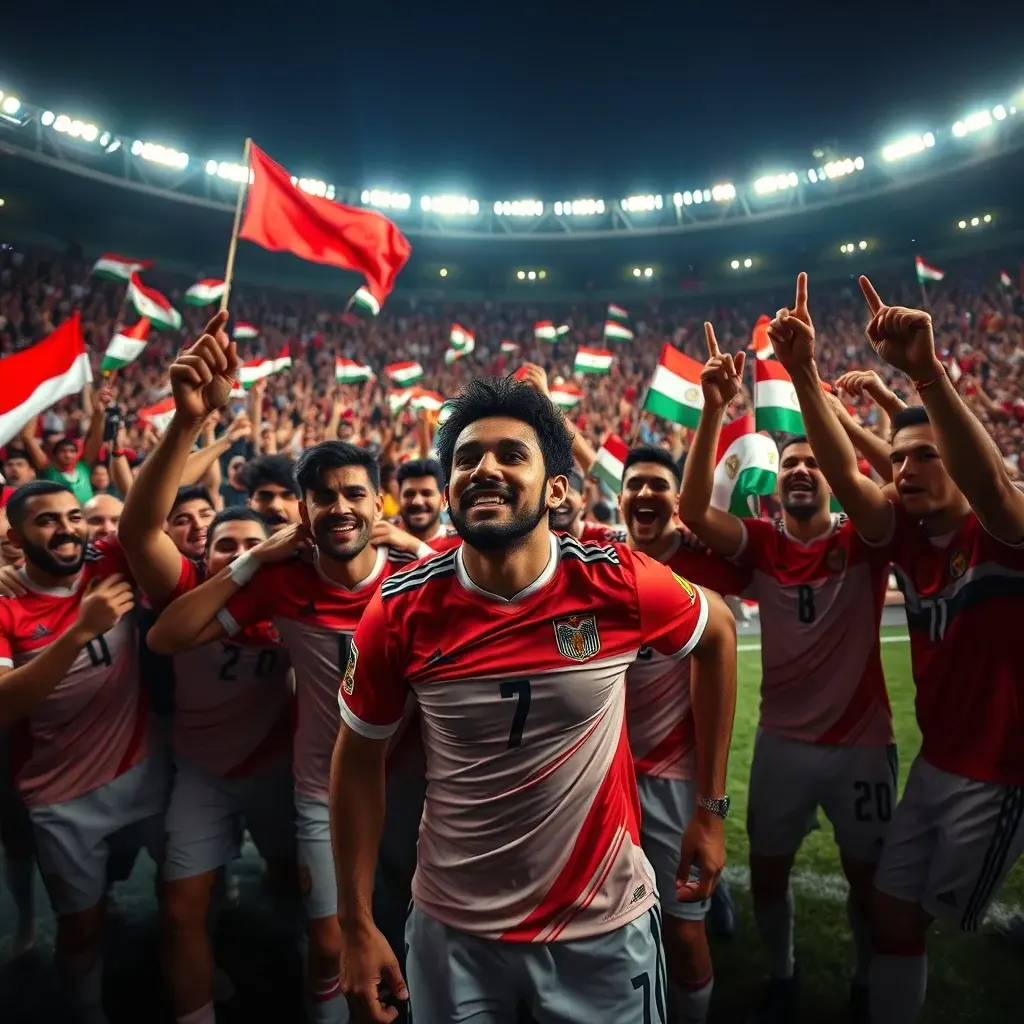
On the night of May 26, 2018, Mohamed Salah’s World Cup dream was dramatically altered when he suffered a shoulder injury in the Champions League final. Three weeks later, a visibly diminished Salah led Egypt into their first World Cup in 28 years in Ekaterinburg, where the Pharaohs lost all three matches, ending their campaign prematurely. Now, eight years later, Salah returns for the 2026 World Cup, carrying not only the memory of past disappointment but also the weight of a nation’s expectations, fueled by his record-breaking nine qualifying goals, the most by an African player in World Cup qualifiers.
The Paradox of Continental Power and Global Struggle
Egypt exemplifies a peculiar paradox in international football: unparalleled dominance on the African continent contrasted with a persistent struggle on the global stage. As one of Africa’s earliest World Cup participants in 1934, Egypt later built an unmatched continental dynasty in the 2000s, securing three consecutive Africa Cup of Nations (AFCON) titles. Despite this regional supremacy, their World Cup record remains stark, with four appearances yielding no wins and no progression to the knockout stages. This persistent divide between continental triumph and global disappointment has profoundly shaped Egyptian football for generations.
Redemption Secured in Casablanca
The long wait for World Cup qualification ended dramatically in October 2025 in Casablanca. Mohamed Salah scored two decisive goals against Djibouti, securing Egypt’s spot in the 2026 tournament. The image of Salah standing motionless in the center circle, hands on his knees, absorbing the roar of the crowd, captured the immense relief and anticipation of a moment long awaited.
Hossam Hassan, Egypt’s all-time leading scorer and current head coach, a three-time AFCON champion player himself, watched the pivotal match with intense focus. Having guided Egypt to the 1990 World Cup, Hassan, with his twin brother Ibrahim as assistant, has now delivered qualification in his first major campaign. He emphasized Salah’s importance, stating, “I had faith in Mohamed Salah… he is of great moral importance to us.”
The current Egyptian squad mirrors the nation’s evolving identity, blending European-based stars like Salah and Omar Marmoush with talented homegrown players. For many Egyptians, these diaspora players are not distant exports but vital extensions of the national team, showcasing the country’s far-reaching football influence.
A Manageable Path in Group G
Egypt finds itself in Group G, which presents a tangible opportunity for advancement. Facing a Belgium team past its prime, an awkward Iran side, and a potentially beatable New Zealand, the Pharaohs have a realistic chance to make an impact. Their campaign begins against Belgium in Seattle on June 15, where a strong performance could ignite genuine belief within the squad and among their supporters.
Coach Hassan’s team typically employs a pragmatic 4-3-3 formation, built around quick transitions and defensive compactness. While lacking the sheer depth of Morocco or the physical prowess of Senegal, Egypt possesses the potential for efficiency and danger when Salah and Marmoush combine effectively. At 33, Salah may not possess the same relentless energy as in his younger years, but his experience has honed his decision-making. The key questions revolve around his physical endurance and the team’s ability to consistently match his high standards throughout the tournament.
The Stakes for Egyptian Football
Egypt has endured a near century-long wait for a World Cup performance that truly reflects its standing and aspirations. Qualification and respect are no longer enough; the nation seeks validation on the global stage. The arduous qualification journey is complete, but the true test of their ambitions begins now, demanding a performance that finally bridges the gap between continental acclaim and global recognition.
Leave a Reply