
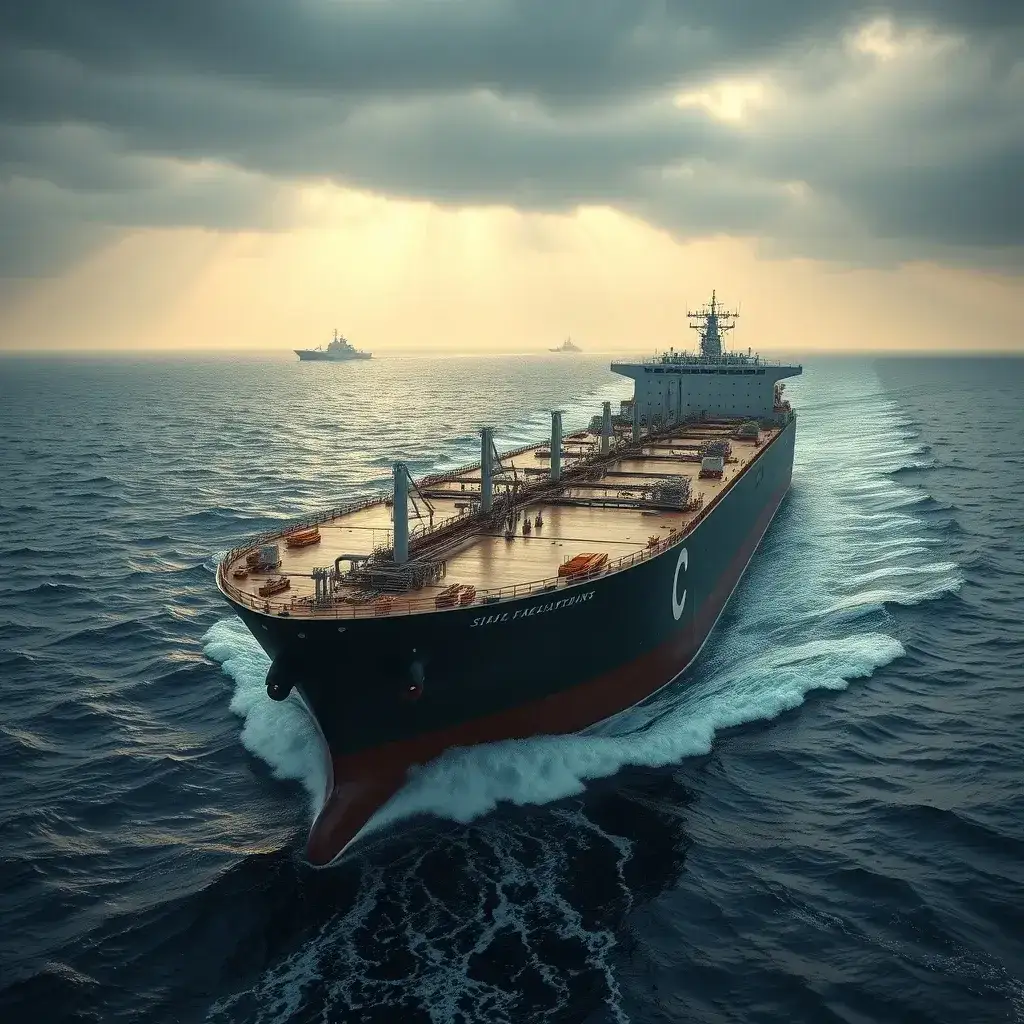
Shell reported first-quarter profits of $6.92 billion (£5.1 billion), surpassing analyst expectations and marking an increase from $5.58 billion in the same period last year. This surge is directly linked to the sharp rise in oil prices following the escalation of the US-Israel war with Iran, which has effectively closed the vital Strait of Hormuz, a key artery for approximately 20% of global oil and LNG supplies.
Market Turmoil and Profit Surges
The geopolitical conflict has sent shockwaves through global energy markets. Oil prices, which hovered around $73 a barrel for Brent crude before the conflict, have experienced significant volatility, peaking above $120 at one point. This price instability creates wider gaps between buying and selling prices, a scenario that benefits oil trading operations.
Shell’s chief executive, Wael Sawan, highlighted the company’s strong performance amidst “unprecedented disruption in global energy markets.” He emphasized the company’s focus on operational performance and its commitment to addressing customer energy needs while prioritizing employee safety.
This profit increase mirrors that of other major energy players. Rival BP announced last week that its first-quarter profits more than doubled. Similarly, Norway’s Equinor reported its highest quarterly profit in three years, reaching $9.77 billion in the first three months of the year.
Factors Driving Shell’s Earnings
Beyond trading profits, Shell’s earnings were also bolstered by higher margins in its refining business. This segment processes crude oil into essential finished products like gasoline and jet fuel. However, the conflict has impacted the company’s production volumes.
Shell’s oil and gas output decreased by 4% in the first quarter compared to the previous three months. Its LNG production facility in Qatar has been shut down since early March due to the conflict, and its Pearl GTL site sustained damage from attacks.
In a strategic move, Shell recently announced its acquisition of Canadian shale producer ARC Resources for $16.4 billion. Sawan described this acquisition as a move that “will deliver value for decades to come.”
Calls for Stronger Windfall Taxes
The substantial profits reported by energy firms have drawn criticism from environmental organizations. Danny Gross, a climate campaigner at Friends of the Earth, stated, “Once again, fossil fuel giants are pocketing monstrous profits while drivers are being squeezed at the petrol pump and households are set to pay higher energy bills.”
Gross advocated for strengthening the windfall tax on these profits and accelerating the transition to renewable energy sources. “The answer is clear: strengthen the windfall tax on these indefensible profits and break our dependence on fossil fuels by powering our economy with homegrown renewables,” he urged.
Energy companies operating in the UK are subject to the Energy Profits Levy, a windfall tax introduced in 2022. The Labour party has extended the tax’s duration until March 2030. However, this levy primarily targets profits from UK-based oil and gas extraction, while a significant portion of major energy companies’ earnings originate from overseas operations. The UK accounts for less than 5% of Shell’s global oil and gas production.
Impact on Consumers and Shipping
While households in Britain are currently shielded by an energy price cap, the rise in wholesale oil and gas prices is expected to lead to an increase in typical annual bills. The cap, currently set at £1,641 for dual-fuel households paying by direct debit until June 30, is projected to rise by approximately £200 in July.
The ripple effects of increased energy costs are also felt in the shipping industry. Vincent Clerc, CEO of Danish shipping giant Maersk, informed the BBC that rising energy prices are adding an extra $500 million per month to the company’s operational costs. “What is really important is actually to pass on these cost increases to our customers as much as possible, so that we can protect our margin and the operations’ integrity going forward,” Clerc stated.
Clerc also noted the uncertainty surrounding whether these increased costs will eventually fuel inflation and dampen consumer demand. He mentioned that a US-flagged vessel, the Alliance Fairfax, had successfully exited the Strait of Hormuz accompanied by US military assets, having been stranded in the Gulf since late February.
The potential for Iran to assert control over the Strait and impose tolls, similar to those at the Suez and Panama Canals, represents a significant potential shift for the industry. However, Clerc cautioned that any such toll charges remain “very, very speculative” at this stage and depend on the Strait’s eventual reopening.
Looking Ahead
As the conflict in the Middle East continues to influence global energy markets, attention will remain fixed on the stability of oil prices, the reopening of key shipping lanes like the Strait of Hormuz, and the ongoing debate surrounding windfall taxes and the pace of the transition to renewable energy sources. The strategic decisions of energy giants, such as Shell’s acquisition of ARC Resources, will also shape the future landscape of energy production and supply.










Leave a Reply