
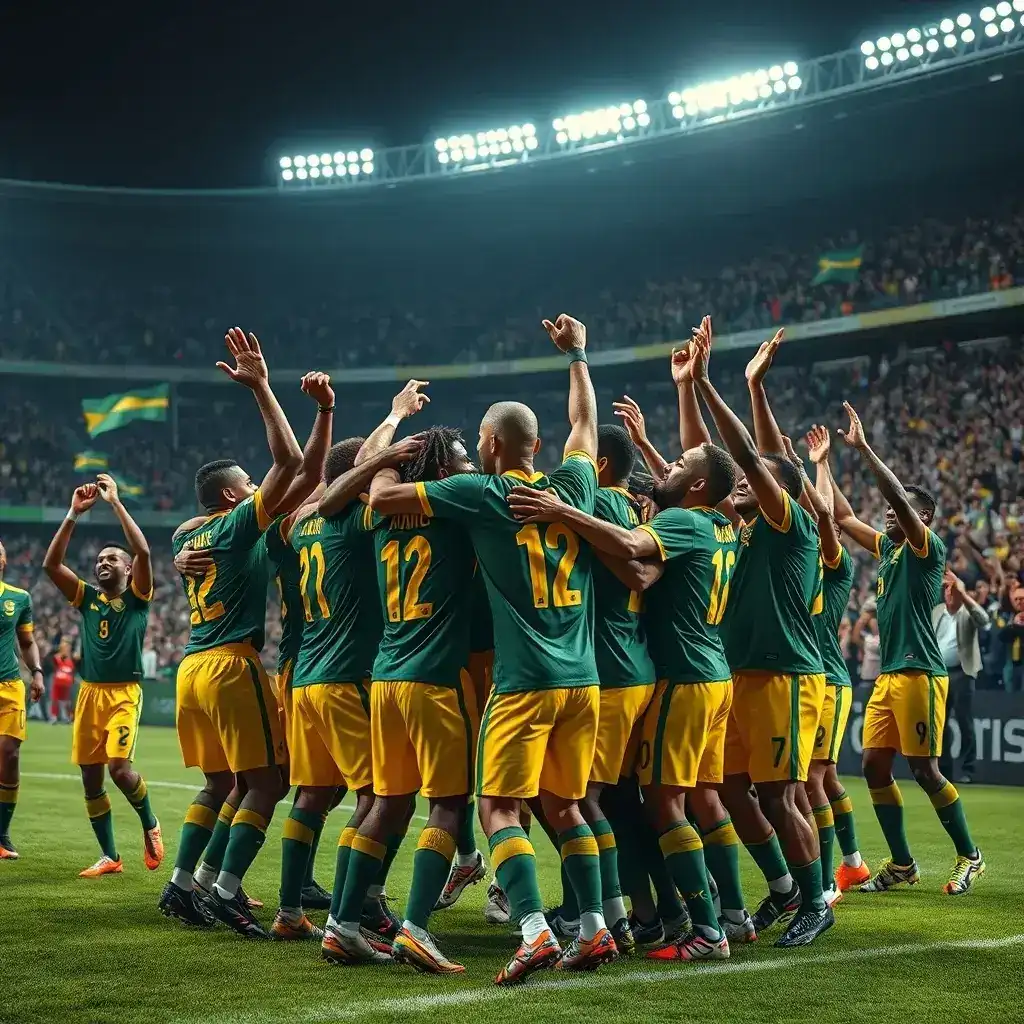
On July 7, 1992, South Africa’s national football team, Bafana Bafana, played their first international match following readmission to global football, defeating Cameroon 1-0 in Durban. This historic game occurred just four days after FIFA reinstated the unified, non-racial South African Football Association on July 3, signaling the end of decades of international sporting isolation due to apartheid.
The 1992 victory, though a friendly, resonated deeply within South Africa, a nation still navigating the complexities of dismantling apartheid. Nelson Mandela had been released two years prior, and peace talks were progressing. The sight of Bafana Bafana on the pitch, restored to the world game, represented a powerful symbol of national unity and reintegration.
The Dawn of a New Era and a Golden Age
The readmission marked the beginning of South Africa’s modern football history. This period saw significant achievements, including winning the 1996 Africa Cup of Nations (AFCON) on home soil. The nation also qualified for consecutive FIFA World Cups in 1998 and 2002, showcasing their return to the international stage.
The zenith of this era arrived in 2010 when South Africa became the first African nation to host the FIFA World Cup. The tournament was lauded for its smooth organization and vibrant atmosphere, amplified by the distinctive sound of vuvuzelas. Siphiwe Tshabalala’s memorable opening goal against Mexico captured the spirit of the continent.
The Inevitable Decline and Administrative Woes
Following their peak, South Africa experienced a gradual decline in performance. They failed to qualify for the 2006, 2014, 2018, and 2022 World Cups. This slide was attributed to missed opportunities in qualifying matches, a notable meltdown in the 2018 qualifiers against Cape Verde, and persistent administrative issues.
These challenges led to the exodus of talented players abroad without adequate development of domestic depth, weakening the national team’s overall strength and consistency.
Hugo Broos’s Revitalization and Cultural Reset
In 2021, Belgian coach Hugo Broos took charge of a team ranked 76th in the FIFA rankings. He identified a cultural issue within the squad, suggesting players had become accustomed to losing. Broos implemented a rigorous training regime and emphasized discipline.
He strategically integrated players from Mamelodi Sundowns, a dominant local club, with eight of them starting in the crucial 2026 World Cup qualifier against Rwanda. Broos also built the team around goalkeeper Ronwen Williams, whose exceptional penalty saves were instrumental in South Africa reaching the semi-finals of the 2023 AFCON.
A significant test came when the team faced a three-point deduction for fielding a suspended player. However, they rallied, securing vital wins against Benin and Rwanda. Their decisive 3-0 victory over Rwanda on October 9, 2025, with an all-local starting lineup, clinched their qualification for the 2026 World Cup and saw their FIFA ranking improve to 58th.
Looking Ahead to the 2026 FIFA World Cup
South Africa has been drawn into a challenging group for the 2026 World Cup, facing Mexico, South Korea, and the Czech Republic. While advancing from the group stage is not widely expected, the team’s recent resurgence suggests they could be underestimated.
The defense, anchored by Williams, conceded only three goals in six qualifiers. The attacking threats posed by Oswin Appollis and Lyle Foster add to their potential. Coach Broos has set a target of reaching the knockout stages, a reflection of the squad’s quiet rebuilding and growing ambition.
The opening match on June 11, 2026, pits South Africa against Mexico once again at the Estadio Azteca, mirroring the iconic 2010 opener. This time, however, South Africa enters not as hosts, but as contenders seeking to make a significant impact.
Full Circle: From Readmission to Contention
In 1992, South African football broke free from 16 years of silence and isolation. In 2010, the nation hosted the World Cup, showcasing the vibrancy of the continent. Now, in 2026, the question is whether this team, after being allowed back into the global fold and having hosted a memorable tournament, can finally achieve a historic victory on the world stage.










Leave a Reply