
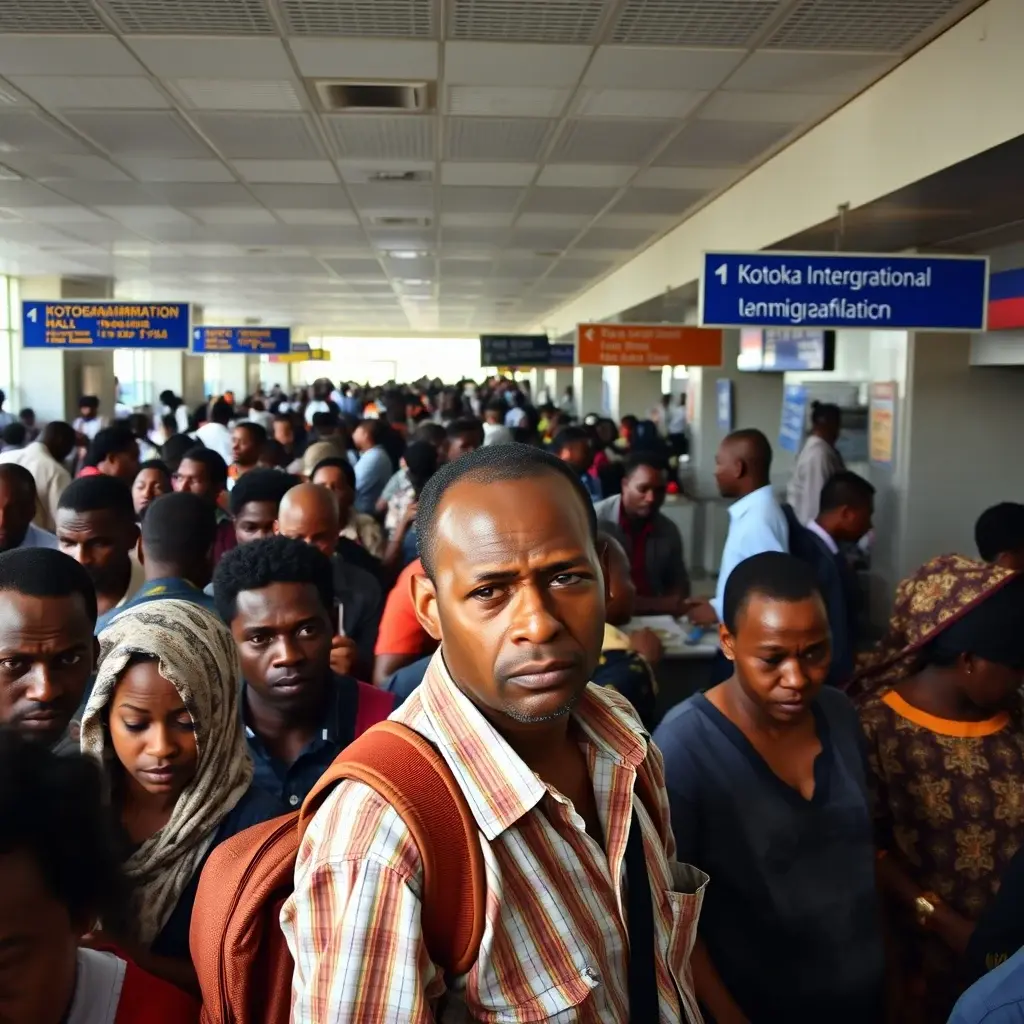
Accra, Ghana – A heated exchange at Kotoka International Airport on December 29, 2010, exposed a deep-seated national identity crisis in Ghana, highlighting the persistent struggle for citizens to definitively prove their nationality. The incident, where an immigration officer questioned a woman’s Ghanaian identity after she spoke Twi in frustration, underscored a decades-long challenge that impacts immigration, security, banking, healthcare, voting, and daily life.
For years, Ghana has grappled with establishing a universally recognized identification system. This void has led to confusion, frustration, and vulnerability for millions within Ghana and abroad, as nationality is often determined by documentation rather than heritage or residency.
The core of the issue lies in Ghana’s historical approach to identification. Unlike many developed nations where identification is intrinsically linked to citizenship and governance, Ghana once viewed passports primarily as travel documents. Consequently, many citizens, particularly those not frequently traveling internationally, never saw the necessity of obtaining one.
This reliance on fragmented and often uncoordinated documents like voter ID cards, birth certificates, and school records has created significant gaps. Many citizens, especially in rural areas, lack formal state documentation, making it difficult to prove their identity even when born and raised in Ghana. Inconsistent records and the absence of birth certificates further exacerbate the problem.
This identification deficit poses a considerable national security threat. The inability to reliably identify citizens hinders effective border control, immigration management, crime prevention, and the equitable distribution of social services. The lack of a centralized, verifiable system leaves the nation vulnerable.
Internationally, the situation can be embarrassing. Immigration authorities in countries like the United States have encountered undocumented individuals suspected of being Ghanaian who cannot be officially identified or deported due to a lack of recognized Ghanaian identification. This occurs despite some of these individuals speaking local Ghanaian languages fluently.
Developed nations, such as Canada and the United States, have long implemented robust, centralized identification systems. These systems integrate citizens and residents through documents like passports, health cards, social insurance numbers, and driver’s licenses, all connected to reliable databases and widely accepted across institutions.
The introduction of the Ghana Card marked a significant reform aimed at addressing this long-standing issue. Championed as part of a broader digitalization agenda, the system sought to centralize personal data, enhance security, modernize public services, and create a reliable national database comparable to international standards. The vision was to establish a unique and verifiable identity for every Ghanaian.
However, reports of some institutions refusing to recognize the Ghana Card as the primary national identification document undermine this crucial reform. Such contradictions create public distrust and weaken confidence in state institutions, raising questions about Ghana’s national identification policy.
Investing millions in biometric registration systems becomes counterproductive if the resulting identification card is not universally accepted. Parliament, policymakers, and national stakeholders must urgently collaborate to establish a clear, enforceable, and standardized national identification framework that all public and private institutions adhere to.
Without a trusted and universally accepted identification system, Ghana will continue to face challenges related to identity confusion, fraud, illegal migration, and institutional inefficiencies. A modern state cannot function effectively without such a foundation.
Ghana must prioritize national identification as a development imperative, moving it beyond political discourse. Every citizen deserves the dignity of belonging, recognition, and legal protection that a robust identification system provides.
Until this identification crisis is fully resolved, the question “Are you really a Ghanaian?” will continue to resonate, highlighting a fundamental challenge to national cohesion and governance.










Leave a Reply