
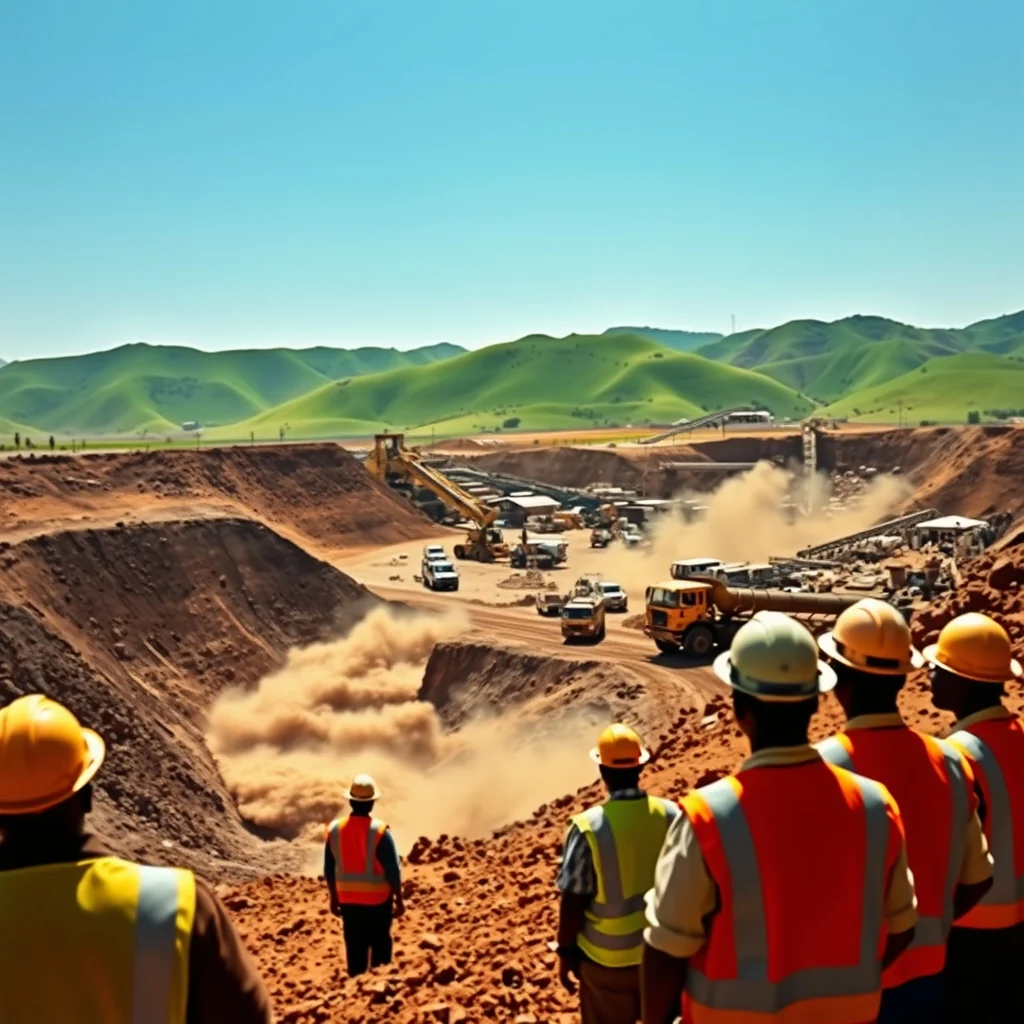
The Ghana Chamber of Mines has called for regulatory certainty and constructive engagement within Ghana’s mining sector, addressing growing concerns that impact operations like Gold Fields’ Tarkwa mine and the broader industry’s global competitiveness. The Chamber emphasized that while mining firms must adhere to legal and environmental obligations, enforcement must also respect procedural fairness and due process to safeguard investor confidence.
Context of Sectoral Concerns
These statements emerge at a time when Ghana’s mining industry faces increased public scrutiny. Issues such as mining lease renewals, environmental impact concerns, and a growing public demand for greater state control over mineral resources are at the forefront of discussions.
The Chamber’s Chief Executive Officer, Ing. Ken Ashigbey, highlighted that procedural protections are fundamental to the rule of law and investor confidence in Ghana’s mining sector. He cautioned that disregarding these principles could have significant negative consequences.
Tarkwa Mine’s Significance and Broader Implications
The Tarkwa Mine is recognized as one of Ghana’s largest gold producers. It plays a crucial role in generating foreign exchange earnings, contributing to local economic activity in the Western Region, and providing substantial employment opportunities.
Industry observers note that prolonged uncertainty surrounding major operations like Tarkwa could negatively affect production forecasts, investor sentiment, and future expansion plans within the entire mining sector.
Ing. Ashigbey stressed that the long-term credibility, stability, and competitiveness of Ghana’s mining industry hinge on all operators adhering to established standards.
Chamber’s Commitment to Responsible Mining
The Ghana Chamber of Mines reiterated its dedication to promoting environmentally and socially responsible mining practices. It pledged to continue working closely with government regulators, member companies, and other stakeholders.
The goal is to strengthen compliance, elevate industrial standards, and ensure the long-term sustainability of the mining sector. This includes improving compliance and sustainability across the industry.
Balancing Enforcement with Economic Stability
The Chamber emphasized the critical need to balance regulatory enforcement with the maintenance of economic stability, especially for communities heavily reliant on mining operations. Ing. Ashigbey acknowledged the potential impact of current developments on employees and host communities.
The Chamber expressed support for initiatives aimed at mitigating any adverse socio-economic consequences arising from these developments. This includes efforts to protect the livelihoods dependent on the sector.
Call for Continued Dialogue
Furthermore, the Chamber urged for ongoing dialogue between government institutions and mining companies. This is seen as essential for resolving disputes constructively without eroding confidence in Ghana’s mining investment climate.
Ing. Ashigbey concluded by reaffirming the Chamber’s unwavering commitment to responsible mining practices, regulatory compliance, and constructive engagement with all stakeholders. The objective is to advance the sustainable development of Ghana’s mineral resources.
Looking Ahead
The focus remains on whether Ghana can strike a balance between asserting greater state control over its mineral wealth and maintaining an attractive environment for foreign investment. The Chamber’s stance suggests that adherence to legal frameworks and procedural fairness will be key determinants of the sector’s future stability and growth, impacting everything from job security in mining communities to the nation’s overall appeal to international mining conglomerates.










Leave a Reply