
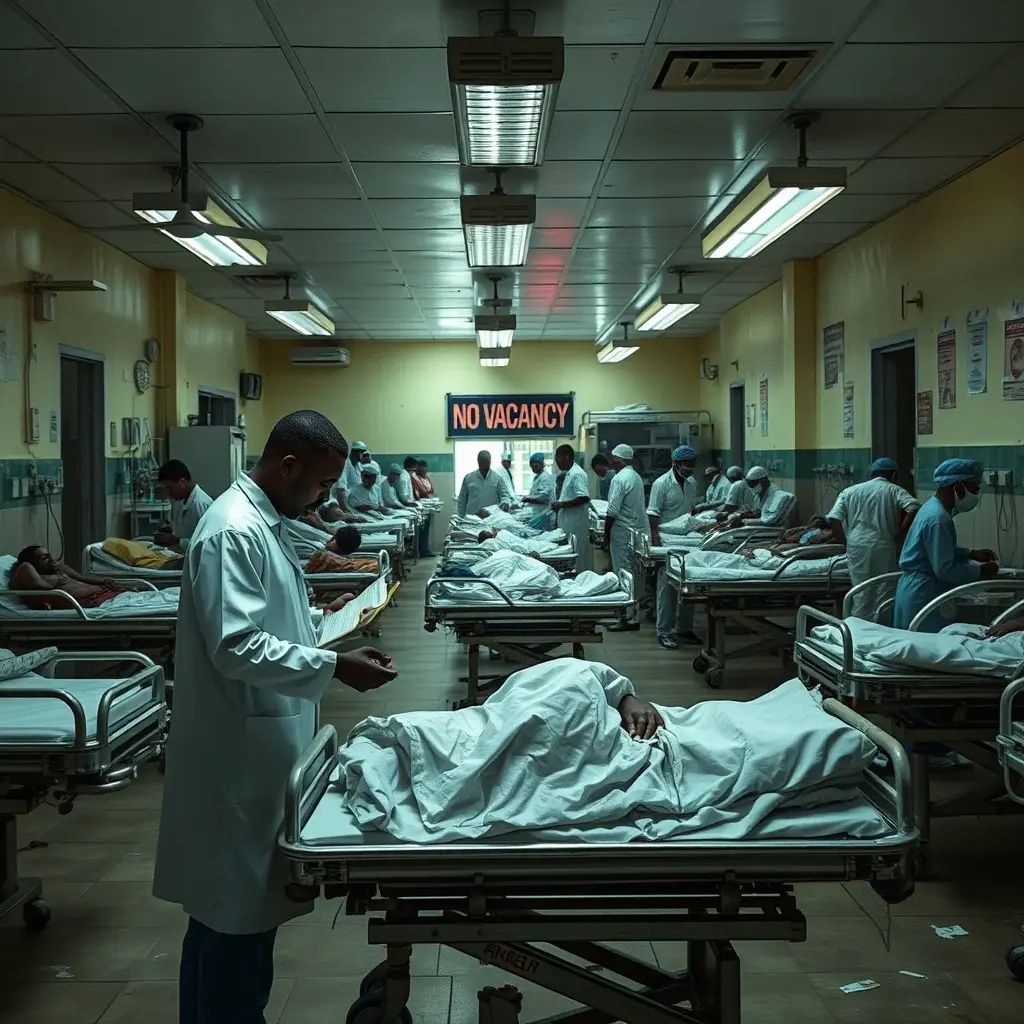
President of the Ghana Medical Association (GMA), Prof. Dr. Ernest Yorke, has called for public restraint in attributing blame to doctors and nurses regarding the ongoing “no bed syndrome” crisis, particularly in light of the recent death of Charles Amissah. Speaking on Joy FM’s Super Morning Show on Friday, May 8, Prof. Yorke emphasized that initial findings suggesting potential negligence among some health workers do not equate to guilt.
Systemic Challenges Over Individual Culpability
Prof. Yorke argued that the “no bed syndrome,” a euphemism for a failing emergency medical system, stems from deeper, long-standing systemic challenges rather than the actions of individual healthcare providers. He cautioned against jumping to conclusions based on preliminary committee reports.
“The fact that the committee has found some initial prima facie evidence that they may be culpable does not mean they are guilty,” Prof. Yorke stated. He stressed that only a formal disciplinary process, conducted by the relevant employer or regulatory body, can definitively establish culpability and determine appropriate sanctions.
“It is only a thorough disciplinary process instituted by the employer, whether Korle-Bu, Ridge, the Police Service, or even the Medical and Dental Council, that can establish potential guilt and pronounce sanctions. So let’s hold our horses,” he urged.
Broadening the National Conversation
The GMA president clarified that the association is not defending specific individuals but advocating for a comprehensive national discussion on the weaknesses plaguing Ghana’s emergency healthcare delivery. He expressed concern that the situation may be deteriorating despite decades of discussion.
“We are not holding brief for anybody. But let’s broaden the conversation. We’ve been discussing these issues for decades, and nothing has really changed. If you ask me, things are probably getting worse,” he remarked.
Recommendations for Improvement
Prof. Yorke highlighted several key areas for systemic improvement, referencing recommendations from recent reports. A critical need identified is an emergency tracking system to enhance coordination between ambulances and hospitals.
“The GMA has long advocated for an emergency tracking system so ambulances do not just move from one hospital to another,” he noted. “Once a decision is made, a central system should be able to identify where appropriate beds are available before the patient is moved, so patients do not get stranded.”
Beyond tracking systems, Prof. Yorke called for increased training for emergency physicians and emergency medical technicians (EMTs), improved healthcare policies, and greater financial investment in emergency services.
He also suggested greater involvement of the private sector and the military in bolstering emergency healthcare capabilities. “We are not discussing enough about how to bring in the private sector, and I’m happy they are now involving the military as well,” he added.
Unpacking the Systemic Failures
Prof. Yorke elaborated on the complex web of issues contributing to the “no bed syndrome.” He explained that the problems begin at the referral stage and encompass ambulance responsiveness, the training of EMTs, and the overall coordination of the emergency system.
“You need to look at where the decision to refer the patient starts from. You have to consider ambulance responsiveness, the training of emergency medical technicians, and the fact that we do not have enough trained EMTs across the country,” he detailed.
Revealing a stark statistic, Prof. Yorke stated that Ghana has fewer than ten fully trained EMTs nationwide. Many personnel currently operating ambulances are primarily drivers, limited to patient transport without specialized medical care.
“The rest are technically drivers. They just scoop and deliver,” he lamented.
Operational and Logistical Hurdles
Further compounding the crisis are significant operational and logistical challenges. These include frequent fuel constraints, weak communication channels between emergency teams and hospitals, and inadequate equipment.
“Sometimes people even have to pay for fuel before an ambulance can move. The ambulances are not properly equipped, and often, no calls are made ahead of time before patients arrive. They simply come and leave the patient at the hospital gate,” he described.
Looking Ahead
The GMA’s call for a systemic approach suggests that addressing the “no bed syndrome” requires more than just disciplinary actions against individuals. The focus must shift towards implementing robust tracking systems, enhancing EMT training and numbers, securing adequate funding, and fostering better inter-agency and private sector collaboration. Observers will be watching closely to see if these systemic recommendations gain traction and translate into tangible improvements in Ghana’s emergency healthcare infrastructure.










Leave a Reply