
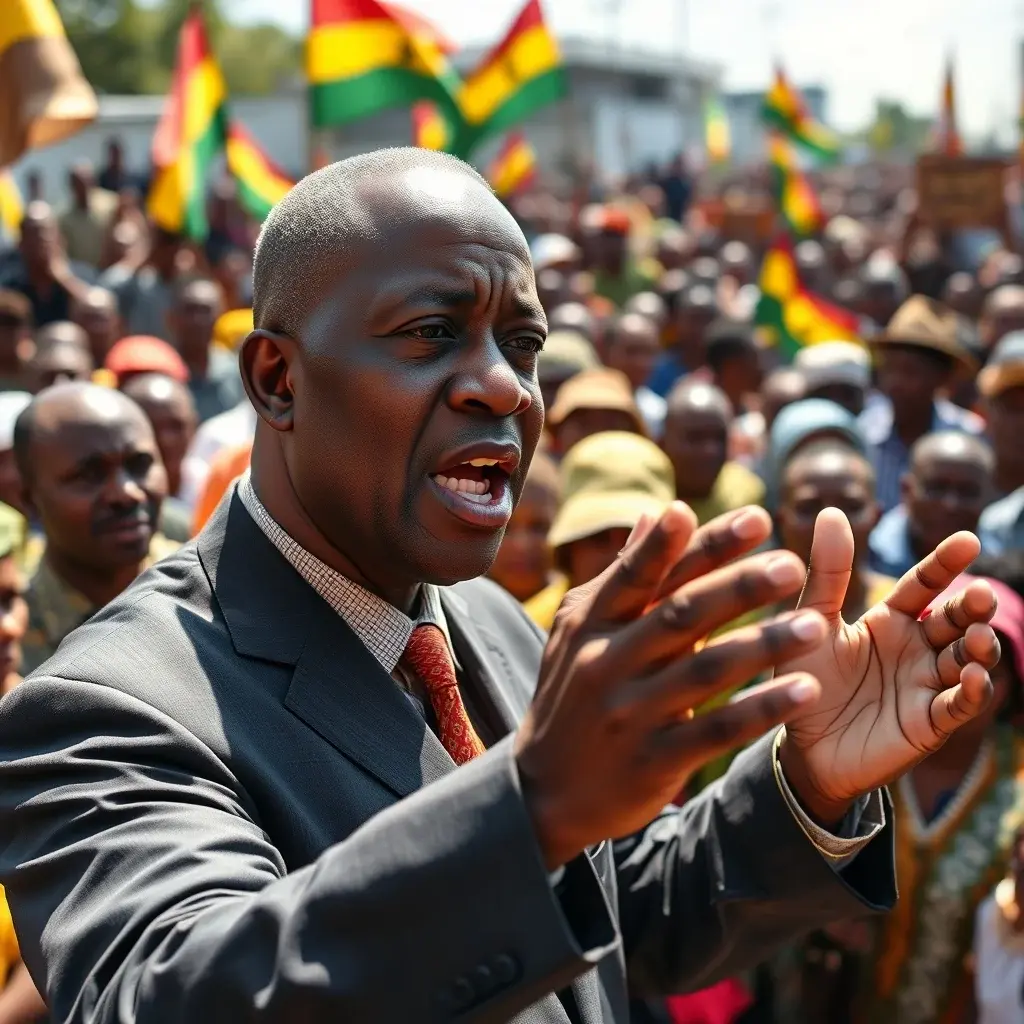
President John Mahama announced a strategic shift in Ghana’s economic policy, moving from a phase of macroeconomic stabilization to a focused agenda on job creation and broad-based economic growth, prioritizing the direct benefits for Ghanaian workers. The announcement was made during the 2026 May Day parade in Koforidua, the Eastern Regional capital.
Mahama pledged that the Ghanaian worker would be the first to benefit as the economy expands, ensuring that the fruits of stability are felt across households and various sectors, including teachers, technicians, and industrial workers. The government’s immediate priority is to translate recent economic stability into tangible opportunities for all citizens.
From Stability to Opportunity
The government’s earlier focus on stabilizing inflation, the national currency, and fiscal balances was a necessary precursor to the current phase. President Mahama emphasized that this stabilization, while crucial, was not an end in itself. The new strategy will prioritize productivity, investment, and employment, underpinned by policies designed to expand key sectors of the economy.
“Our mission is clear… we want to turn stability into opportunity. We will not just manage the economy; we will expand it to create jobs and prosperity,” President Mahama stated, underscoring the transition from managing economic challenges to actively fostering growth.
Economic Turnaround Underpins New Agenda
Ghana entered 2025 navigating the aftermath of a 2022 debt default, which had led to increased inflation, debt, and currency pressures. The country was under a $3 billion IMF Extended Credit Facility during this period. Significant economic improvements have been recorded since then, providing the foundation for the policy shift.
Government data reveals a dramatic reduction in inflation, which fell from approximately 23.8% at the end of 2024 to 5.4% by the close of 2025, and further down to 3.2% in March 2026. Economic growth rebounded, reaching an estimated 6% to 6.3% in 2025.
Fiscal discipline yielded positive results, with the primary balance shifting to a surplus of 2.6%. National debt saw a reduction of about GH¢82 billion, bringing it down to 45% of GDP. International reserves also strengthened considerably, rising to $13.8 billion, equivalent to nearly six months of import cover, a significant increase from $9.1 billion at the end of 2024.
These gains were bolstered by successful debt restructuring efforts and positive outcomes from IMF reviews conducted throughout 2025, creating a stable platform for the transition towards job creation and broader economic expansion.
Strengthening Governance and Infrastructure
Beyond economic policy, President Mahama reiterated the government’s commitment to combating corruption, stressing the importance of accountability for public officials. He commended the judiciary for establishing additional High Courts, a move aimed at expediting the prosecution of cases related to audit irregularities and strengthening institutional oversight.
Addressing recent concerns about power supply, the President announced the full restoration of operations at the Akosombo Hydroelectric Plant following a fire incident. Engineers successfully bypassed the affected control room and restarted all six turbines, ensuring the return of generation capacity.
He lauded the swift response and expertise of technical teams from the Ghana Grid Company and the Volta River Authority in resolving the issue. The government’s ongoing policy measures are designed to ensure that economic gains translate directly into improved livelihoods and increased employment opportunities.
Looking Ahead: Sustaining Inclusive Growth
President Mahama assured Ghanaian workers that the government would maintain close collaboration with Organised Labour and other key stakeholders as these reform measures progress. The focus remains on translating economic stability into sustainable, inclusive growth that benefits all segments of society.
The coming months will be crucial in observing how effectively the government implements policies aimed at job creation and expands key economic sectors. Continued engagement with labor unions and other stakeholders will be vital in ensuring that the benefits of the economic reset are widely distributed and contribute to improved living standards across Ghana.










Leave a Reply