
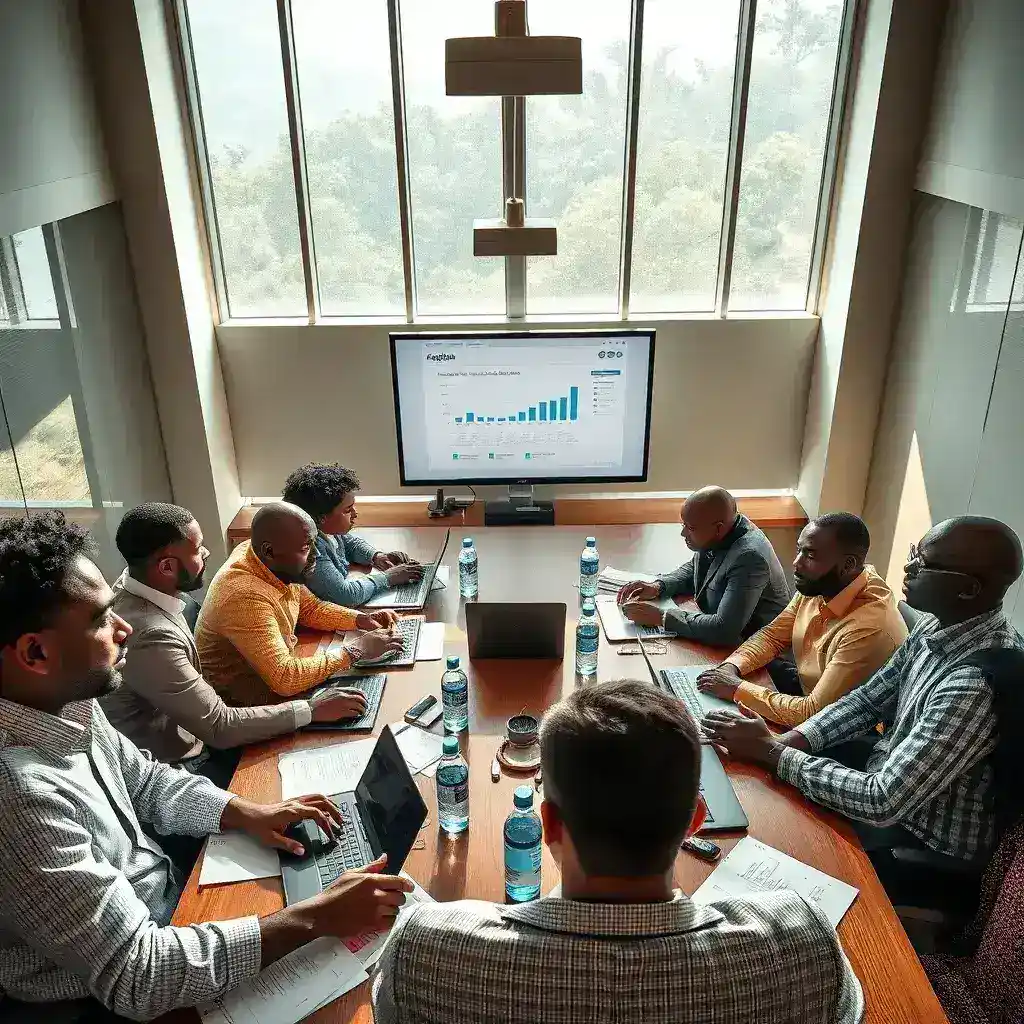
The Minerals Income Investment Fund (MIIF), alongside several key state institutions in Ghana’s extractive sector, has reconstituted an inter-agency committee to enhance the monitoring, verification, and collection of mineral royalties and other mining revenues. The committee, which held its inaugural meeting in Accra on Friday, May 8, 2026, aims to close coordination gaps and ensure greater accountability in the mining sector.
Context and Rationale for Revival
The committee brings together a broad spectrum of government bodies, including the Ghana Revenue Authority (GRA), the Minerals Commission, the Ghana Standards Authority (GSA), the Minerals Development Fund (MDF), the Economic and Organised Crime Office (EOCO), GoldBod, the Environmental Protection Authority (EPA), and the Ministry of Lands and Natural Resources. Chaired by Dr. Martin Yamborigya, Acting Commissioner of the Domestic Tax Revenue Division of the GRA, its revival addresses a recent period of inactivity that created vulnerabilities in monitoring and enforcement.
MIIF CEO Justina Nelson highlighted that this renewed platform is crucial for tackling issues such as undeclared production, royalty leakages, and weak regulatory oversight, particularly affecting the small-scale mining sector. She emphasized the critical role of mineral royalties as a significant revenue stream for national development and infrastructure financing.
Strengthening Revenue Mobilization
Discussions during the inaugural meeting focused on restoring effective coordination among institutions responsible for overseeing royalties, licenses, production declarations, and regulatory compliance. Dr. Yamborigya acknowledged ongoing challenges in domestic revenue mobilization, noting that areas beyond large-scale mining, such as quarrying and salt production, often receive less monitoring attention.
The committee reviewed draft terms of reference to define its mandate, governance, and operational procedures. Key proposals include enhancing inter-agency data sharing, establishing a comprehensive database of mining operators and rights holders, and improving systems for tracking production levels and royalty obligations. Members also explored sustainable funding mechanisms, including potential cost-sharing among participating institutions to support operational activities like field inspections.
Broader Implications for the Extractive Sector
The renewed collaborative effort underscores the importance of strengthening oversight and combating illegal mining activities to ensure all eligible mineral operations contribute appropriately to national revenue. Officials from the GRA expressed confidence that past collaborative interventions have yielded positive results, suggesting that renewed institutional coordination will improve compliance and revenue assurance.
MIIF will primarily provide coordination and secretariat support, with the overarching goal of protecting national interests and promoting accountability within the extractive sector. The committee agreed to adopt revised operational guidelines and hold monthly meetings to maintain momentum and consistent oversight.
Future Outlook
Participants expressed optimism that this closer collaboration will enhance royalty administration, boost transparency, and ultimately improve Ghana’s capacity to leverage its mineral wealth for long-term economic benefit. The focus now shifts to the implementation of these enhanced monitoring mechanisms and the sustained commitment of all member institutions.










Leave a Reply