
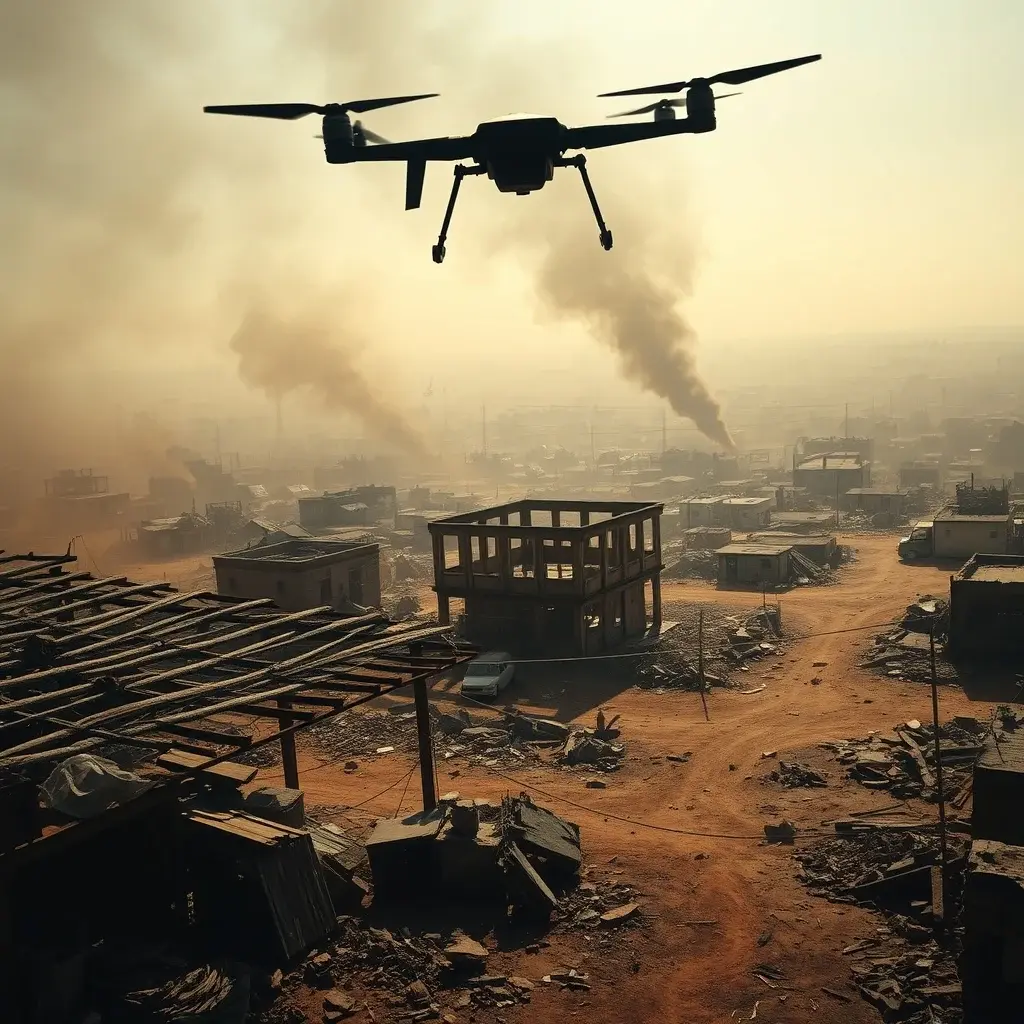
Drone strikes have become the predominant cause of civilian fatalities in Sudan’s ongoing conflict, accounting for over 80% of all war-related deaths among non-combatants in the first four months of 2026, according to a recent report from the Office of the United Nations High Commissioner for Human Rights (OHCHR). At least 880 civilians have been killed by these remote-controlled weapons as the war between the Sudanese Armed Forces (SAF) and the paramilitary Rapid Support Forces (RSF) enters a more technologically advanced and deadly phase.
A Lethal Evolution in Conflict Dynamics
As the war enters its fourth year, the nature of the violence has significantly shifted. UN High Commissioner for Human Rights Volker Türk highlighted this alarming trend, noting that armed drones are now the leading threat to civilian life.
This increasing reliance on drones allows hostilities to continue unabated, even as the approaching rainy season historically brings a lull to ground operations. This technological adaptation means violence can persist regardless of environmental conditions.
Kordofan Becomes the Epicentre of Aerial Violence
The Kordofan region has emerged as the most heavily impacted area, bearing the brunt of drone-related casualties. A specific incident on May 8 resulted in the deaths of 26 civilians across South and North Kordofan alone.
These strikes frequently target civilian spaces such as markets and residential areas, underscoring the indiscriminate nature of the attacks. Türk issued a stark warning that the international community must act decisively to prevent the conflict from escalating into an even deadlier phase.
Targeted Destruction of Vital Infrastructure
Essential civilian infrastructure has been a consistent target for drone attacks by both warring parties. Data from the OHCHR reveals that health facilities were struck at least 12 times within a four-month period.
These attacks have forced numerous clinics to cease operations, leaving vast populations without access to critical medical care. Markets, vital hubs for daily life and commerce, have also been hit repeatedly, with at least 28 recorded strikes causing casualties.
Furthermore, the destruction of fuel storage facilities and crucial supply routes has severely hampered the movement of basic goods, exacerbating the humanitarian crisis.
Expansion of the Theatre of War
The use of drones is no longer confined to the initial conflict zones of Kordofan and Darfur. The aerial assaults are rapidly expanding to include Blue Nile, White Nile, and the capital city, Khartoum.
An attack on Khartoum International Airport on May 4 effectively halted all flight operations. Türk pointed out that the intensity of these recent attacks has shattered the relative calm previously experienced in the capital, leading to fears of a resurgence of large-scale hostilities in Khartoum.
Humanitarian Operations Under Threat
The escalating drone warfare poses a direct and severe threat to humanitarian operations, including the delivery of aid and food security initiatives. Regions like Kordofan are now at heightened risk of famine.
This dire situation is compounded by anticipated delays and shortages of vital agricultural inputs such as fertilizer, partly due to the ongoing Gulf crisis. Türk emphasized the critical need to prevent further humanitarian catastrophe and called for immediate global intervention to halt the flow of advanced weaponry into Sudan.
He warned that impunity for drone attacks against civilians will only embolden both parties to normalize such tactics, leading to further violence.
Urgent Calls for Civilian Protection
The United Nations continues to urge all parties involved in the conflict to prioritize the safety and protection of the Sudanese population. This includes ensuring safe passage for civilians attempting to flee active hostilities.
Türk reiterated that the warring factions are obligated to shield the population from reprisals, which include summary executions, sexual violence, arbitrary detention, and abductions.
The Global Challenge of Arms Proliferation
The widespread availability and use of advanced unmanned systems in Sudan highlight a significant failure of international arms embargoes. Both the SAF and RSF are reportedly acquiring sophisticated technology from external sponsors, transforming the conflict into a high-tech proxy war.
Reversing the flow of weapons is presented as the only viable path for the international community to offer the Sudanese people a realistic opportunity for peace.
Continental Consequences and the African Response
For nations across Africa, including Ghana, the normalization of drone warfare in Sudan signifies a troubling shift in regional security stability. The African Union (AU) Peace and Security Council has expressed growing concern over the ‘regionalisation’ of the conflict, with cross-border strikes now impacting neighboring states like Chad.
This technological escalation risks exporting a new model of asymmetric warfare to other volatile regions on the continent. The resulting mass displacement, estimated at over 13 million people, places immense pressure on the humanitarian frameworks of the entire African Union.
A Call for African Solidarity and Vigilance
The conflict’s repercussions are extending to West African markets, where disruptions to trade and agricultural output in East Africa contribute to continental food price volatility. Experts caution that the ‘atrocities laboratory’ in Sudan could embolden armed groups elsewhere to adopt similar remote tactics.
In response, African leaders are being urged to strengthen the AU’s monitoring of arms smuggling and to advocate for a unified ‘Silence the Guns’ initiative specifically targeting unmanned aerial technology. The implications for the continent are profound, demanding a coordinated and vigilant response to this evolving security threat.










Leave a Reply