
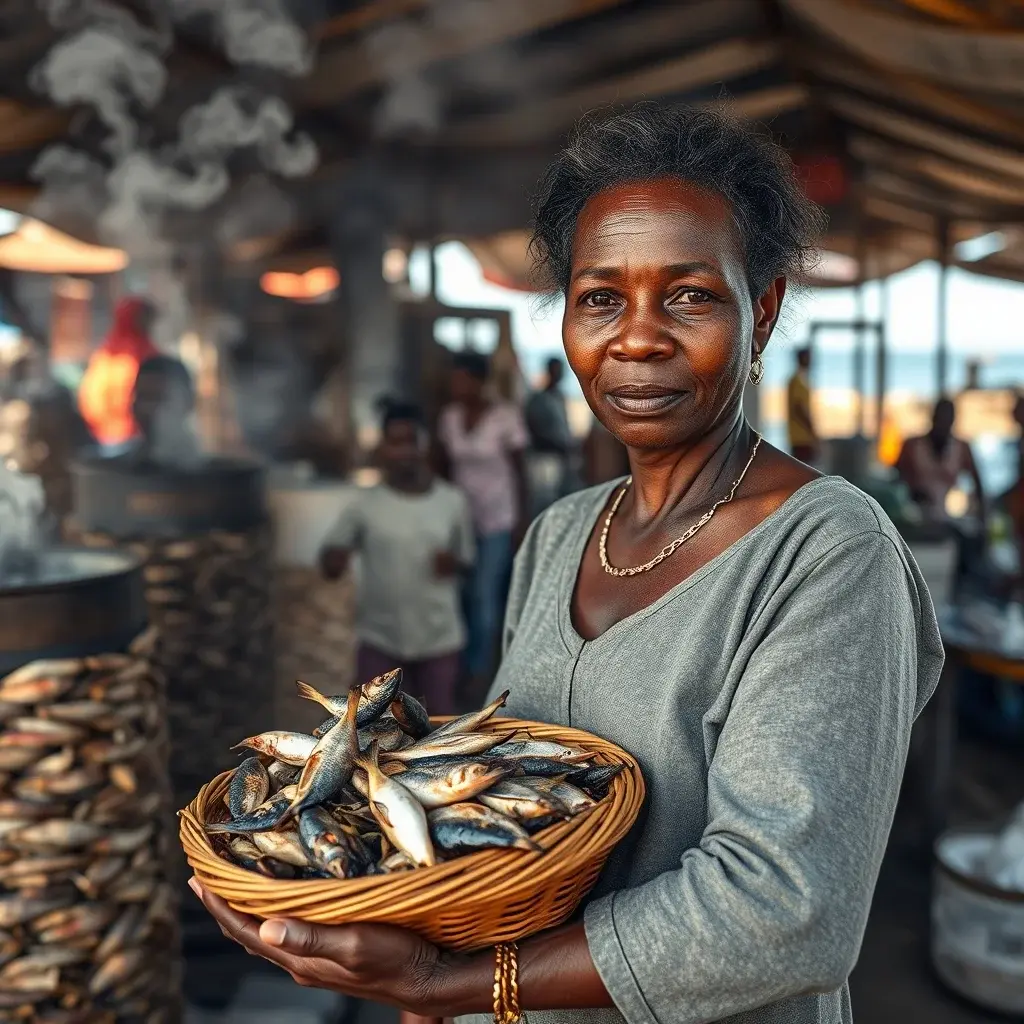
Along Ghana’s Volta Region coastline, fishmongers are grappling with a compounding crisis driven by dwindling firewood supplies and the escalating impacts of climate change. This scarcity disrupts traditional fish smoking practices, a cornerstone of local economies and household sustenance, compelling a search for sustainable alternatives.
The Growing Scarcity of Firewood
For generations, women in these coastal communities have relied on firewood to smoke fish, a vital process that preserves the catch and forms the basis of their livelihoods. However, changing climate patterns, widespread deforestation, and increased demand have rendered firewood both scarce and prohibitively expensive.
What was once an accessible natural resource has become a significant economic burden. This situation highlights the vulnerability of communities whose economic well-being is intrinsically linked to the health of their surrounding natural ecosystems.
Environmental and Health Repercussions
Beyond the economic strain, traditional open-fire fish smoking methods carry substantial environmental and health costs. The dense smoke generated contributes directly to air pollution and accelerates climate change through carbon emissions.
Furthermore, prolonged exposure to this smoke poses severe health risks to the women and children who work around these smoking kilns. Research by Gordon et al. (2011) indicates that fish smoking is associated with serious health issues, including heart disease, lung cancer, cataracts, anaemia, and even increased risk of miscarriage.
Promoting Climate-Smart Technologies
In response to these challenges, health advocates and environmental organizations, such as the Climate and Development Knowledge Network (CDKN), are actively promoting cleaner, climate-smart technologies.
Improved fish smoking ovens, like the Chorkor smoker and the FASO (Fish Smoking Oven), are being introduced. These designs are more energy-efficient, significantly reducing smoke emissions and the overall consumption of firewood.
Barriers to Adoption and Economic Benefits
Local women’s cooperatives, in collaboration with NGOs and government agencies, are leading efforts to encourage the adoption of these improved technologies. This reflects a growing recognition of the need to balance economic survival with environmental stewardship.
However, the upfront cost of implementing these solutions remains a major obstacle. As noted by Attah-Peters (2023), many fishmongers face financial constraints that prevent them from constructing new ovens, purchasing necessary equipment, or hiring skilled labor for installation.
Despite these financial hurdles, there is evidence that adopting cleaner technologies can yield economic advantages. Fish processed using improved ovens often command higher prices in the market. This is attributed to better quality, more uniform appearance, enhanced color, shape, and taste, demonstrating that sustainable practices can also improve income potential when made accessible.
Exploring Alternative Solutions
Other promising alternatives are being explored to further reduce reliance on firewood. These include the use of Liquefied Petroleum Gas (LPG), grass charcoal, and solar dryers.
Environmental groups advocate that expanding access to these diverse technologies could substantially cut greenhouse gas emissions, mitigate deforestation, and bolster the resilience of coastal communities against the intensifying impacts of climate change.
A Grassroots Movement for Sustainability
As coastal fishmongers navigate these interconnected pressures, their experiences signal more than just a fight for economic survival. They represent a burgeoning grassroots movement towards adopting climate-conscious livelihoods.
Their message is clear: with adequate support and access to affordable, sustainable technologies, fish processing can be transformed into an industry that benefits both the people and the planet. The future of these vital coastal economies hinges on embracing these innovative, eco-friendly approaches.










Leave a Reply