
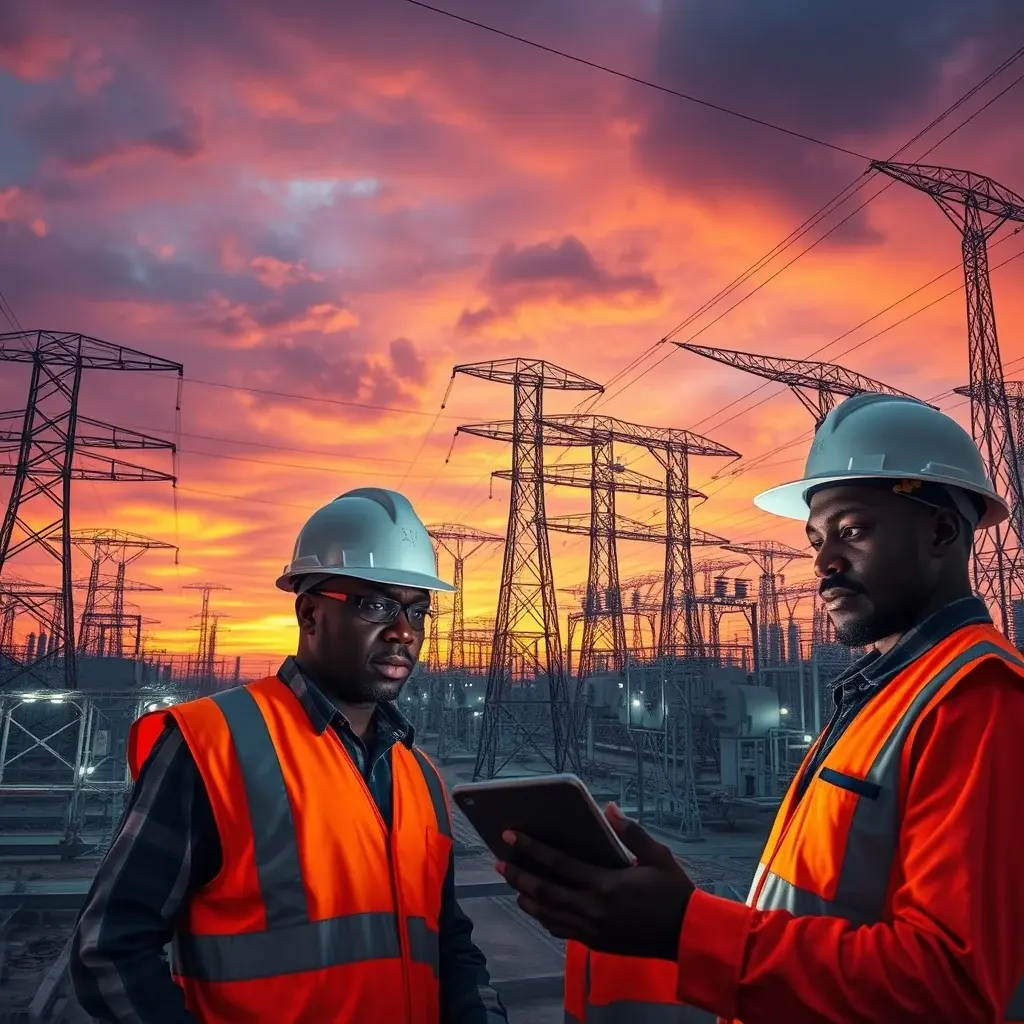
An Energy Committee Member of Parliament, Michael Kwasi Aidoo, on April 30 challenged the Ghanaian government’s assurances of a stable power supply, warning that a significant gap between the country’s total installed electricity capacity and its actual available power leaves the national grid vulnerable to emergencies. Speaking on JoyNews, the MP argued that despite recent successes in restoring power after a fire at the Akosombo Generating Station, underlying weaknesses persist that could plunge the country back into uncertainty.
Context of a Fragile Recovery
The MP’s comments came just a week after a fire at a switchyard at the Akosombo dam on April 23 disrupted the power supply, taking several generating units offline. President John Dramani Mahama subsequently visited the facility, praising engineers from the Volta River Authority (VRA) and Ghana Grid Company (GRIDCo) for their rapid response.
Engineers successfully restored four of the six affected units within a week, adding approximately 550 megawatts (MW) back to the national grid. While officials lauded this as a sign of the system’s resilience, Aidoo suggested it diverted attention from more systemic problems.
He acknowledged that Ghana’s energy sector has seen significant long-term investment. “There were a lot of investments in the energy sector… upgrades of transmission lines and distribution systems,” he noted, crediting successive governments for building the infrastructure currently in place, including GRIDCo’s modern SCADA system for managing power flow.
The Numbers Don’t Add Up
The core of Aidoo’s argument lies in the discrepancy between official figures and operational reality. Ghana has a total installed capacity of about 5,800 MW, which appears more than sufficient to cover its peak demand of roughly 4,300 MW. This on-paper surplus of 1,500 MW should, in theory, provide a comfortable reserve margin.
However, the MP pointed out a critical flaw in this assumption. “If you have 5,800 megawatts of installed capacity and your peak demand is about 4,300, that leaves you with more than 1,000 megawatts,” he stated. “But if we are now meeting demand, it means we had a deficit.”
His logic suggests that a substantial portion of the installed capacity is consistently unavailable. This gap can be attributed to a variety of factors, including aging plants requiring frequent maintenance, fuel supply challenges for thermal plants, and some generators sitting idle. This effectively shrinks the reserve margin to a dangerously thin level.
“In case we should have any emergency at all, we do not have anything to fall on,” Aidoo warned, emphasizing that an unexpected failure at a major power station could have cascading effects across the grid.
Economic Implications and Memories of ‘Dumsor’
The concerns resonate deeply in a country with a recent history of debilitating power crises, known locally as ‘dumsor.’ These rolling blackouts, which peaked between 2012 and 2016, crippled businesses, hampered economic growth, and severely impacted daily life for millions of Ghanaians.
Energy analysts support the notion that reliable power is non-negotiable for economic development. According to the World Bank, unreliable electricity supply is a primary constraint on business growth in Sub-Saharan Africa. For Ghana, which is pushing to expand its industrial and manufacturing sectors, a stable grid is a prerequisite for attracting foreign investment and enabling local entrepreneurship.
The lack of a true reserve margin means that any shock to the system—whether technical, like the Akosombo fire, or financial, like a disruption in gas supply—could threaten a return to load-shedding practices. This uncertainty poses a significant risk to the nation’s economic ambitions.
A Call for Transparency and Proactive Maintenance
The MP’s intervention is effectively a call for greater transparency from energy authorities. Instead of focusing solely on the impressive installed capacity figure, critics argue that a more honest public discourse should center on dependable, available capacity. This would provide a clearer picture of the grid’s health and the urgent need for investment in maintenance and operational efficiency.
Moving forward, the focus may shift from building new power plants to ensuring the existing ones can run at their full potential. This includes securing consistent fuel supplies, investing in preventative maintenance for aging infrastructure, and upgrading components to improve plant efficiency and reliability.
As Ghana navigates its energy future, the key development to watch will be whether policymakers heed these warnings. The immediate challenge is to close the gap between what the power system promises on paper and what it can deliver in reality, thereby securing a truly stable and resilient energy supply for its citizens and economy.










Leave a Reply