
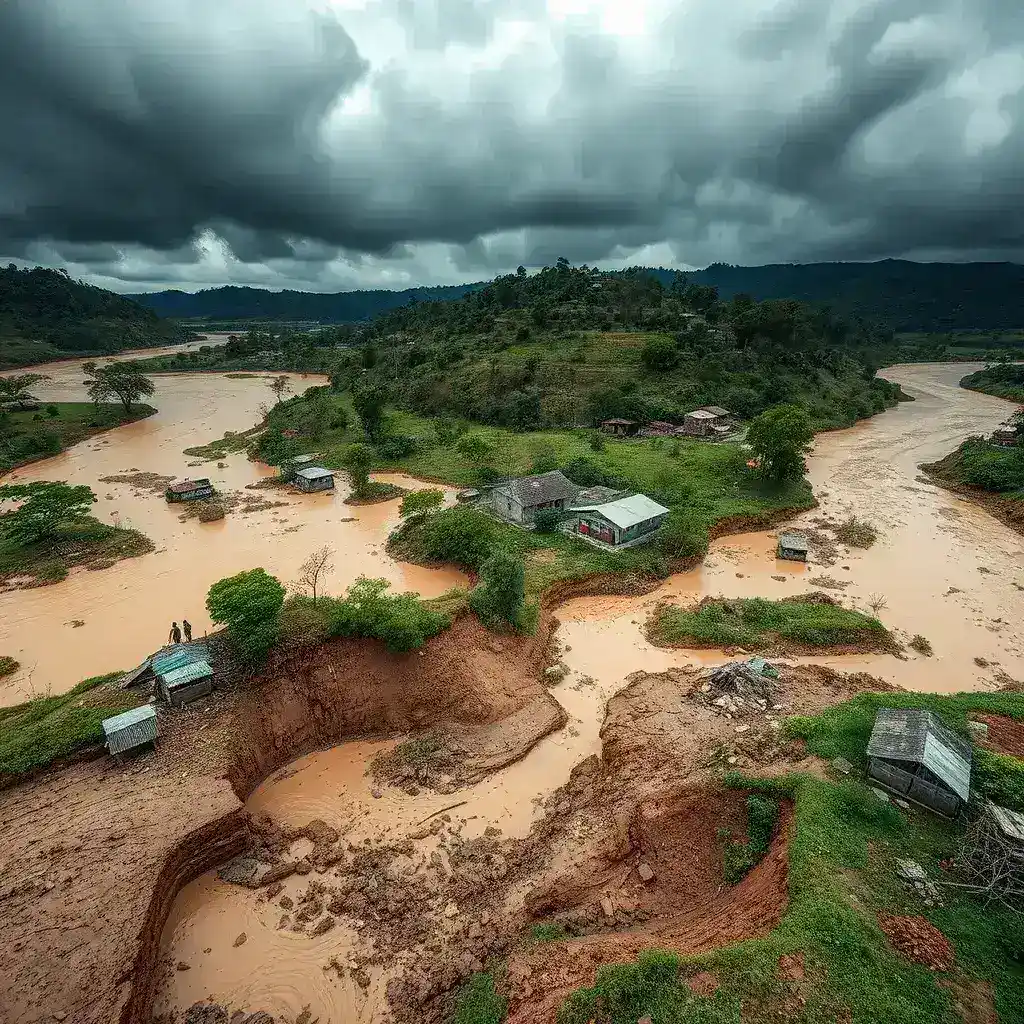
At least 18 people have died in Kenya due to severe flooding and landslides triggered by relentless heavy rains, the national police service confirmed on Sunday. The incidents occurred across Tharaka Nithi, Elgeyo Marakwet, and Kiambu counties in central and eastern Kenya, areas grappling with the peak of the country’s March to May rainy season.
Widespread Devastation from Sustained Rainfall
The National Police Service issued a statement detailing the tragic loss of life, emphasizing the significant danger posed by the ongoing adverse weather conditions. These heavy downpours have not only resulted in fatalities but have also caused widespread damage to critical infrastructure across the East African nation.
Many residents have been displaced from their homes as rivers overflow their banks and the ground becomes saturated, leading to dangerous landslides in hilly regions. The intensity of the rain is consistent with the expected peak of the long rain season, which typically brings substantial precipitation to Kenya.
Context of Kenya’s Rainy Season
Kenya experiences two main rainy seasons: the short rains from October to December and the long rains from March to May. The current period is characterized by the latter, which historically can be severe. However, recent weather patterns, influenced by global climate phenomena like El Niño, have been observed to intensify rainfall events, leading to more extreme conditions than typically anticipated.
These intensified rains are often linked to shifts in atmospheric and oceanic conditions. Experts have pointed to the potential for these extreme weather events to become more frequent and severe due to climate change. This underscores the vulnerability of many communities in Kenya, particularly those living in low-lying areas or on steep slopes.
Impact on Infrastructure and Livelihoods
Beyond the immediate human toll, the floods and landslides have crippled transportation networks, damaged homes, and threatened agricultural land. Roads have been washed away, bridges have collapsed, and power lines have been brought down, disrupting essential services and isolating communities. The agricultural sector, a cornerstone of Kenya’s economy, is particularly at risk, with crops being submerged and fertile soil eroded.
The displacement of thousands of people presents an immediate humanitarian challenge, requiring shelter, food, and medical assistance. Government agencies and non-governmental organizations are mobilizing resources to respond to the crisis, but the scale of the disaster strains available capacity.
Expert Perspectives and Data
Meteorological experts have noted that the current rainfall levels exceed historical averages for this time of year. Dr. Evelyn Mbugua, a climatologist at the University of Nairobi, stated, “We are observing a pattern of increased intensity and duration in rainfall events, consistent with projections of climate change impacts in East Africa. This requires proactive adaptation and mitigation strategies.”
Data from the Kenya Meteorological Department shows a significant surplus in rainfall across several regions compared to the long-term average. This excess moisture saturates the soil, increasing the likelihood and severity of landslides, especially in areas with high deforestation or poor land management practices. According to a report by the National Disaster Management Authority, landslides pose a significant threat in at least 23 counties, with Tharaka Nithi and Elgeyo Marakwet being among the most vulnerable.
Looking Ahead: Preparedness and Future Implications
The recurring nature of such extreme weather events highlights the urgent need for enhanced disaster preparedness and climate resilience measures across Kenya. This includes investing in robust early warning systems, improving infrastructure to withstand floods, and promoting sustainable land-use practices. The long-term implications point towards a need for greater adaptation planning to protect vulnerable populations and economies from the escalating impacts of climate change.
Authorities are urging residents in flood-prone and landslide-susceptible areas to exercise extreme caution and heed evacuation orders where issued. The focus now shifts to rescue operations, relief efforts, and assessing the full extent of the damage, while also considering how to better mitigate future risks from increasingly unpredictable weather patterns.










Leave a Reply