
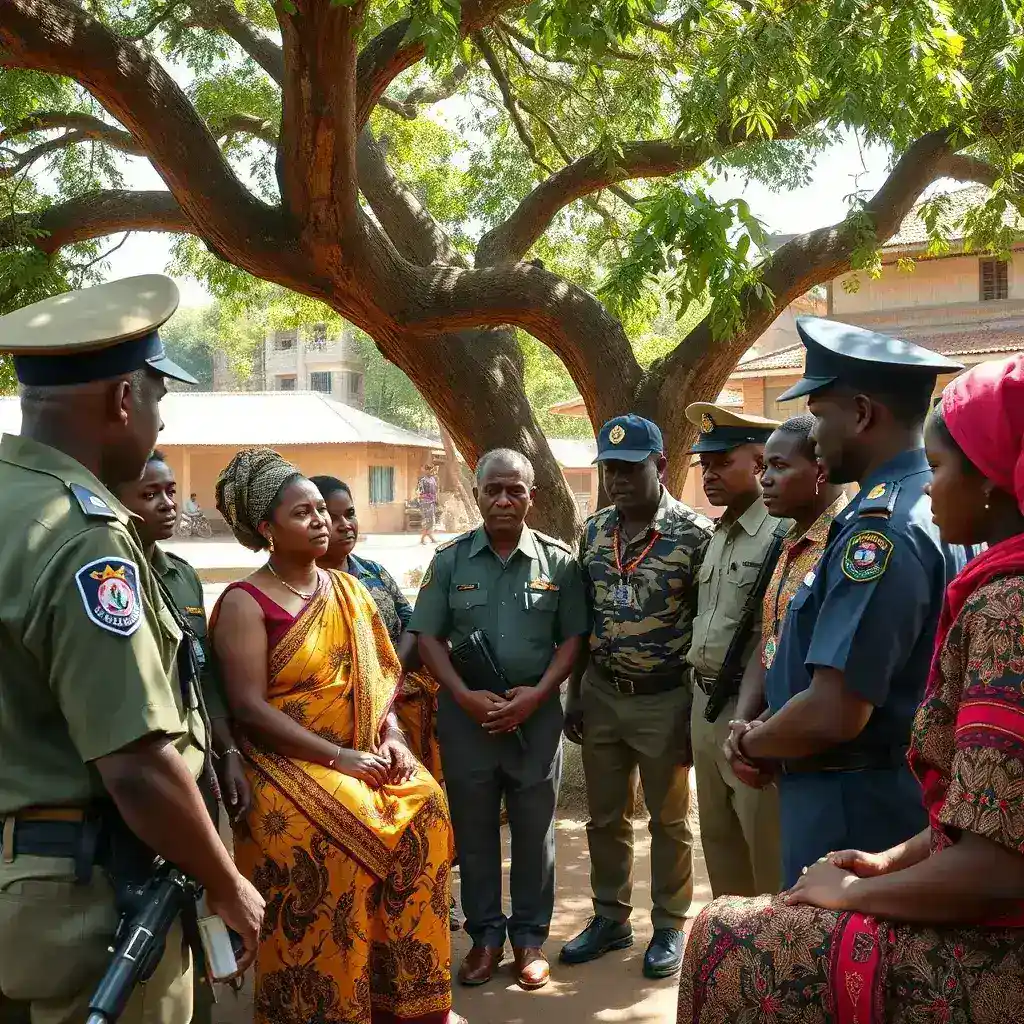
The National Peace Council (NPC) is intensifying efforts to prevent violent extremism (VE) by fostering stronger collaboration between security agencies and local communities. This initiative involves a series of civilian-security dialogues aimed at enhancing information sharing, bolstering community vigilance, and collectively addressing security threats. The dialogues have recently taken place in Wiesi and Bachonsa within the Builsa South District, and Kadema in the Builsa North Municipality, drawing over 300 participants including community members and security personnel.
Building Bridges for Security
These dialogues are a key component of the Preventing and Responding to Violent Extremism Initiative, operating under the Atlantic Corridor Project. This crucial project receives funding from the Embassies of Denmark and Norway, facilitated by the United Nations Development Programme (UNDP).
Mr. David Atualing Angaamba, the Upper East Regional Principal Programmes Manager at the National Peace Council, highlighted the primary objective of these engagements. “The primary aim is to strengthen the relationship between security agencies and community members to facilitate easy information sharing and prevent violent extremism,” he stated. The initiative seeks to build trust and encourage active community participation in maintaining peace and security.
The dialogues aim to educate residents on the functions of various security institutions. Crucially, they also emphasize the vital role citizens play in identifying and reporting suspicious activities. This proactive approach empowers communities to become frontline defenders against potential security threats.
Addressing Local Challenges and Cultural Nuances
Mr. Angaamba pointed out specific cultural dynamics in the region that require careful consideration. Many communities in the Builsa districts are known for their welcoming nature towards visitors. While a positive cultural trait, this hospitality can sometimes lead residents to be less questioning of strangers’ origins or intentions.
However, he cautioned that the evolving security landscape necessitates increased vigilance. The upcoming farming season, in particular, often attracts migrants and visitors from various parts of the country and even beyond. This influx requires communities to be more aware of their surroundings and potential security risks.
Combating Drug Abuse and Illicit Firearms
The dialogues also addressed the concerning rise in illicit drug use, particularly among the youth. Mr. Marshal Abuchow, the Deputy Upper East Regional Commander at the Narcotics Control Commission, linked drug abuse to activities fueling violent extremism. He urged young people to steer clear of such substances.
Mr. Abuchow also provided crucial information regarding drug addiction treatment. “We do not see these people as criminals. If you have a relative or friend who is addicted to drugs, you can contact the Narcotics Control Commission, and we will direct you to appropriate rehabilitation services,” he explained. This highlights a shift towards viewing addiction as a public health issue, encouraging support and rehabilitation over solely punitive measures.
The issue of unregistered firearms was also a significant point of discussion. Mr. Victor Abo-Ame Akanbonga, the Upper East Regional Programme Officer of the National Commission on Small Arms and Light Weapons, warned residents about the severe consequences of possessing illicit weapons. He stressed that non-compliance with firearm ownership regulations could lead to imprisonment.
Shared Responsibility for Security
Deputy Superintendent of Immigration (DSI), Mr. Jerry Kwadzo Attipoe, emphasized that security is a collective responsibility. Representing the Ghana Immigration Service’s Navrongo Office, he urged community members to actively report any suspicious movements or individuals to the relevant security agencies.
Community Response and Future Outlook
The impact of these dialogues is already being felt within the communities. Nab Abdul Malik, a Sub-Chief of Wiesi, reported increased community awareness. “The training has helped us a lot. Now, when people notice strangers or activities that may threaten the peace of the community, they will report them unlike in the past where they may easily ignore,” he said.
Participants expressed gratitude and commitment to these security efforts. Mr. Jonathan Abiisilimi from Bachonsa pledged support for preventing violent extremism and maintaining community peace. Ms. Cynthia Anabil highlighted a newfound understanding of security agencies’ work, expressing her willingness to volunteer information to combat crime.
These civilian-security dialogues represent a crucial step in building resilient communities capable of identifying and mitigating security threats. As these initiatives continue, their success will depend on sustained engagement, ongoing trust-building, and the active participation of all community members in safeguarding their collective peace and security.



Leave a Reply