
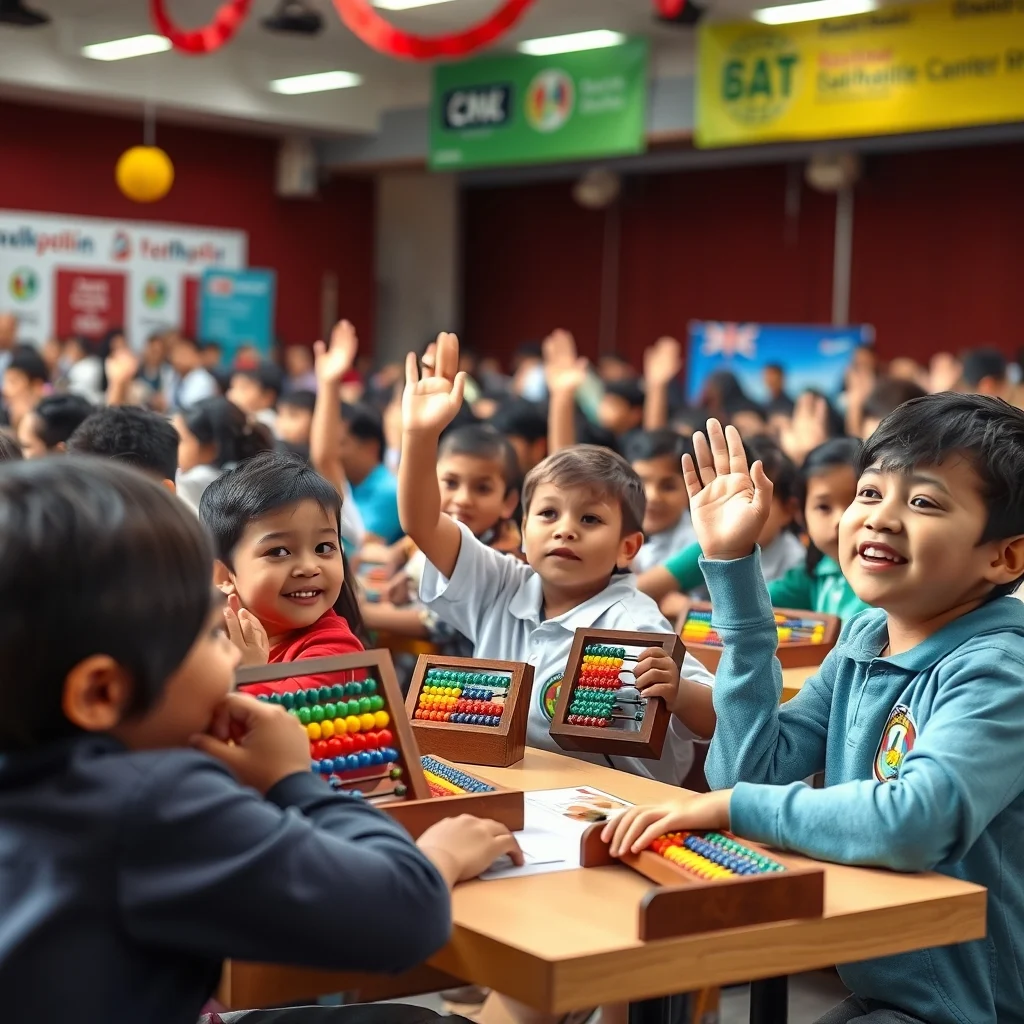
Parents are being strongly advised to make consistent investments in their children’s education, with educators highlighting it as one of the most profitable and sustainable family investments. This appeal comes as preparations intensify for the 2026 Universal Concept of Mental Arithmetic System (UCMAS) National Competition, scheduled for August 2026 at the Pentecost Convention Centre in Ghana’s Central Region. The event will gather approximately 500 private basic schools nationwide.
Cognitive Skill Development Through Competition
The upcoming national competition will see young learners tackle 150 questions in just eight minutes, a rigorous test designed to evaluate their brain power, concentration, imagination, visualization, and mental speed. Contestants from various primary and junior high school categories will compete, with different grade levels distinguished by specific colors. Crucially, all participants have already proven their mettle by winning at district, municipal, and metropolitan levels, securing their place in this national showdown.
Mr. Emmanuel Boamah, Area Supervisor for UCMAS in Teshie-Nungua, emphasized the program’s proven track record in developing children’s cognitive abilities. Speaking at the seventh Inter-District Competition for Krobo and Ledzokuku municipalities last Saturday, he explained that the competition’s value extends beyond rapid calculation.
“It’s not just about answering questions quickly,” Mr. Boamah stated. “It’s about sharpening thinking skills, improving concentration, and building confidence among learners.” These are foundational skills that benefit students across all academic disciplines.
The Crucial Role of Parental Support
While acknowledging the significant investments made by the government and other institutions in the education sector, Mr. Boamah underscored the indispensable role of parents. He urged parents to provide the essential support their children need for effective learning, ensuring they attend school regularly and receive necessary educational assistance.
“This support should be provided regardless of their location, religion, ethnicity, or political affiliation,” he added, stressing the universal importance of educational commitment.
UCMAS: A Complement to Formal Education
Although UCMAS lessons are not integrated into Ghana’s mainstream school curriculum, their demonstrable impact on learners serves as compelling evidence for parents to consider enrollment. The program aims to enhance children’s mental agility and analytical skills, complementing their formal education.
Mr. Boamah expressed optimism that the national competition would offer more than just awards. “It will also expose learners to healthy interaction, discipline, and competition with their peers from different parts of the country,” he noted. This broader exposure fosters social and emotional development alongside academic prowess.
Focus on Speed, Accuracy, and Engagement
During UCMAS lessons and competitions, students utilize specialized tools designed to facilitate quick and accurate calculations. The UCMAS concept itself has received approval from the Ghana Education Service, though it operates independently of the national curriculum. Maurya Education Limited, a private educational consultancy, administers the program.
The recent Teshie-Nungua competition was characterized by a vibrant, festive atmosphere. Side attractions like bouncy castles, horse riding, dancing contests, and video games were incorporated to keep the young learners engaged and ensure a memorable learning experience. Organizers intentionally designed the event to be a holistic celebration of learning, blending academic challenges with enjoyable activities.
Looking Ahead
As the 2026 UCMAS National Competition approaches, the emphasis on parental investment and the development of critical cognitive skills is likely to grow. The success of programs like UCMAS, even outside the formal curriculum, may prompt further discussions on innovative educational approaches and the importance of holistic child development. Parents and educators will be watching to see how these initiatives continue to shape the future learning landscape for Ghanaian children.







Leave a Reply