
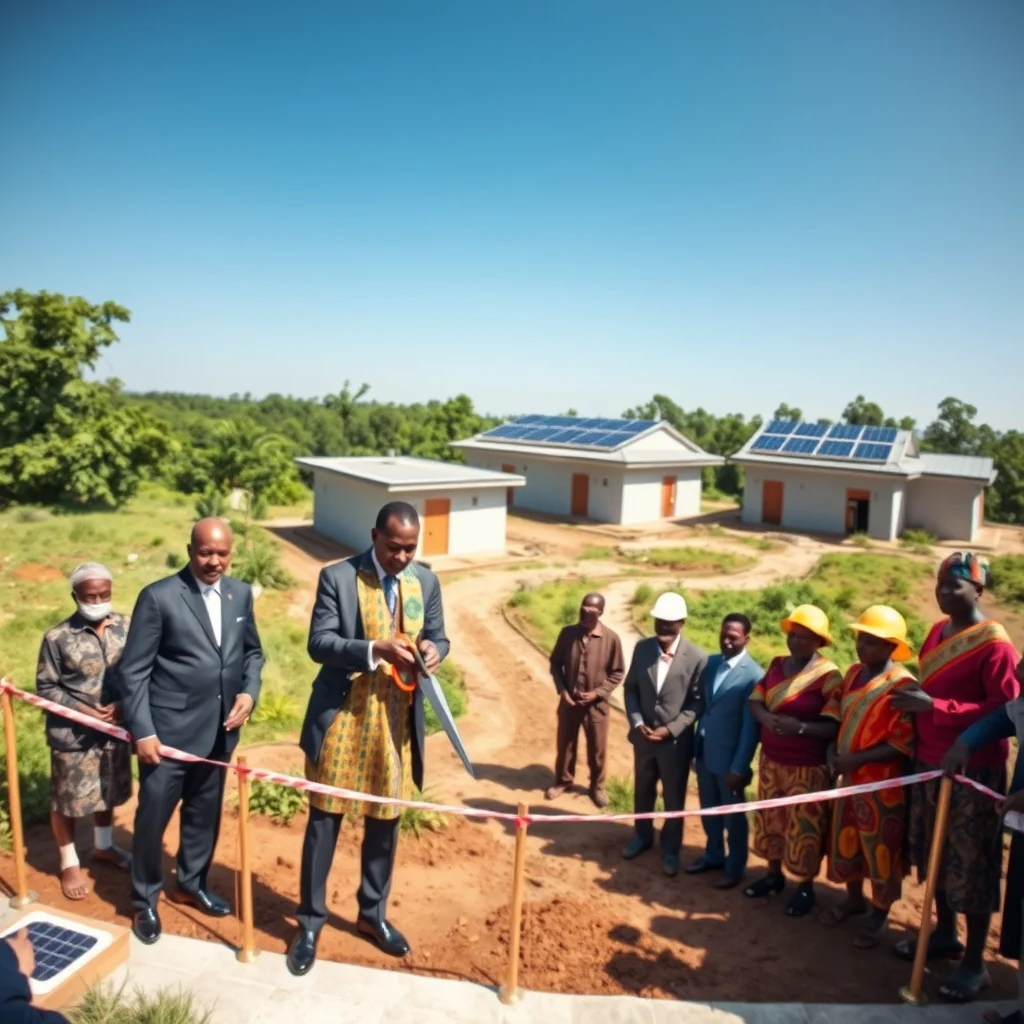
President John Mahama officially launched the Green City Housing Project in the Ashanti Region on Saturday, May 9, marking a significant government initiative aimed at mitigating Ghana’s substantial housing deficit and providing affordable homes. The project signifies a “new phase” in the nation’s housing strategy, underscoring a commitment to making decent housing accessible to all citizens.
Context: Ghana’s Growing Housing Challenge
Ghana grapples with a severe housing crisis, estimated at over 1.5 million units. Factors contributing to this deficit include escalating land values, rising construction costs, and limited access to long-term financing, which collectively price home ownership beyond the reach of many Ghanaians.
President Mahama highlighted the urgency of the situation, warning that inaction would exacerbate the crisis. “If we do not act urgently and at scale, tomorrow’s housing crisis will far exceed what we are experiencing today,” he stated during the sod-cutting ceremony.
The Green City Housing Project
The Green City Housing Project is situated on 200 acres of land generously provided by Otumfuo Osei Tutu II, the Asantehene. This expansive site is planned to accommodate over 1,000 housing units within an integrated community designed with sustainability and modern urban living principles at its core.
The President expressed gratitude to the Asantehene for his contribution, recognizing it as a demonstration of his dedication to his people’s welfare. “The decision to site this project here is both symbolic and fitting, and we are deeply grateful to Otumfuo for your generosity in making this land available,” President Mahama remarked.
Addressing Land Disputes and Encouraging Diaspora Investment
A key feature of the Green City project is its assurance against the land disputes that frequently plague private real estate developments in Ghana. President Mahama specifically encouraged Ghanaians living abroad to invest in the project, promising secure and completed homes upon handover.
“Here, your house will be completed before handover. You will receive your keys without litigation, disputes or the fear of demolition,” he assured potential investors. The Asantehene’s guarantee that the land is free from litigation further strengthens this commitment.
Government Support and Infrastructure Investment
In a move to reduce the final cost of the homes, the government has pledged to cover the infrastructure expenses for roads, drains, and gutters within the Green City estate. This initiative falls under the ‘Big Push’ infrastructure program.
“If we don’t do that, they will have to add the cost onto the houses and that makes the houses more expensive,” President Mahama explained, emphasizing the direct benefit to homebuyers.
Project Timeline and State Housing Company’s Role
The State Housing Company is spearheading the development of the Green City project. The President expressed optimism that the first phase of the project would be completed and ready for commissioning by next year.
“I look forward to returning here next year to commission Phase One of the Green City Project,” he stated, setting a clear target for the project’s initial delivery.
Rental Housing Market Concerns
Beyond new construction, President Mahama also addressed persistent issues in Ghana’s rental market, particularly the common practice of demanding rent advances exceeding the legal limit of six months. He acknowledged the difficulty in enforcing this law due to a reluctance from both landlords and tenants to report violations.
“The law is clear, no landlord should demand more than six months’ rent advance,” he reiterated. The government’s objective remains to ensure fairness, protection, and dignity for tenants while exploring practical alternatives within the rental sector.
Future Outlook
The Green City Housing Project represents a significant step in the government’s strategy to alleviate Ghana’s housing deficit. The inclusion of integrated infrastructure, the focus on sustainability, and efforts to ensure dispute-free land tenure are key elements that could set a new standard for large-scale housing developments. Attention will now turn to the execution of Phase One and the government’s ability to maintain its commitment to absorbing infrastructure costs, as well as its broader efforts to regulate and improve the rental housing market.










Leave a Reply