
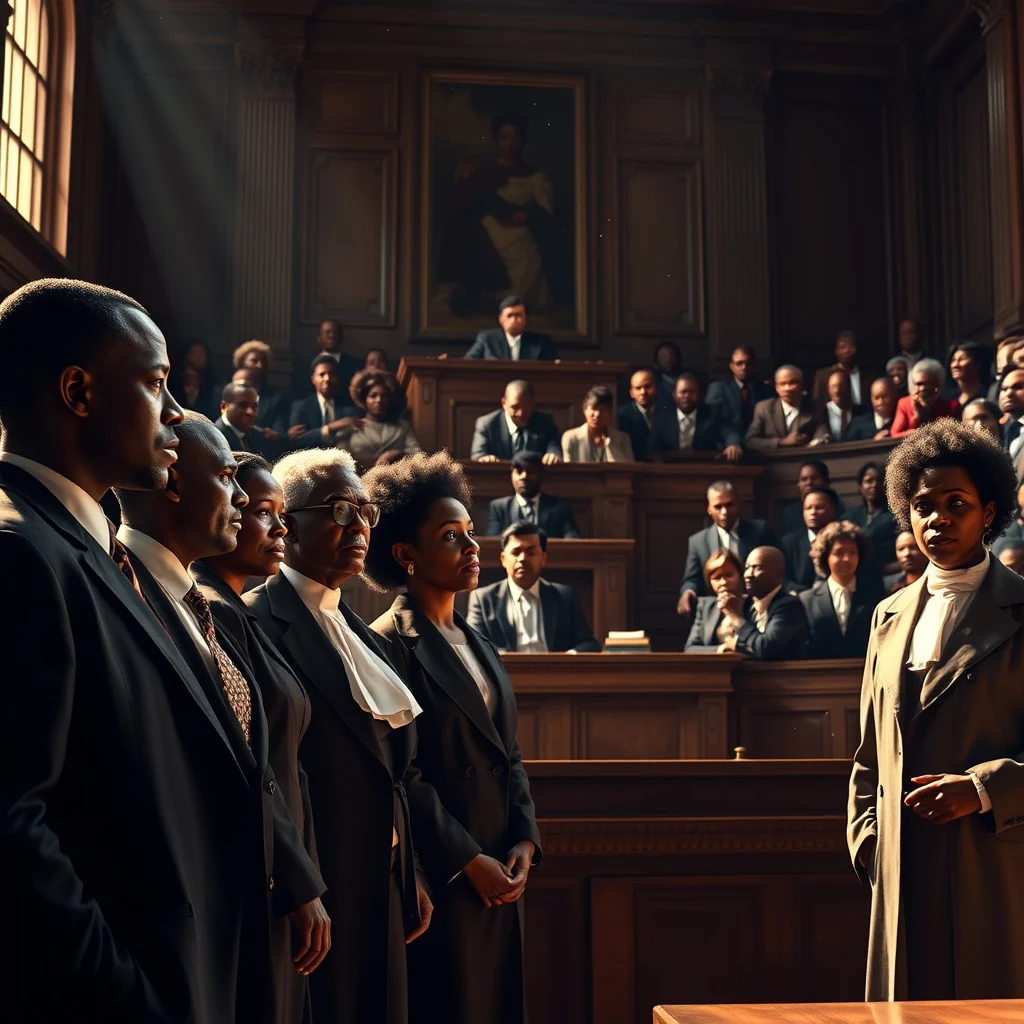
Four of South Africa’s leading law firms are challenging the government’s new, stringent Black employment and ownership targets, arguing they are “irrational” and impossible to meet within the stipulated five-year timeframe. This legal battle, set to be heard in Pretoria’s High Court, unfolds against a backdrop of persistent racial inequality in the legal profession and internal accusations of discrimination from Black lawyers within some of these same firms.
Context: Affirmative Action and Legacy of Apartheid
The case is rooted in South Africa’s post-apartheid efforts to dismantle the systemic disadvantages created by decades of white-minority rule. Affirmative action policies, broadly known as Broad-based Black Economic Empowerment (B-BBEE), aim to redress this historical imbalance by promoting the participation of Black South Africans in the economy.
These policies have faced scrutiny, amplified by figures like former U.S. President Donald Trump and South African-born billionaire Elon Musk. However, for many Black professionals, these measures remain crucial for achieving genuine equality.
The New Legal Sector Code and the Firms’ Challenge
In late 2024, the government introduced a new code for the legal sector, significantly raising the bar for B-BBEE compliance. The code mandates that large law firms achieve 50% Black ownership within five years, with a specific target of 25% for Black women.
The four firms challenging the code – Deneys (formerly Norton Rose Fulbright South Africa), Webber Wentzel, Werksmans, and Bowmans – were compliant with previous B-BBEE rules, which set a lower ownership threshold of just over 25% Black ownership. They argue that the new targets are not only unrealistic but also risk compromising the merit-based progression essential for equity partnerships.
In a joint statement, the firms highlighted progress made, with Webber Wentzel increasing Black partners from 25% in 2019 to 38% in 2026, and Werksmans from 20% to 31% in the same period. Bowmans has maintained Black ownership between 25% and 29% over the last decade. Deneys declined to share specific figures but stated, “We want to be part of the solution. But it must be one that is legally sound, practically workable, and which genuinely advances black participation in the profession.” The other firms echoed this sentiment, warning that the current target “risks forcing outcomes that are neither sustainable nor lawful.”
Allegations of Discrimination Within Firms
While the firms challenge the government’s targets, Reuters spoke with 13 current and former employees of Deneys, Webber Wentzel, and Bowmans who allege subtle and explicit discrimination. These individuals claim that Black lawyers face obstacles in career advancement, including favouritism in case allocation, being overlooked for promotions, and, in one instance, denial of reduced working hours for a new Black mother that were granted to a white colleague in a similar situation.
One former Deneys employee, Inga Dyantyi, 30, is pursuing a racial discrimination case in the Labour Court, alleging demeaning remarks and intolerable working conditions that led to her resignation. Deneys has denied her claims in court documents.
A Black lawyer at Webber Wentzel also has a pending discrimination case, accusing the firm of making her employment intolerable. She spoke anonymously, fearing repercussions for her career prospects.
Two other Black women reported unfair treatment complaints against Deneys and Webber Wentzel to the Commission for Conciliation, Mediation and Arbitration (CCMA). One case was dismissed on procedural grounds, leading to the lawyer’s resignation, while the other concluded with a settlement.
Deneys declined to comment on the specific allegations. Webber Wentzel and Bowmans stated they have zero tolerance for discrimination and robust processes for addressing complaints.
Industry Data and Expert Views
Statistics from the Legal Practice Council in 2024 reveal a significant disparity: while the top six firms, including the complainants, were 59% Black at the associate level, this figure dropped to just a quarter at the partner level. Data from the Johannesburg Society of Advocates showed that two-thirds of junior advocates who left the bar over the past five years were Black.
Christine Qunta, chairperson of the Legal Sector Charter Council, which enforces the code, stated, “The only conclusion we can reach is that there is a ceiling that these firms believe Black people should have.” She warned that failing to address this would perpetuate the inequalities of 1994 for future generations.
Implications and What’s Next
The legal challenge highlights a deep-seated tension in South Africa: the drive for economic transformation versus the practicalities and potential unintended consequences of policy implementation. The firms’ argument about meritocracy and realistic timelines, while potentially valid in business terms, clashes with the urgent need to address historical racial exclusion.
The outcome of the High Court case will have significant implications for the legal sector and potentially other industries grappling with similar empowerment goals. It could either reinforce the government’s commitment to rapid transformation or lead to a recalibration of B-BBEE targets. Meanwhile, the ongoing discrimination cases within some of these firms will shed further light on the internal challenges faced by Black legal professionals, regardless of the broader policy debates.
South Africa’s Justice Minister Mmamoloko Kubayi has pledged to defend the sector code, stating the state is “not willing to bend” on its empowerment objectives. Observers will be watching to see if the court sides with the firms’ arguments for practicality or the government’s stance on historical redress.










Leave a Reply