
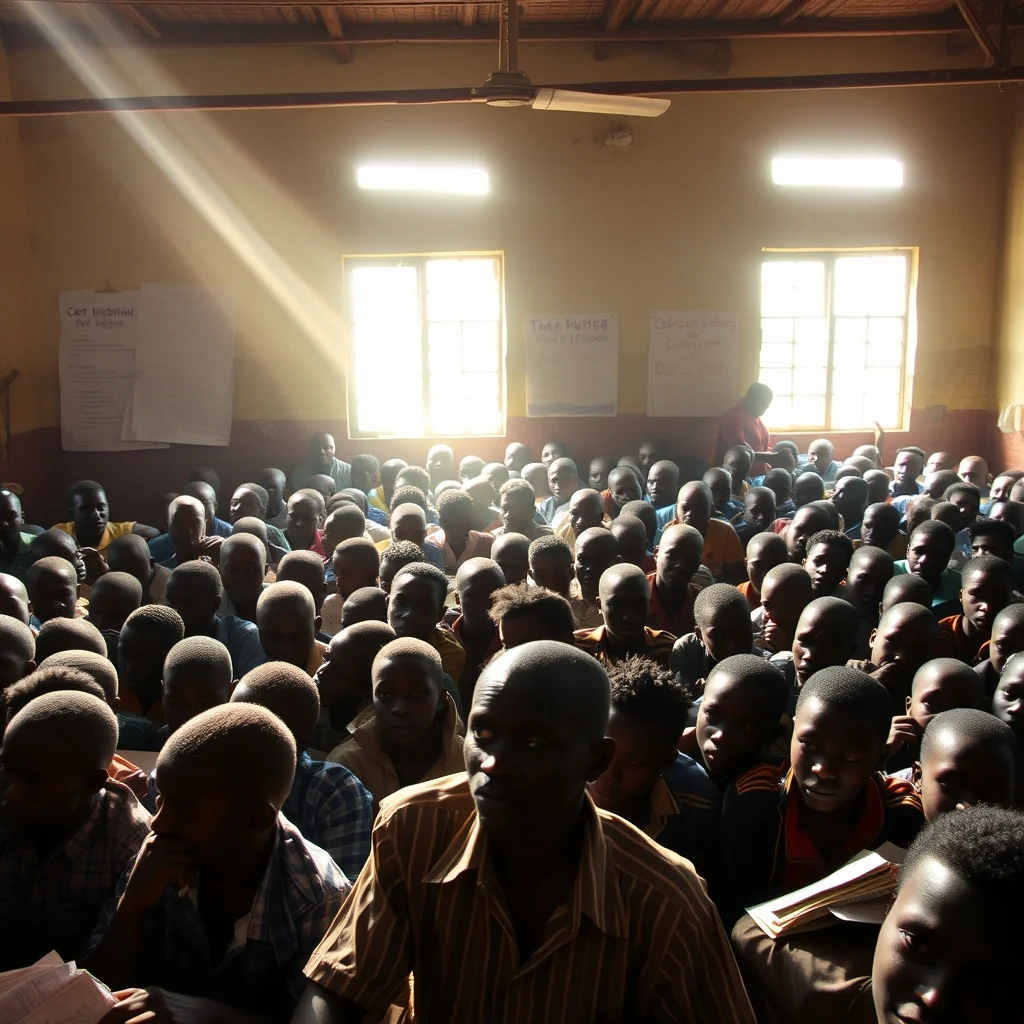
Lawyer and energy expert Lom-Nuku Ahlijah has voiced significant concerns regarding the diminishing level of supervision within Ghanaian schools, attributing the rise in student indiscipline to increasing student populations and insufficient educational investment. His commentary follows a recent disturbing incident at Ada Senior High Technical School, where a video circulated showing a student armed with a cutlass threatening peers, leading to four students’ arrest by the Ghana Police Service.
Overcrowding and Resource Strain
Mr. Ahlijah highlighted on JoyNews’ The AM Show on May 25 that the implementation of the Free Senior High School (Free SHS) policy has led to a surge in student enrollment. However, this expansion has not been matched by a proportionate increase in essential resources, including infrastructure and teaching staff.
This disparity has resulted in an escalating teacher-to-student ratio, making effective supervision a considerable challenge across many school campuses in Ghana. “Supervision is less than it used to be, and it is a fact we cannot run away from. That is the reality on many school campuses. Supervision is not what it used to be,” Mr. Ahlijah stated.
Unintended Consequences of Free SHS
While the Free SHS policy has laudably expanded educational access for many Ghanaian youth, it has concurrently created unintended pressures on the existing school system. The rapid influx of students has outpaced the growth in educational infrastructure and the recruitment of adequate teaching personnel.
“There has not necessarily been the corresponding investment in more teachers and more infrastructure,” Mr. Ahlijah observed, pointing to the core issue of inadequate preparation for the policy’s success.
Parental Responsibility and Teacher Overstretch
The expert emphasized that while schools play a role, the primary responsibility for student conduct ultimately lies with parents. He noted that teachers are increasingly overstretched due to the high student numbers, limiting their capacity for individualized attention and thorough supervision.
“The primary responsibility for ensuring that students behave the way they are supposed to remains a parental responsibility,” he asserted. “If you are relying solely on a teacher to monitor your child in school, the reality is that you are not likely to get that level of attention because there are simply too many students for the supervision required.”
Future Implications and Call for Reform
Mr. Ahlijah issued a stern warning that without significant reforms and investment in the education sector, incidents of violence and indiscipline in schools are likely to persist and potentially increase. The current situation, marked by overcrowding and stretched resources, creates an environment where maintaining order and ensuring student safety becomes increasingly difficult.
“That is why we are seeing more of these incidents, and I can assure you that until significant changes are brought into this space, we may continue to witness some of these things,” he concluded, underscoring the urgent need for proactive measures to address the systemic challenges.










Leave a Reply