
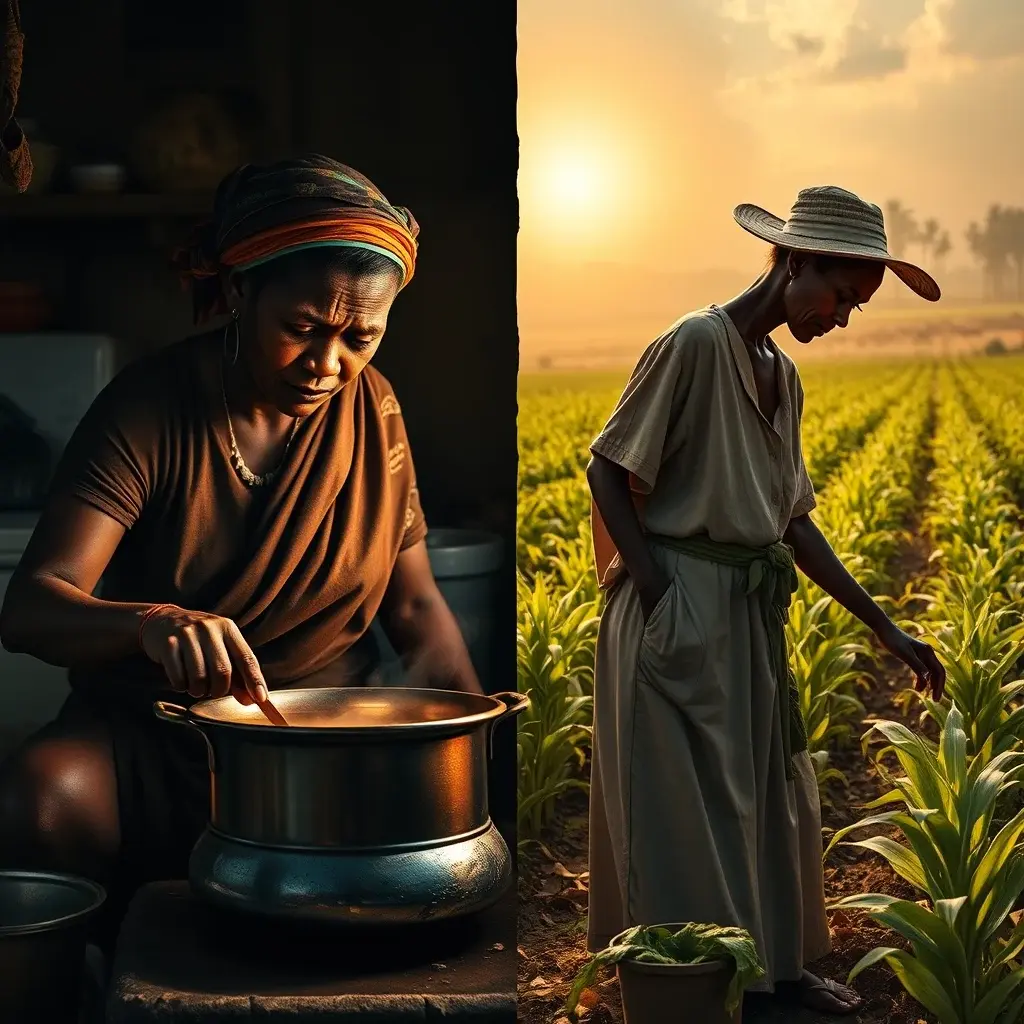
Globally, an estimated 16 billion hours are devoted daily to unpaid domestic and care work, a contribution valued at $11 trillion annually or 9% of global GDP, according to the International Labour Organisation (ILO). This essential work, primarily performed by women, underpins the functioning of the global economy by producing and maintaining its workforce, yet it remains unacknowledged in national statistics and uncompensated.
The Foundation of the Economy: Social Reproduction
Before the advent of formal economies or structured workforces, individuals were cared for, nurtured, and prepared for life. This foundational role, known as social reproduction, involves carrying, delivering, feeding, cleaning, nursing, and educating future generations. It is the oldest and most economically vital form of labor, yet it has never been formally recognized or paid.
The global economy relies on healthy, educated, and emotionally stable individuals to function. These individuals are not born ready for the workforce; they are nurtured and maintained. This continuous process of preparation and upkeep, from infancy through adulthood, is the work of social reproduction.
Women’s Disproportionate Burden
In the overwhelming majority of households worldwide, women are the primary performers of this unpaid care work. They not only produce the future labor force but also sustain the current one through daily tasks like cooking, cleaning, childcare, and eldercare.
The ILO’s research highlights that women perform three times more unpaid care work than men. In some economies, the monetary value of this uncompensated labor exceeds 40% of GDP, surpassing major sectors like manufacturing or transport. This signifies that the very foundation of the global economy is built upon women’s uncompensated time and effort.
The ‘Mental Load’ and the Second Shift
While men do contribute to care work, the data consistently shows women bearing a significantly larger share. This disparity extends beyond visible tasks to encompass the ‘mental load’ – the cognitive and emotional management of care. This unseen labor involves planning, organizing, and worrying about household needs, a burden that rarely switches off.
For women who also hold paid employment, this unpaid work translates into a ‘second shift.’ After a full day in the formal economy, they return home to another full day of domestic responsibilities, often without equal partnership from male counterparts. This situation is described not as a domestic arrangement but as an economic policy by default.
Regional Disparities and Early Burdens
In regions like Sub-Saharan Africa, the burden of unpaid care work is particularly heavy due to a lack of infrastructure. Rural women in countries like Ghana and Rwanda spend several hours daily collecting water and firewood. Across Sub-Saharan Africa, water collection alone accounts for 40 billion hours annually, equivalent to the entire workforce of South Africa’s yearly labor.
Projections indicate that the time women in Sub-Saharan Africa spend on unpaid care work will increase by 2050. Crucially, this burden begins in girlhood, preventing many girls from completing their education, entering formal employment, and achieving economic independence. They are absorbed into the care economy before they can realize their full potential.
Economic Impact and Policy Implications
In Ghana, unpaid care work is estimated to contribute as much as 30% of the nation’s GDP, representing billions of dollars in invisible, uncompensated labor. Women form the backbone of Ghana’s agricultural sector, producing the majority of its food crops, yet they own fewer farms and landholdings than men. They perform essential labor for the nation’s sustenance but do not appear in national economic accounts, often returning to domestic duties after a long day of farming.
Learning from Global Models: Policy Solutions
Countries like Sweden and Norway offer models for addressing this imbalance. Sweden’s introduction of non-transferable parental leave for each parent, a policy known as the ‘daddy month,’ significantly increased fathers’ uptake of childcare responsibilities. This policy incentivized men to share caregiving, leading to a marked increase in their involvement.
The economic consequences are substantial. Studies show that a mother’s future earnings increase for every month the father takes parental leave, not due to increased talent, but because she gains more time. This demonstrates that the connection between care work and income is mathematical and a result of policy choices.
The Call for Recognition and Revaluation
While Ghana and Africa may not mirror Scandinavian policy environments, the principle of valuing care work remains universal. The question arises: at what point will countries recognize, support, and share the work of producing and maintaining their entire workforce? When will a mother’s labor within the home hold the same moral and economic weight as a father’s labor outside it?
The state must begin to view unpaid care not as a personal sacrifice but as a vital national service. The women performing these essential tasks are not failing to participate in the economy; they are its oldest and most fundamental workers, who have simply never been compensated. This lack of compensation is a choice, and like all choices, it can be made differently to foster a more equitable and economically sound future.










Leave a Reply